
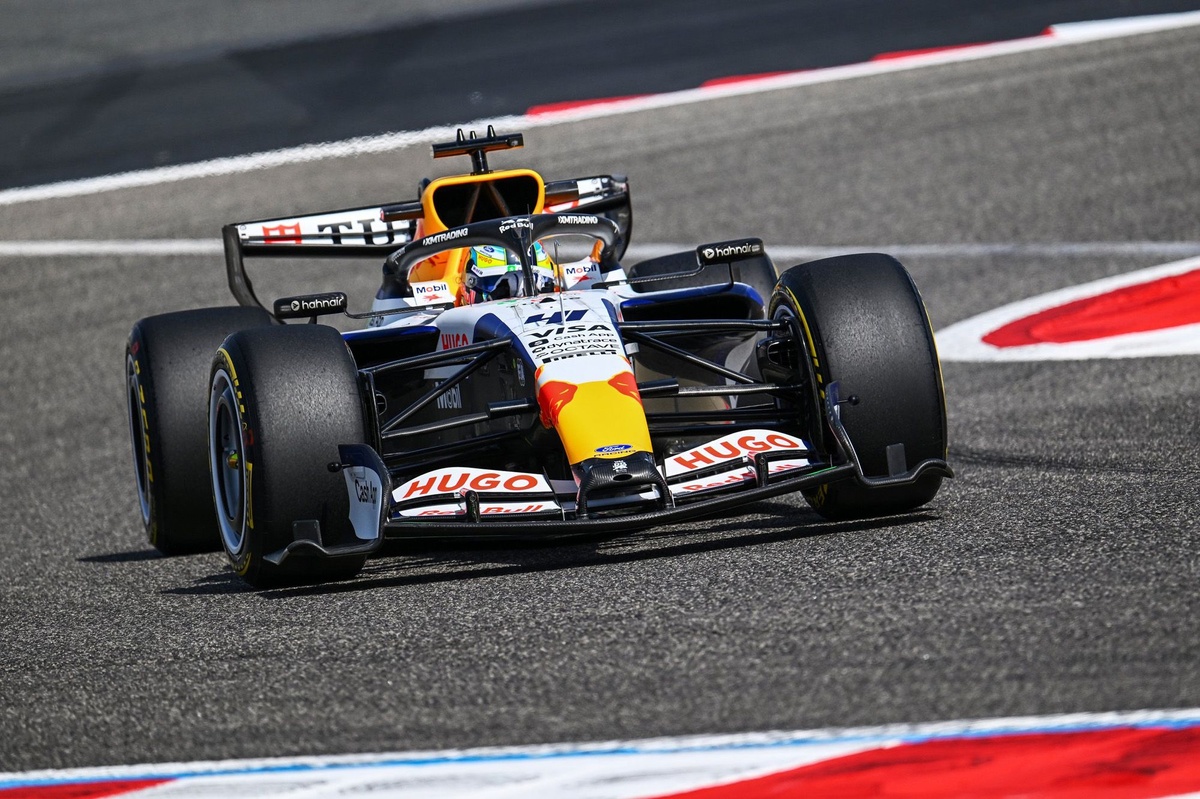
Formula 1’s four top teams from last year – McLaren, Mercedes, Red Bull and Ferrari – have been tipped to dominate again in 2026, amidst one of the biggest regulation changes ever.
The world championship introduced new chassis and engine rules featuring active aerodynamics and a much greater emphasis on electrical energy, which wiped the slate clean as teams worked on their new concepts – but so far, everything points to last year’s protagonists emerging back on top.
This is what Haas’ Esteban Ocon, Williams’ Carlos Sainz and Racing Bulls team principal Alan Permane all said following the opening Bahrain pre-season test.
“It seems like the gap to the top teams, the four teams that used to lead last year, has increased,” Sainz contritely commented in a video posted by Williams on social media, “and it’s going to require a lot of hard work over the next few months, the next few races, going into the first part of the season, to try and recover that gap.”
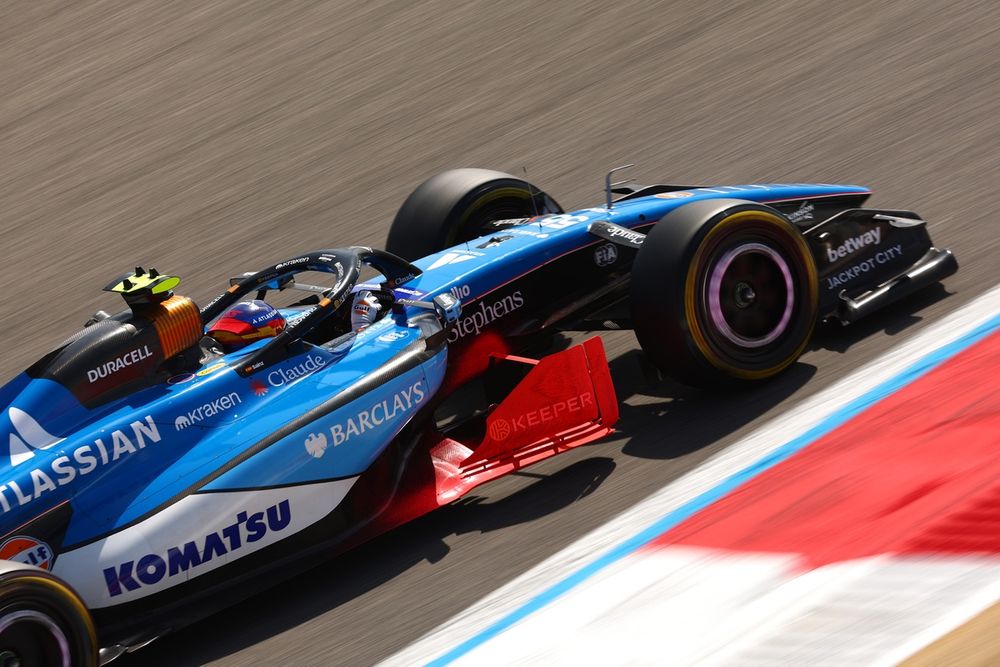
Carlos Sainz, Williams
Photo by: Joe Portlock / LAT Images via Getty Images
Meanwhile, asked if the likes of Ferrari, Red Bull and Mercedes were going to dominate again, Ocon replied: “I would like to respond something else to you. But, at the moment, the top four are well locked. Where you saw last year the top 10 within three, four tenths in some races, now I think the top eight is maybe within three, four tenths – but after that, it’s seconds away, I think.
“I’m not saying that will stay until Melbourne, because, obviously, we’ve seen many teams bringing updates to their car, from one day of test to another. We saw Audi making a big jump as well in performance with their new bodywork and stuff, maybe something else. But, yeah, at the moment, the midfield is much further away compared to last year.”
Last week in Bahrain, Mercedes set the fastest time overall with Kimi Antonelli’s 1m33.669s, while Red Bull was the slowest of the top four teams as Max Verstappen lapped in 1m34.798s – but that was on day one, with likely room for improvement.
The top midfield team was Haas, with Oliver Bearman in 1m35.394s, followed by team-mate Ocon. Alpine was the only other outfit in the 1m35s bracket, courtesy of Franco Colapinto.
Fastest times from Bahrain Test 1 per team
P
DRIVER
TEAM
Time (day)
1
Antonelli
Mercedes
1’33″669 (D3)
2
Hamilton
Ferrari
1’34″209 (D3)
3
Piastri
McLaren
1’34″549 (D3)
4
Verstappen
Red Bull
1’34″798 (D1)
5
Bearman
Haas
1’35″394 (D2)
6
Colapinto
Alpine
1’35″806 (D3)
7
Hulkenberg
Audi
1’36″291 (D3)
8
Albon
Williams
1’36″793 (D3)
9
Lawson
Racing Bulls
1’36″808 (D3)
10
Bottas
Cadillac
1’36″824 (D2)
11
Stroll
Aston Martin
1’38″165 (D3)
And it wasn’t just about one-lap pace. “We’ve seen some of the big guys do some race distances where you kind of know roughly what the starting fuel and the finishing fuel is, and we can see that they’re very quick,” Permane pointed out.
“But I don’t think that’s a surprise. Whenever you have a big regulation change, you’re going to get the top teams move away and the smaller teams move back. I don’t think anyone should be surprised by that.”
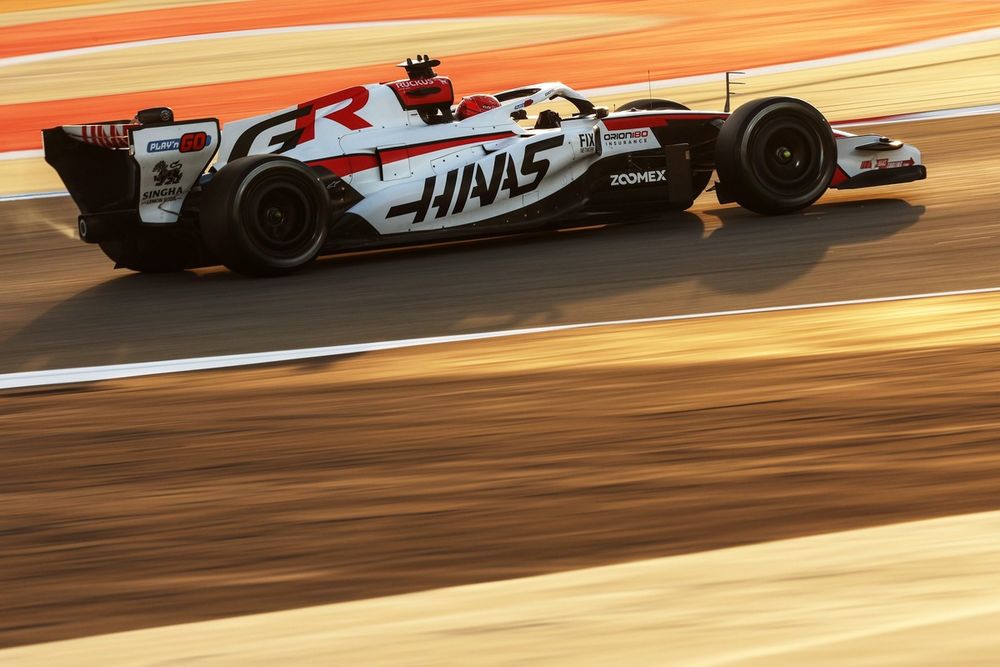
Esteban Ocon, Haas F1 Team
Photo by: Glenn Dunbar / LAT Images via Getty Images
According to the Racing Bulls boss, what made the racing so close until 2025 was the stable regulations, the cost cap, and the aerodynamic testing restrictions – awarding more wind tunnel time and CFD simulations to lower-ranked outfits. “That helps the smaller teams catch up,” he added.
Still, the top teams are prevailing, which is down to having better tools and engineers, according to Permane: “You still have the top aerodynamicists who want to work at the top teams.”
Asked why, the Briton retorted: “Why would the top footballer want to play for the top football team? It’s the same thing. People want to win. We’re all very, very competitive. And from drivers all the way through the organisation, everyone is competitive and wants to do well. And I think that’s just natural.
“That is not to put down any team. But I think it’s natural that the more successful engineers gravitate to the more successful teams – and that skews things.
Read Also:
“Also it’s a little bit historical, I would imagine as well. Because for many years we ran without budget caps. And the gap between the [teams] was probably – certainly – in the tens of millions, if not in the hundreds of millions, that people were spending, between the very top and the very little. And that enables you to develop further infrastructure and tools that are still being used now.
“The regulations hopefully will stay stable and we’ll see it close up. What we want more than anything, or what I want more than anything, and I know what you guys want more than anything, is close racing. You don’t want one team or one PU manufacturer or one driver dominating the whole thing. We want to have some racing. We want to turn up on a Friday not knowing who’s going to win on a Sunday. And I think that’s the aim of everybody.”
Additional reporting by Jake Boxall-Legge and Filip Cleeren
We want your opinion!
What would you like to see on Motorsport.com?
– The Motorsport.com Team