
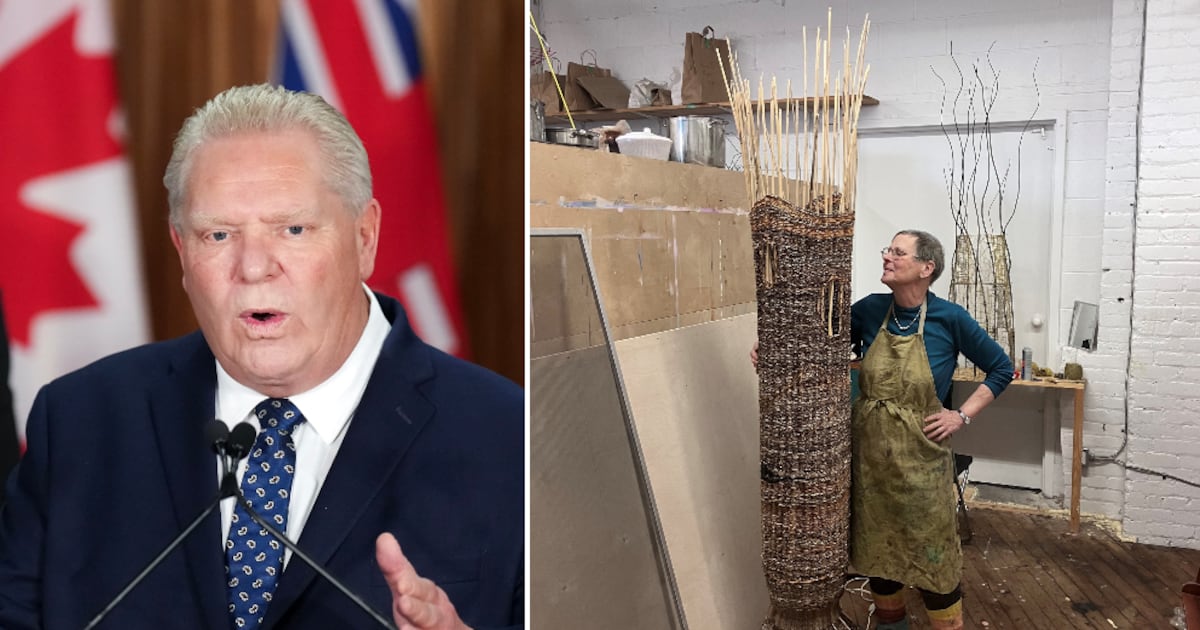
Ontario Premier Doug Ford addresses the backlash over the province’s decision to hike tuition fees and make cuts to OSAP grants.
For members of the Toronto Guild of Spinners and Weavers, Ontario Premier Doug Ford’s unprompted jab at “basket-weaving courses” while he urged students to pursue “jobs of the future,” landed close to home.
Ford singled out the profession during a media availability on Tuesday in which he said that “a lot of students, (are) picking basket-weaving courses” when “there are not too many baskets being sold out there.”
The premier went on to suggest students go into health care, trades, and “jobs of the future,” including careers in STEM (Science, Technology, Engineering, Math).
The remarks came as he defended his government’s decision to lift Ontario’s tuition freeze and scale back grants under the OSAP program.
He said that he hoped that by investing more in their education, students would perhaps be more “accountable” for their academic choices.
But Miriam Kaufman, chair of the Toronto Guild of Spinners and Weavers and former professor at the University of Toronto, said the premier’s framing missed the point of higher education.
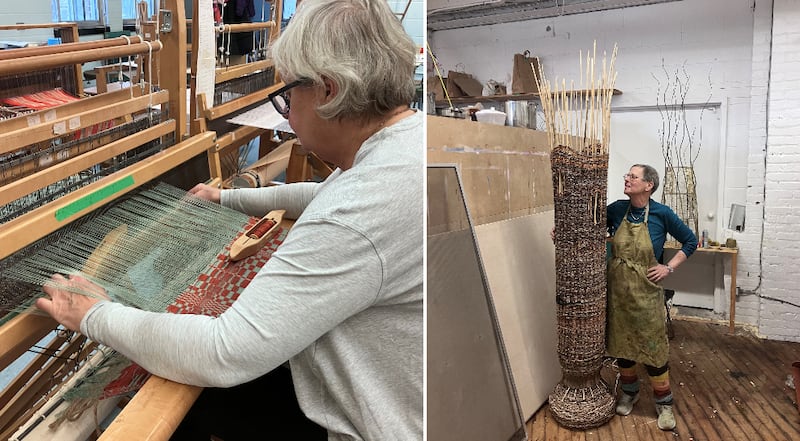 WEAVERS Weavers at the Toronto Guild of Spinners and Weavers (provided TDSB Learn4Life).
“What people go to university for is learning how to problem solve and think through things,” she told CTV News Toronto.
“Many jobs need you to be able to take a broad look at something, pick it apart, think very abstractly. And that’s one of the things that universities do.”
The Ford government announced last week that colleges and universities would be allowed to increase tuition by up to two per cent per year for the next three years, ending a freeze that had been in place since 2019.
At the same time, the province said that it would reduce the proportion of grants available through OSAP from roughly 85 per cent of total funding to a maximum of 25 per cent starting this fall.
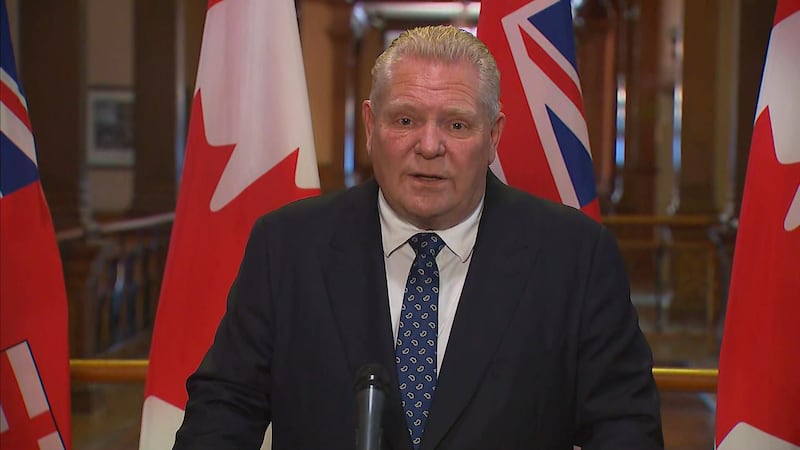 Ford
Ford
Kaufman said that she was “really surprised” by Ford’s remarks taking aim at basket-weaving.
She said that the comments made her feel as though Ford “does not value education.”
“A lot of the arts, including basket weaving, involve a level of mathematics, planning, engineering,” she said.
“If you’re using natural materials, there’s chemistry and physics involved in some of that, and biology, obviously. So there’s a real interaction between the two. You’re not going to waste your time learning fibre arts. You’re not going to waste your time learning philosophy. You just won’t.”
How much can you make in weaving?
Kaufman said weaving can also be economically viable.
“You can make anywhere from nothing to $150,000 a year weaving or doing things that are related to weaving,” she said, noting many people balance creative work with other careers.
“You never know what’s going to be practical, and you never know what is going to guide your life into a totally different direction.”
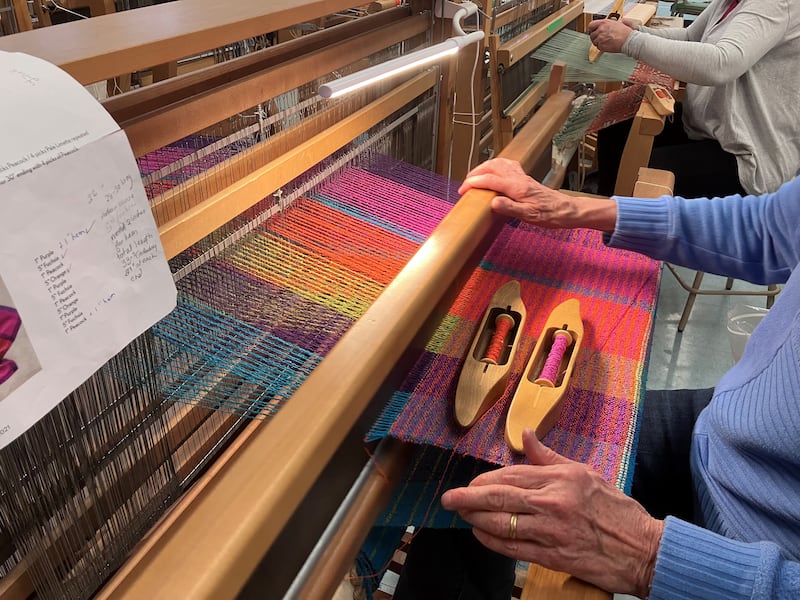 weavers A person is seen in this undated photo weaving material for the Toronto Guild of Spinners and Weavers (provided by TDSB Learn4Life). Students ‘feeling a little bit stuck’
Student leaders say the debate over programs is unfolding as financial pressure mounts.
Omar Sayyed, vice president of finance for the Ontario Undergraduate Student Alliance, said the organization supported the tuition freeze and “would have liked to see it in place for longer,” but acknowledges the phased two-per-cent cap provides predictability.
“In practical terms, (the two per cent increase) will look like about 47 cents a day for university students,” he said.
The larger concern, he said, are the changes to OSAP.
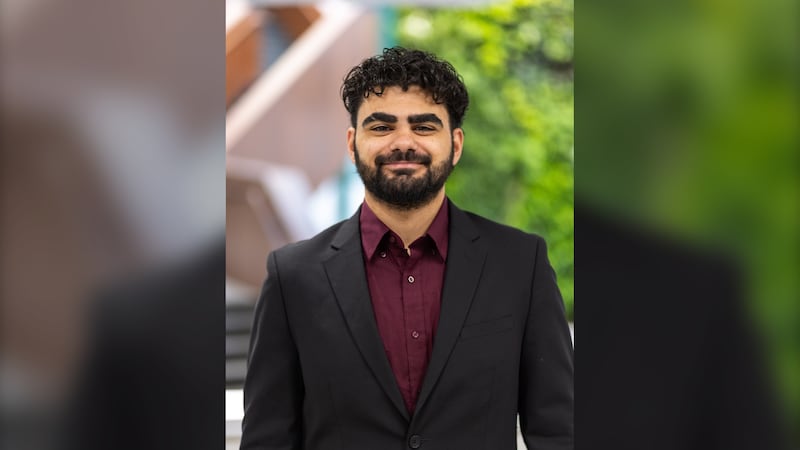 Omar Sayyed Omar Sayyed, vice president of finance for the Ontario Undergraduate Student Alliance (provided by Omar Sayyed).
“We’re definitely a lot more concerned about the changes to OSAP,” Sayyed said.
“(Shifting the OSAP structure)… that risks increasing the debt burden on students at a time when students are navigating a cost of living crisis, coupled with the highest rate of youth unemployment since 2008.”
He noted that before the latest changes, the average undergraduate student in Ontario was graduating with $28,600 in debt.
“We’re definitely hearing from current students that are kind of feeling a little bit stuck because they had planned their financial futures for one set of rules, and now they’ve had it kind of flipped on them,” he said.
‘Demand will change,’: OUSA
Sayyed also cautioned against steering students too narrowly toward so-called in-demand fields.
“It’s also important to recognize that the demand will change, and going into an in demand program now doesn’t necessarily guarantee employment in five years or when that market or economy changes,” he said.
“The demands of the economy already are one of the many factors that students use to make decisions about their education. But it’s not the only one.”
Ford, for his part, doubled down on his remarks during a media availability on Wednesday.
“The taxpayers expect the students to go through courses that are going to drive economic growth… there’s a lot of courses that don’t drive economic growth. And God bless you. You do those courses, but don’t expect the taxpayers to pay for it,” he said.
For Kaufman, the stakes go beyond one remark.
“If what Ford is saying is, we need lots of people to do work where they just do exactly what they’re told and don’t think… then he would be right in saying… do not fund people to go to university,” she said.
“Do what you feel passionate about, but know that might not be your day job.”