
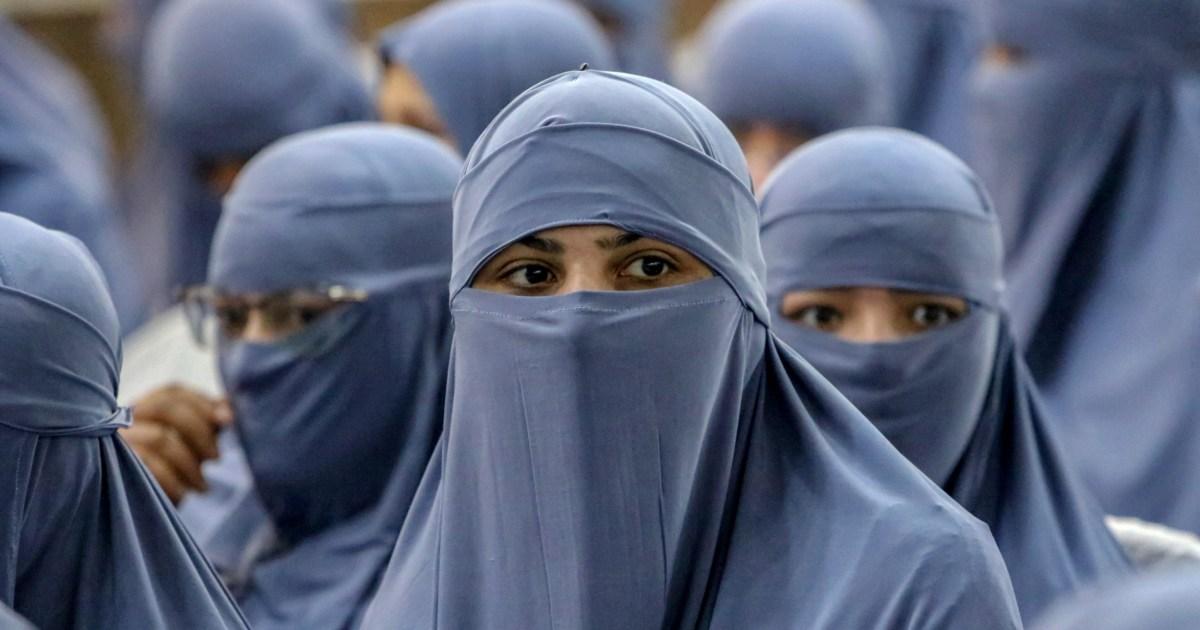
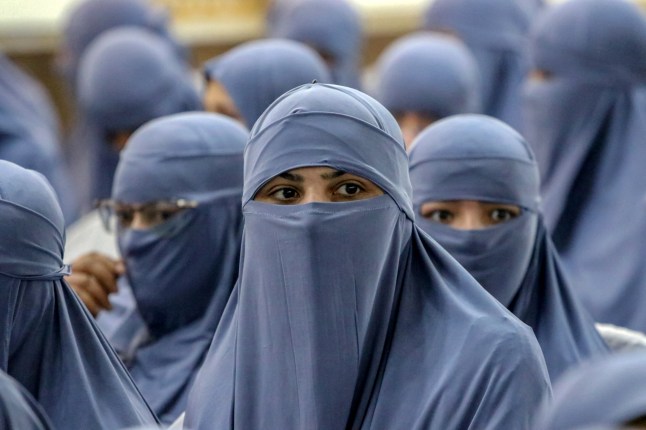
The Taliban’s leader signed the new penal code into law (Picture: EPA)
The Taliban has introduced a new penal code which allows husbands to abuse their wives and children, as long as it doesn’t break bones or cause ‘open wounds’.
The barbaric code, signed into law by Supreme Leader Hibatullah Akhundzada, would still prosecute those who cause visible fractures or injuries.
But the abuser would only be convicted if the woman can prove abuse in court – showing her wounds to the judge, while remaining fully covered.
If the man is convicted, he would only face a maximum of a 15-day sentence in prison.
The law has no mention of protecting children from assault and abuse, both physical, mental and sexual.
The law also mentions that if a woman goes to her father’s or another family member’s house without her husband’s permission and doesn’t return home, they will be thrown in prison for three months.
‘The totality of these provisions stands in clear contradiction to the principle of equality, the prohibition of gender discrimination, the prohibition of violence against women, and the right to human dignity, and seriously increases the risk of intensifying and institutionalising violence against women,’ Rawadari, a human rights organisation, said.
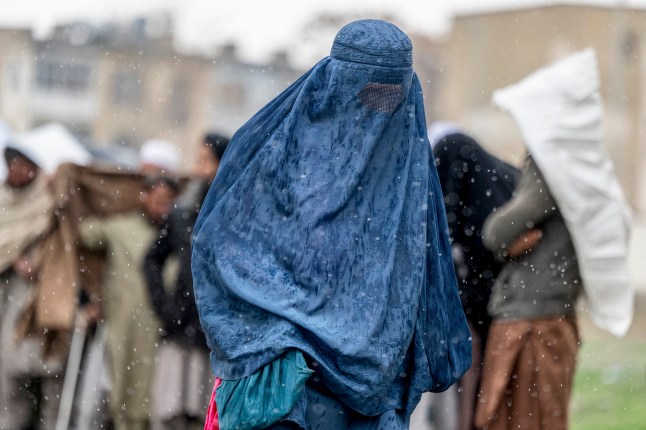
The woman would have to show her wounds – while remaining covered – in court (Picture: AFP)
Since retaking power over Afghanistan in 2021, the Taliban has cracked down on human rights, especially harming women.
In 2024, the government passed a law banning women from reading and singing in public.
The laws were part of a strict new set of ‘vice and virtue legislation’, which was approved by Supreme Leader Akhundzada.
This Is Not Right
On November 25, 2024 Metro launched This Is Not Right, a campaign to address the relentless epidemic of violence against women.
With the help of our partners at Women’s Aid, This Is Not Right aims to shine a light on the sheer scale of this national emergency.
You can find more articles here, and if you want to share your story with us, you can send us an email at vaw@metro.co.uk.
Read more:
They cover aspects of everyday life like public transportation, music, shaving and celebrations.
Article 13 specifically relates to women, making it mandatory for females to veil their bodies at all times in public while emphasising that a face covering is essential to avoid temptation as well as tempting others. It also states that clothing should not be thin, tight or short.
In addition, women are now forbidden from singing, reciting, or reading aloud in public, since the female voice is considered too intimate.
They are also banned from looking at men they are not related to by blood or marriage and vice versa.
Women are also told to cover themselves in front of non-Muslim males and females to avoid being corrupted.
Get in touch with our news team by emailing us at webnews@metro.co.uk.
For more stories like this, check our news page.
Arrow
MORE: Sexual harassment in sport is no secret – change is overdue
Arrow
MORE: My daughter died after her abuser told her to take her own life
Arrow
MORE: I didn’t consider my husband abusive – until a nurse asked this question
Comments
Add Metro as a Preferred Source on Google
Add as preferred source
News Updates
Stay on top of the headlines with daily email updates.