
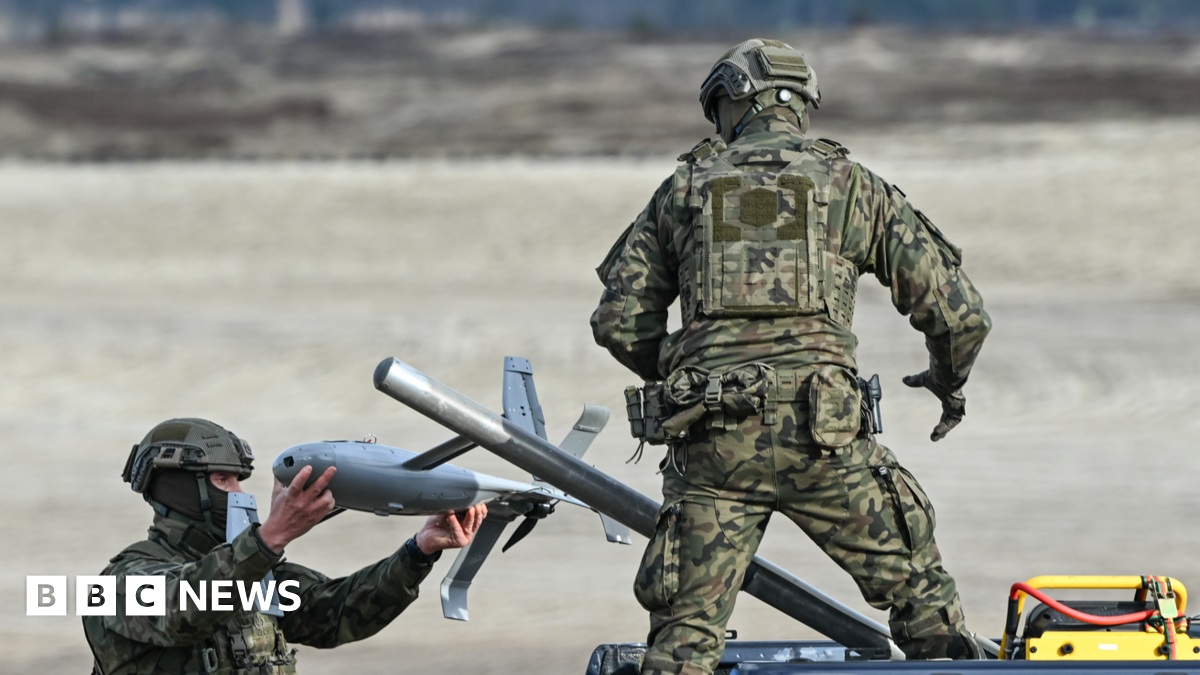
“To be effective at shooting down relatively low-cost missiles, drones and other threats facing us, we need to make sure that we’re matching the cost of the threat with the cost of defence,” said Pollard after the meeting.
He added that the drone defence plan agreed on Friday would be the first in a series of initiatives from the group of five allies, known as the E5, to change the “economics of warfare” amid the threat from Russia.
The MoD has not provided a detailed plan for how drones could be developed more quickly, but is pledging to step up co-operation with smaller technology companies and minimise operational requirements for taking part in projects.
Europe is under pressure to increase defence spending in the wake of the Ukraine war and questions over the reliability of the United States as a Nato ally.
The E5 group, which first met in autumn 2024 after Donald Trump’s re-election, has now met seven times and has emerged as a key body for boosting European defence co-operation outside the much larger structures of the EU.
Boosting the use of autonomous drones, which can independently identify targets without human control using AI, was a key part of a wide-ranging review of UK military capabilities unveiled in summer last year.
That review saw the MoD commit to developing “more permissive” regulations for such autonomous systems, in a potential shift away from the position, external that there should always be “context-appropriate human involvement” in weapons.