

Listen to this article
Estimated 5 minutes
The audio version of this article is generated by AI-based technology. Mispronunciations can occur. We are working with our partners to continually review and improve the results.
The U.S. Supreme Court struck down a number of tariffs that President Donald Trump has imposed since he returned to the White House.
While Friday’s decision removes some tariffs on Canada, others still remain in place.
Trump has also promised to slap a 10 per cent global tariff to replace the ones that the court invalidated.
Here’s what we know about the court’s decision, Trump’s latest threat and how all of it will impact Canada.
What tariffs were voided by the court?
The U.S. Supreme Court struck down the tariffs Trump implemented using a 1977 law called the International Emergency Economic Powers Act (IEEPA).
That law gives the U.S. commander-in-chief broad powers in the case of a “national emergency” and an “unusual and extraordinary threat.”
The Trump administration used a part of that act, the ability to “regulate” imports, to impose a swath of tariffs on Canada, Mexico and countries around the globe.
In Canada’s case, Trump argued that a “flood of fentanyl and other illicit drugs across our northern border” constituted a national emergency requiring a response.
The president said he would use IEEPA to hit all Canadian goods with a 25 per cent levy, though that was later walked back and only applied on goods that didn’t comply with provisions of the Canada-United States-Mexico Agreement (CUSMA). That levy was put in place in March and then boosted to 35 per cent in the summer.
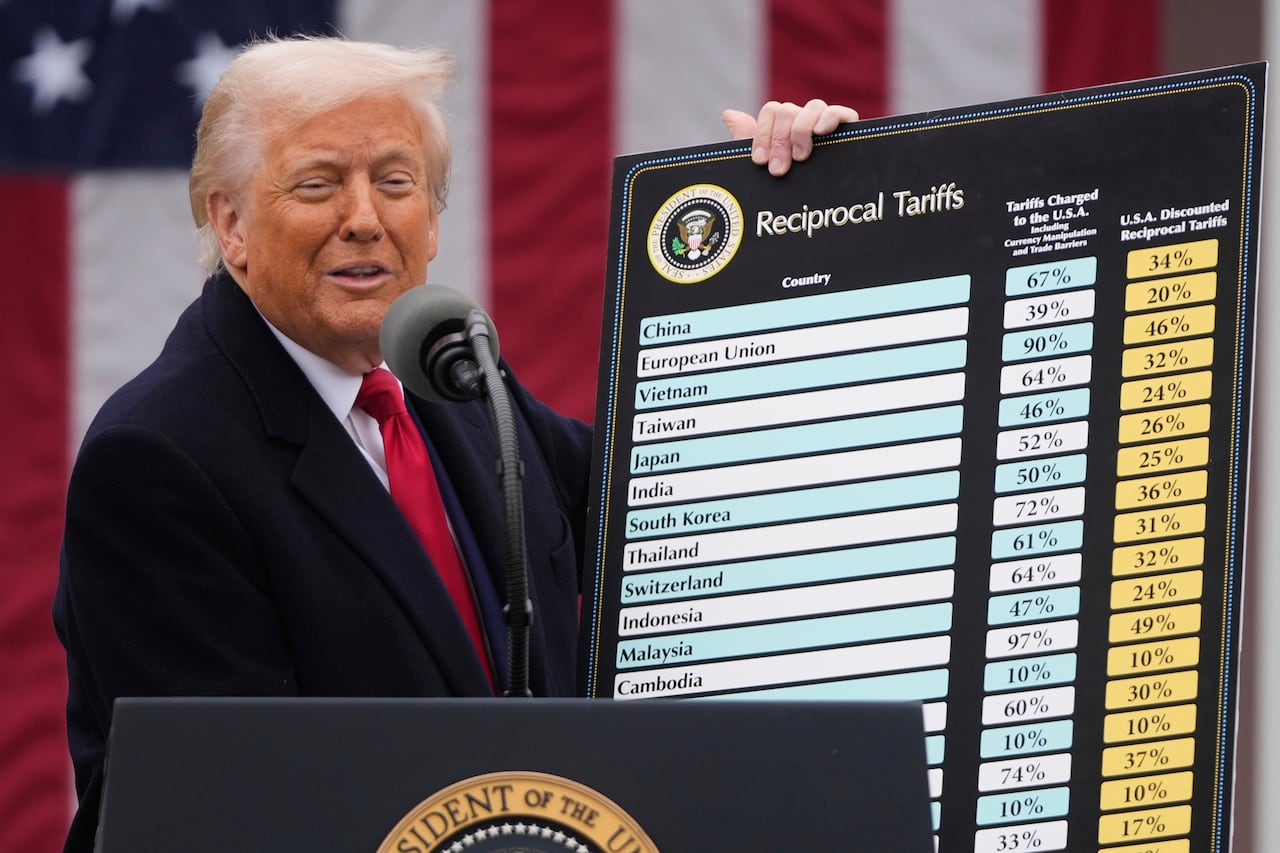 Trump’s ‘liberation day’ tariffs were also struck down by the court, though those levies didn’t apply to Canada. (Mark Schiefelbein/The Associated Press)
Trump also used IEEPA to impose his “liberation day” global tariffs that excluded Canada and Mexico. The president argued that trade deficits constituted a national emergency to justify these levies .
As of Friday, all of those tariffs have been voided.
While IEEPA gives power to the president to regulate trade in an emergency, the plaintiffs in the case argued that the act doesn’t explicitly mention the word tariffs and therefore Trump overstepped.
In a six to three ruling, the majority of judges sided with the plaintiffs, saying the act “does not authorize the president to impose tariffs.”
What other U.S. tariffs remain?
A number of other sectoral specific tariffs are still in effect.
Trump used Section 232 of the U.S. Trade Expansion Act to impose levies on Canadian steel, aluminum, copper, some automotive parts, lumber and other wood products.
Section 232 of that act allows top U.S. officials to direct the secretary of commerce to look into suspected national security threats caused by imports. Within 270 days — roughly nine months — the secretary must present the president with a report and any recommendations for action.
WATCH | Remaining tariffs still an issue, Canada-U.S. trade minister says: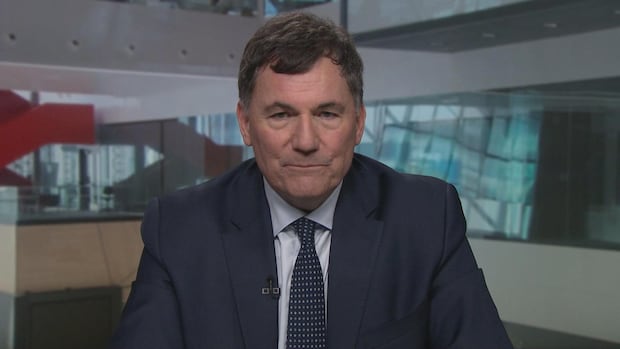
U.S. tariff ruling ‘significant’ for some sectors — but sectoral tariffs still an issue: LeBlanc
Minister of Internal Trade Dominic LeBlanc, whose interview with Power & Politics will air Friday evening, says the U.S. Supreme Court ruling striking down tariffs imposed by President Donald Trump under emergency powers will help some Canadian businesses, but he cautioned that the sectoral tariffs — including those on steel and softwood lumber — remain a concern, as does ongoing uncertainty in trade ties with the U.S.
The use of section 232 tariffs were not addressed in Friday’s court decision, only the IEEPA tariffs.
Trump also relied on section 232 to impose tariffs on metals in his first term, which were only lifted on Canadian products after CUSMA was brokered.
Trump is threatening new tariffs. Does that include Canada?
In response to Friday’s court ruling, Trump has promised a new 10 per cent “global tariff” using a different U.S. law.
Section 122 of the U.S. Trade Act (not to be confused with the Trade Expansion Act) allows temporary tariffs of up to 15 per cent — but these tariffs can only be imposed for 150 days unless Congress approves an extension.
A White House document released Friday night said the new 10 per cent tariffs will take effect Tuesday and will include Canada. But CUSMA-compliant goods will be exempt as they had been under IEEPA.
That means the new levy is lower than the 35 per cent tariff that had previously been applied. Goods that are already covered by the Section 232 tariffs are also exempted for this new tariff.
WATCH | Trump says he will impose 10 per cent global tariff after U.S. Supreme Court loss:
Trump says he will impose 10 per cent global tariff after U.S. Supreme Court loss
President Donald Trump, who took aim at a U.S. Supreme Court ruling striking down tariffs he imposed under emergency powers, says he has alternatives available to him and will move forward with a 10 per cent global tariff. CBC’s Katie Simpson looks at the top court’s ruling, Trump’s reaction and what might come next.
CIBC chief economist Avery Shenfeld told CBC News that Canada could have be in a worse position than before if Trump had decided to impose a blanket tariff rather than carving out a CUSMA exemption like before — at least in the short term.
These new tariffs can only be temporary because the extension requires Congressional approval — and the U.S. House of Representatives voted against the IEEPA tariffs on Canada just last week.
“We simply don’t know, as of today, where these policies are going to sit even a week from now, let alone six months from now,” Shenfeld said.