
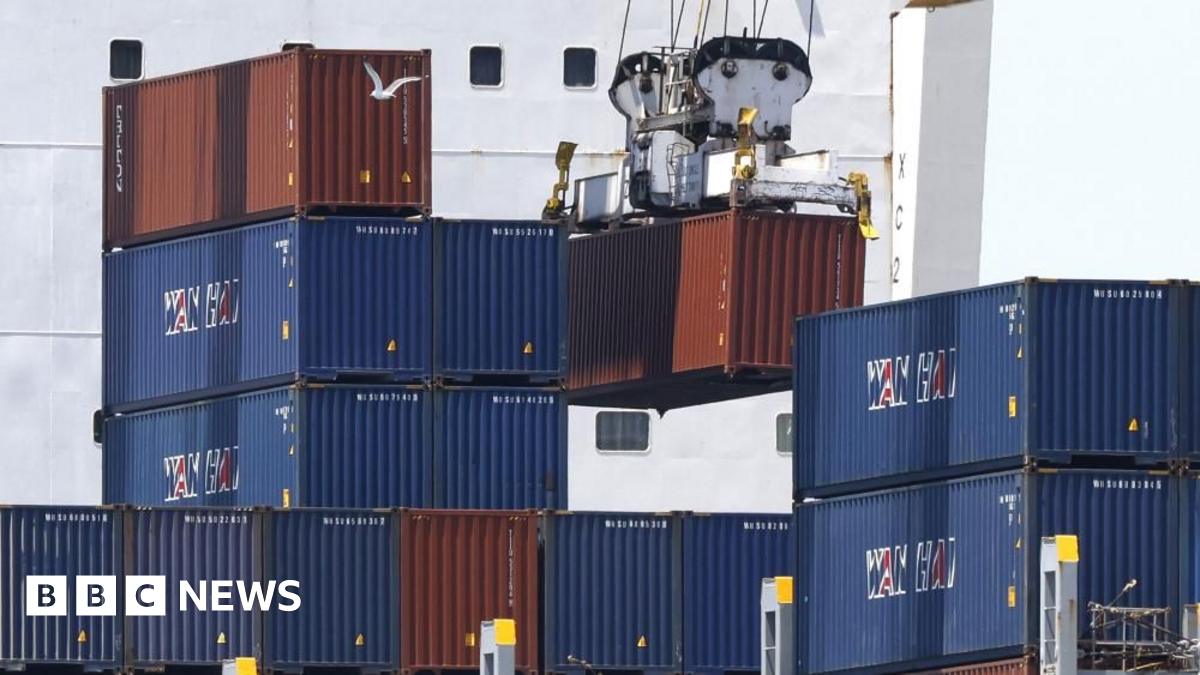
Starting at 24 February at 12:01 EST (05:01GMT), the new 10% tariffs will be imposed on almost all imports to the US, regardless of where they come from, according to the White House.
A White House official told the BBC that countries that struck trade deals with the US, including the UK, India and the EU, will also face the global 10% tariff under Section 122 rather than the tariff rate they had previously negotiated.
The Trump administration expects those countries to keep abiding by the concessions they had agreed under the trade deals, the official added.
Some goods will be exempt from the tax “because of the needs of the U.S. economy” or in order to better target the duty.
These fall into major categories so that some critical minerals, metals, energy products, natural resources, food crops, pharmaceuticals, electronics, cars and trucks, and aerospace products will be exempted.
Also, “informational materials (e.g., books), donations, and accompanied baggage” will not be taxed, according to a White House fact sheet.
For many of the categories of exempt goods, the proclamation is broad and does not specifically say what items might be exempt.
Another important exemption is goods that are part of the USMCA – the trade agreement between the US, Mexico and Canada. Those goods were also exempt from the IEEPA tariffs and Prime Minister Mark Carney has often said Canada is among the countries in the world with the lowest tariff rate due to the USMCA exemption.
Similarly, textiles and apparel from Costa Rica, the Dominican Republic, El Salvador, Guatemala, Honduras, and Nicaragua will remain duty-free under the Dominican Republic-Central America Free Trade Agreement.
At the same time, Trump said he is keeping up tariffs on low-cost goods. Last year, he ended what was known as the de minimis exemption, which had allowed goods valued at $800 or less to enter the US without paying any tariffs.