
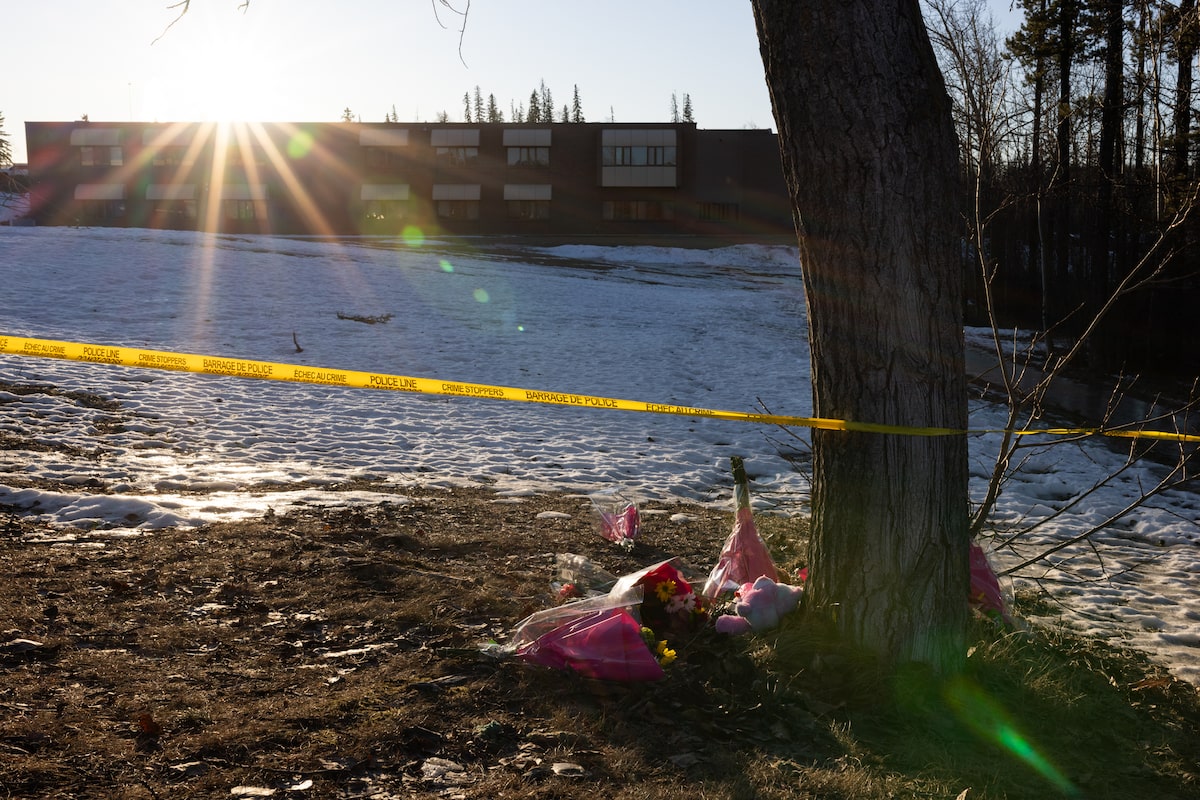
A memorial for the victims of a mass shooting at a high school in Tumbler Ridge, B.C., is seen last week.Jesse Winter/The Globe and Mail
It’s unlikely students will return to classes at Tumbler Ridge high school in British Columbia after a recent mass shooting, the chair of its school district said, adding no decision has been made yet.
Chad Anderson said the school district is awaiting advice from a B.C.-based consultancy called Safer Schools Together, which has experience dealing with traumatic events.
The Peace River South School District will also consult the Tumbler Ridge community of about 2,400 in northeast B.C. on how it wants to proceed, he said.
“I think all the information we have up to now is that it’s not likely that the building has a future, but we wait for their advice,” Mr. Anderson said, adding it’s too early for long-term decisions.
Earlier: Temporary school trailers to arrive in Tumbler Ridge as town weighs return to classes
An 18-year-old shooter entered the Tumbler Ridge Secondary School on Feb. 10 and killed five students and an educational aide. The shooter later died of an apparent self-inflicted wound, while two other victims, the shooter’s mother and half-brother, were found dead at the family home.
The secondary school as well as the local elementary school, located about a kilometre away, have been closed since the shooting. The school district is beginning to make plans for the elementary students to return to their classrooms, but it will take longer for high school to resume, Mr. Anderson said.
Staffing the secondary school classes could be a concern, he added. It may take time for some teachers to be emotionally ready to return, considering the trauma that some experienced.
“People will be moving on different timelines,” Mr. Anderson said.
When he visited the community a few days after the shooting, B.C. Premier David Eby said no student would be forced to go back to the school.
Survivors of past Canadian school shootings reflect on tragedy in Tumbler Ridge
Portable trailers that can serve as classrooms and restrooms arrived in Tumbler Ridge this week and are being connected to heat, electricity and running water in the first phase of a temporary setup for the high-school students. The portables have been placed in the field adjacent to the elementary school and will eventually be replaced by larger, double-wide trailers, expected to arrive in about three weeks.
B.C. Infrastructure Minister Bowinn Ma said the government intends to help the community rebuild its physical learning spaces and support its emotional healing.
“We know that it will take time for people to begin to feel safe in their community spaces again. No student, staff member or family should feel pressured to return to school before they are ready,” Ms. Ma said.
The principal of the district’s distance learning school was in Tumbler Ridge this week to meet with students and parents interested in exploring that option, Mr. Anderson said.
Across the country from Tumbler Ridge, another tiny town is shaken by its ties to the B.C. tragedy
Opinion: Can understanding the Tumbler Ridge shooting help prevent future tragedies?
He added that parents and students will likely hold a range of views on whether or not it’s appropriate to go back to a school where a tragedy took place. A plan for consulting the community on the school’s future is not yet complete.
Keisha Homister is the parent of a child in Grade 7 at Tumbler Ridge Secondary who missed school that day to attend a medical appointment. She said she was initially opposed to the idea of students returning to the building, but she has since changed her mind. She was persuaded by her niece, 12-year-old Maddy Mansky, who has spoken out in favour of returning to the school.
In Sandy Hook in Connecticut, where a mass shooting took place at the elementary school in December, 2012, the school building was demolished less than a year later and a new school was eventually built. At Columbine high school in Colorado, where a mass shooting took place in April, 1999, the library where many students were killed was torn down and the school reopened.
“The real concern here is psychological safety given the level of trauma that was suffered there,” Mr. Anderson said.