
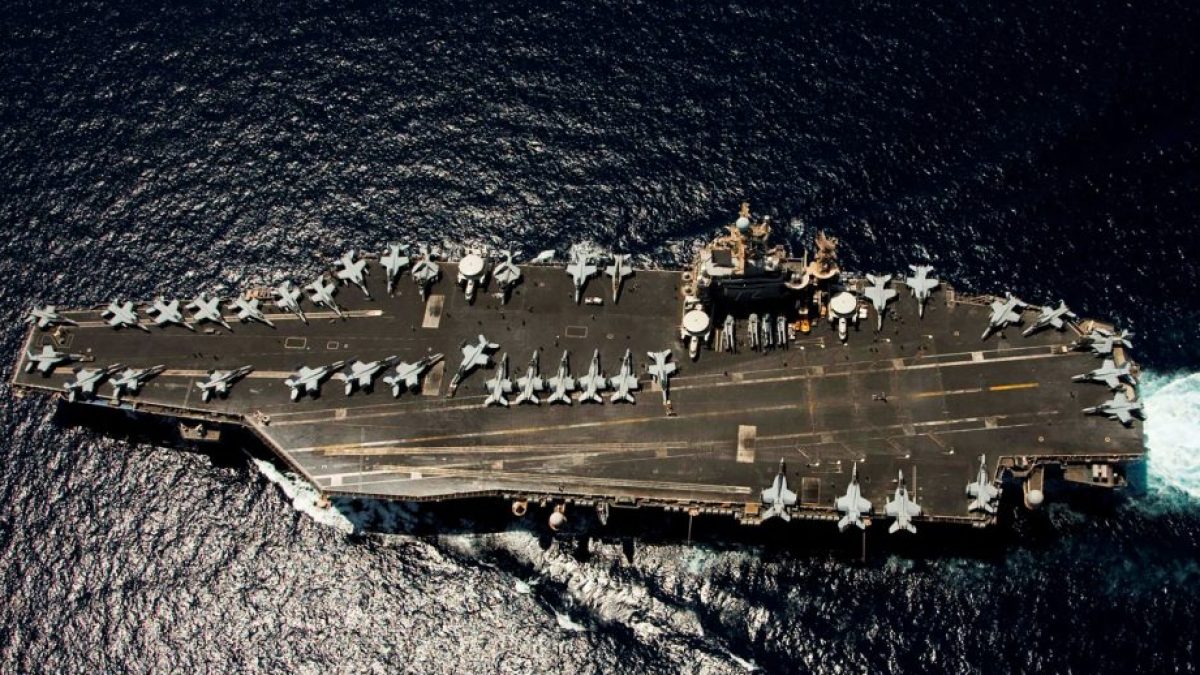
Hesitance in supporting possible American military action against Iran stems from concerns over breaching international law
US fighter jets have continued flying into UK airbases even after the British Government refused to co-operate with Washington in strikes on Iran, The i Paper can reveal.
The UK is understood to have withheld permission for US forces to use UK bases, such as RAF Fairford in Gloucestershire and the British Overseas Territory of Diego Garcia, in the Indian Ocean, to carry out strikes in the Middle East.
The decision is believed to have been made during a phone call between Sir Keir Starmer and Donald Trump on Tuesday evening.
New FeatureIn ShortQuick Stories. Same trusted journalism.
Since then, at least 28 US military flights have used airbases in the UK and Cyprus to carry out one of the largest build-ups of US military strength in the Middle East for decades, according to open source flight-tracking data analysed by The i Paper.
Nato sources said the flights represented the start of a “significant air campaign” and concluded that a strike on Iran was probable. On Thursday, Trump appeared to give Tehran a 10-day deadline to strike a deal on its nuclear programme, saying “bad things will happen” otherwise.
The US military flights were tracked using open source flight-tracking software, photos taken by plane enthusiasts at airbases and satellite image analysis of military bases which were then verified by this paper.
The flights have taken off and landed from US air force facilities based in the UK, including RAF Mildenhall and RAF Lakenheath, where the Pentagon has long-standing access to airfields through a lease agreement.
Strategic American aircraft, capable of transporting heavy weaponry and troops, were tracked using US airbases at Prestwick, Scotland – a key transatlantic fueling station for deployments towards the Middle East.
Diego Garcia, the largest of the Chagos Islands, is a key strategic base for any potential military strikes on Iran. But the UK Government is believed to have denied the White House permission to use its airbase on the island as a launchpad for military action in the region.
While Washington would require permission to launch strikes from sovereign UK bases, the Pentagon has more autonomy to pass equipment through leased airfields in UK territory.
The ban is understood to have caused dissatisfaction in the White House, leading to Trump’s public criticism of Starmer’s deal to hand the islands over to Mauritius while leasing the airbase.
In a post on social media on Thursday, Trump said: “Should Iran decide not to make a deal, it may be necessary for the United States to use Diego Garcia, and the [RAF] Airfield location in Fairford [Gloucestershire], in order to eradicate a potential attack by a highly unstable and dangerous regime.”
A significant air campaign
Despite the UK’s resistance, the Pentagon has continued to deploy a staggering volume of military aircraft heading to bases in Europe and the Middle East in recent days, according to a comprehensive analysis of open source information by The i Paper.
The deployments include at least 76 transport and tanker aircraft over the past week – 30 more than are believed to exist in Britain’s entire RAF fleet.
In a 48-hour period between 17 and 18 February, specialist US military aircraft and carrier planes, including Boeing KC-135R Stratotankers used for refueling military jets over long flights with transfer capacity of up to 200,000lbs of fuel, have been landing at airbases across Europe and the Middle East at a far larger scale than normal.
It is probable that a number of the tankers that have arrived in recent days were accompanied by fighters. However, US air force fighter jets rarely enable their public location transponders, making them difficult to track.
More than twice the number of planes have been deployed to bases in Europe and the Middle East compared with a previous build-up in the aftermath of Iran’s deadly repression of peaceful protests in January.
In total, this newspaper has verified that at least 128 US military aircraft have flown to bases in Europe and the Middle East since the start of the year, representing one of the largest deployments of US military presence in the region in decades.
Aircraft used by the US military for the rapid deployment of troops and equipment as well as at least six Boeing E-3B Sentry planes – flying operational centres essential to ground force operations – have flown to Europe and the Middle East this week.
Two Nato officials, who were shown the aircraft identified by this paper, said the movements symbolised the kind of build-up you would expect ahead of a “significant air campaign”.
An analyst at the military alliance said they believed there was a 70 per cent chance the US would strike Iran in the coming days, but admitted it was hard to predict “Trump’s intent [to] bluff or commitment to strike” from military movements alone.
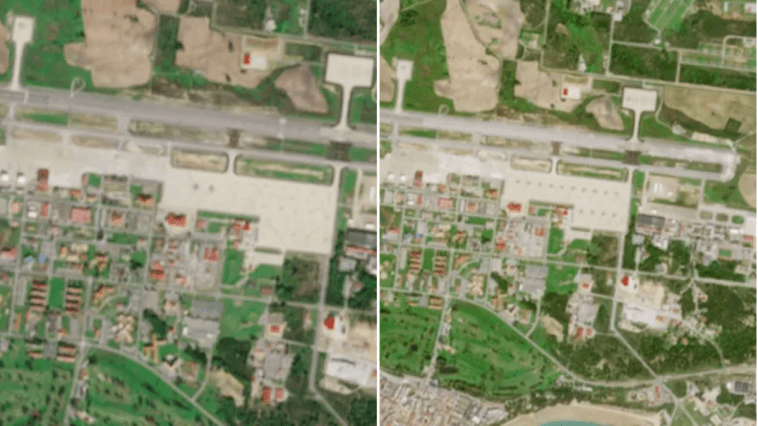 Satellite images taken on 10 January, left, appear to show just two large planes on the tarmac at Naval Station Rota, while images from 19 February, right, show 15 (Photo: Copernicus Sentinel data 2026)
The US President has utilised bases across Europe for his strategic build-up, including the Naval Station Rota in the south of Spain. The airfield, which acts as a hub for fuel and logistics for US forces in the region, has welcomed at least 15 Stratotankers this week, according to satellite imagery analysed by The i Paper.
At least 12 US tankers have flown to Sofia, Bulgaria, where the city’s airport was closed to non-military flights on Friday.
In announcing these plans, Bulgaria’s deputy foreign minister said “they are all on their way to Iran. Apparently it’s going to get very hot there very soon”.
Pressure on peace talks
The movements come amid ongoing nuclear peace talks between Washington and Tehran in Switzerland. US Vice President JD Vance told Fox News on Tuesday that Trump has “set some red lines that the Iranians are not yet willing to actually acknowledge and work through”.
Iran’s supreme leader, Ayatollah Ali Khamenei, has warned that “the Americans should know that if they start a war, this time it will be a regional war”. The regime’s forces held a naval exercise on Monday named “Smart Control of Hormuz Strait”.
The UK’s hesitance in supporting US military action against Iran stems from concerns over breaching international law.
Before launching any military operations from UK military bases the US would need permission, thereby implicating Britain as a supporting party with “knowledge of the circumstances of the internationally wrongful act”.
Your next read
Emma Salisbury, a senior fellow at the Foreign Policy Research Institute, said the build-up of forces meant that a “military option” was “firmly and credibly on the table, giving extra leverage to the Americans in their negotiations with the Iranian regime”.
She told The i Paper: “The Trump administration has not so far been inclined to worry about international law when intervening overseas, so it is unlikely to change any of its plans in order to comply.”
A spokesperson for the Ministry of Defence said: “There is a political process ongoing between the US and Iran, which the UK supports. Iran must never be able to develop a nuclear weapon, and our priority is security in the region.”