
Britain’s top Nato officials have warned the government that uncertainty about defence spending and the speed of rearmament risks undermining the country’s status as a leading member of the military alliance.
The Ministry of Defence has been warned the UK risks being relegated to the bottom tier of the Nato league tables according to spending as a proportion of GDP and progress in meeting the alliance’s capability requirements.
The message is understood to have been relayed by Angus Lapsley, the UK’s permanent representative to Nato; Nick Catsaras, a Nato assistant secretary-general; and Sir Keith Blount, a Royal Navy admiral and Nato’s outgoing deputy supreme allied commander Europe.
There is concern among British defence sources that unless the prime minister addresses Nato’s concerns he could be criticised by President Trump and Mark Rutte, the Nato secretary-general, who is aligned with the president in thinking America’s allies need to step up.
It has been reported that Sir Keir Starmer wants to accelerate increases to the defence budget and the latest disclosure will pile pressure on the Treasury, which is said to be resisting the move.
Under plans announced last June, before a Nato summit, the prime minister committed himself to spending 2.5 per cent of GDP on defence by April next year, with the “ambition” to increase this to 3 per cent by the end of the next parliament. Weeks later at the Hague, Starmer and the leaders of 30 other member states, pledged to hit Trump’s target of spending 3.5 per cent on core defence by 2035.
However, a new UK defence investment plan has been repeatedly delayed because of warnings from defence chiefs that its proposals can only be met if the higher spending targets are hit more quickly.
• Double defence spending or face war, Keir Starmer warned
Nato is said to have become increasingly frustrated by Britain’s failure to live up to its promise to lead the alliance in Europe. These tensions have been relayed to London by Britain’s leading representatives in Brussels. They were also discussed on the sidelines of the Munich security conference last weekend.

Angus Lapsley
GINTS IVUSKANS/DEFODI IMAGES/GETTY IMAGES
Sources said Lapsley had warned the MoD that Britain, now a mid-table member in terms of spending as a proportion of its GDP, risks sinking down the table within two to three years, potentially to the bottom third of the 32 members.
According to Nato’s data, last year Britain was the 12th biggest spender proportionally, falling from third place in 2021. Driven on by the war in Ukraine, countries such as Poland have surged ahead. Warsaw doubled its defence spending from 2.2 per cent to 4.5 per cent over the same period.
While the UK remained the largest European spender in cash terms until 2024, Germany’s decision to sharply increase its military budget to 3.5 per cent of GDP by 2029 has led it to eclipse the UK as the continent’s dominant force.
A British defence source said Friedrich Merz, the German chancellor, was “prepared to lead on defence in Europe” and, unlike Britain, was unrestrained by the cost of maintaining a nuclear deterrent. “We argue that Nato should take more account of our nuclear costs, but the response is that we have been a major nuclear power for fifty years and have never made that case before,” said the source.
Before Christmas, Blount is also said to have issued similar warnings.
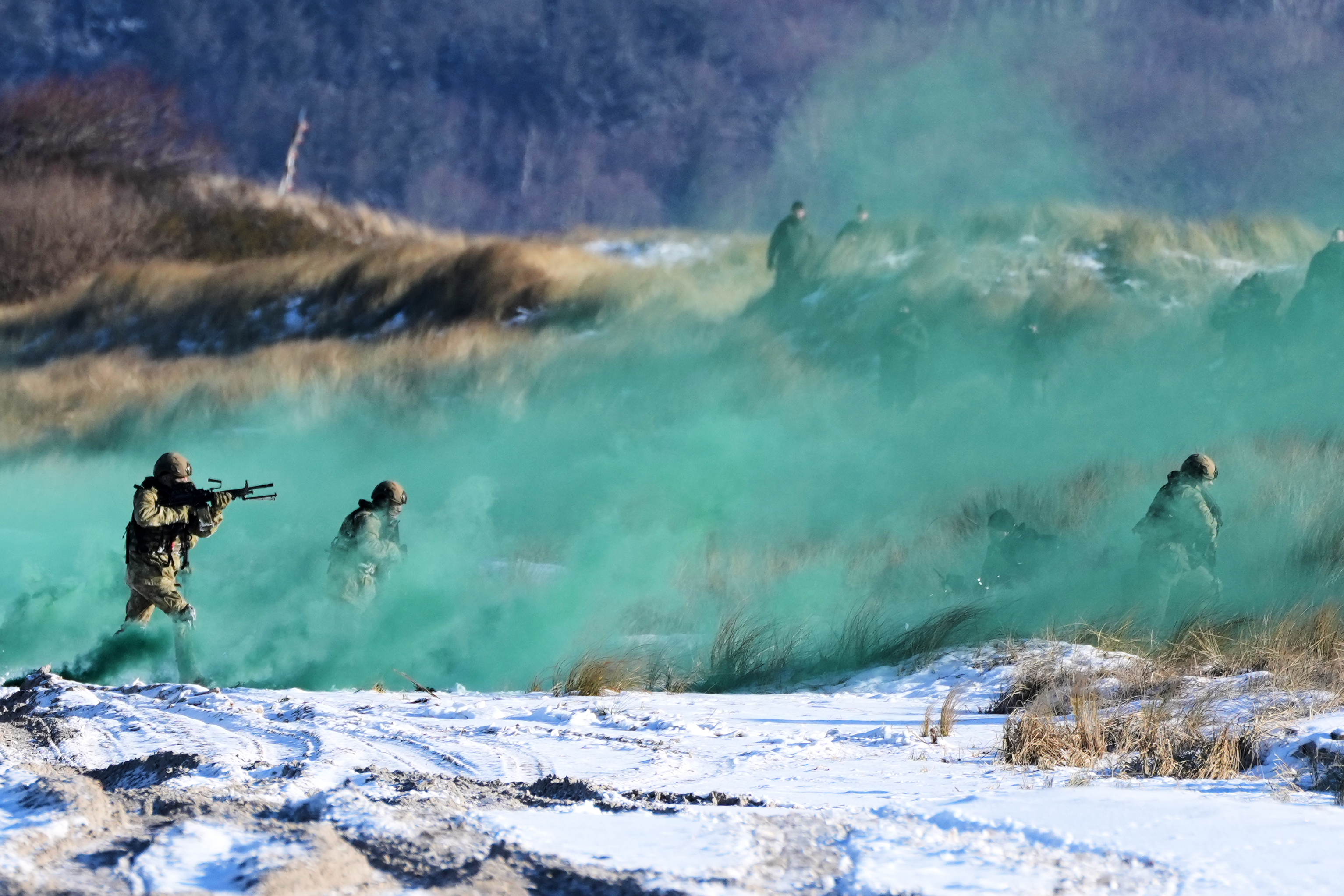
The Nato-led Allied Reaction Force takes part in exercises on Wessek Beach, Putlos, Germany, on Wednesday
VIRGINIA MAYO/AP

The exercise Steadfast Dart took place over the past week
LIESA JOHANNSSEN/REUTERS
While the Treasury is said to have told the MoD it will not reconsider defence spending plans until Nato conducts its own threat and capability review in 2029, Blount has told officials he believes the alliance will ask more of member states, not less.
In discussions in recent weeks, Catsaras, a former deputy national security adviser to Starmer, is said to have raised the alarm about the UK’s progress in meeting its Nato responsibilities.
These capability requirements are issued to member states to ensure that Nato is collectively able to deal with the threats it faces. Each member brings different capabilities and Nato places particular emphasis on the UK’s nuclear deterrent, provided by its four Vanguard submarines.
The latest set of targets was issued last year and encompassed air defence, aircraft, tanks, drones and personnel. However, it is understood Catsaras has told the government that Nato believes the UK is falling behind other members in progress on meeting its 2025 targets and is 31st out of 32 members.
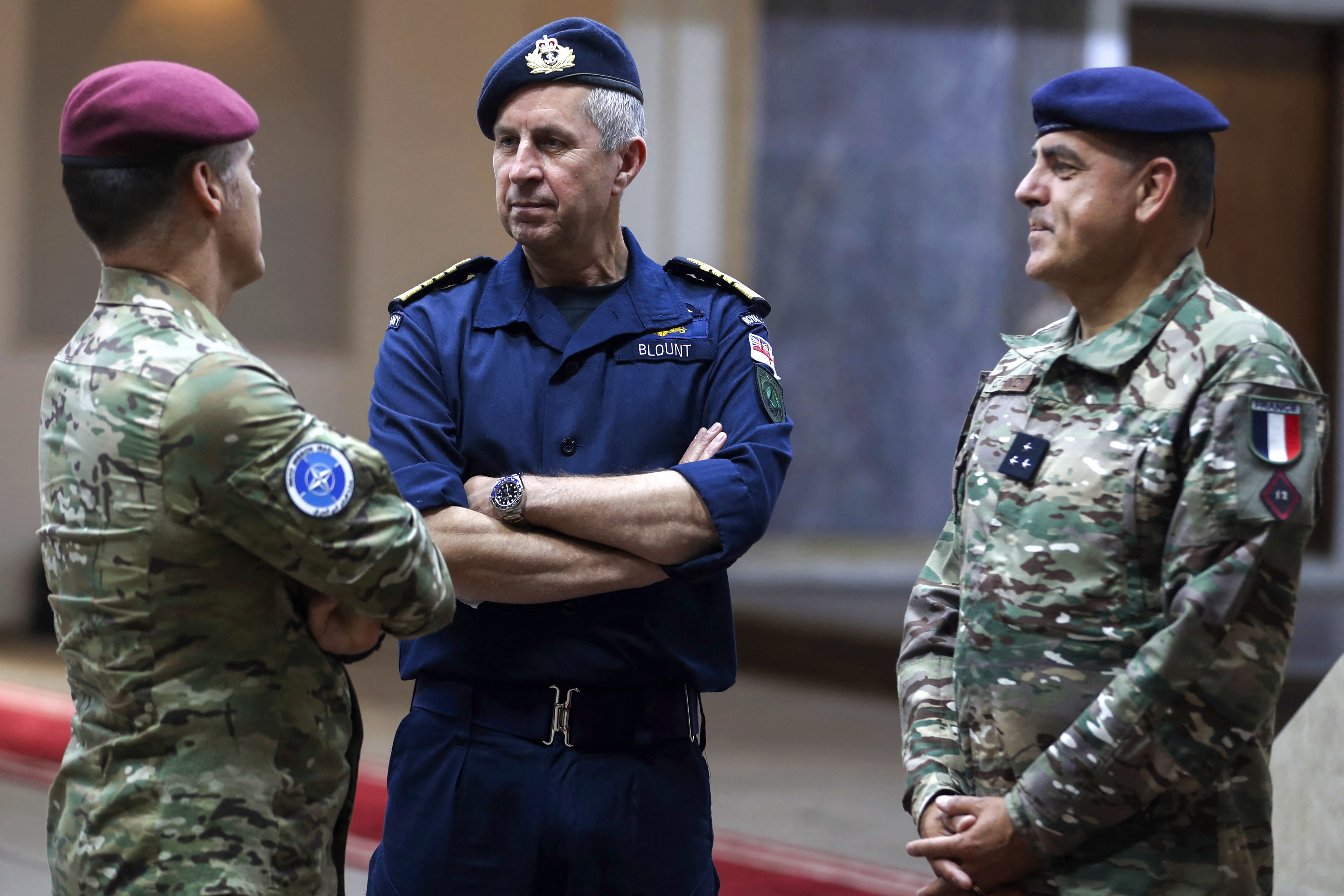
Admiral Sir Keith Blount, centre, said Nato would be expecting more of member states
AHMAD AL-RUBAYE/AFP/GETTY IMAGES
Colonel Martin O’Donnell, a senior Nato spokesman for Blount, said: “I am not going to elaborate publicly on any private conversations that Nato leadership have had with anyone. What I can say is that Nato has made it crystal clear: European allies and Canada must do more. Delivering a credible defence spending path to 5 per cent as agreed by all 32 nations in the Hague as well as real military capabilities to the alliance is a necessity now more than ever, and a long-term investment in Euro-Atlantic security.”
• Germany asks Ukraine to train its soldiers in drone warfare
Sir Grant Shapps, the former Conservative defence secretary, said the warning from Catsaras “should be a blaring alarm bell in Downing Street”.
He said: “At a moment when Europe is crying out for leadership, Britain should be straining every sinew to be Europe’s foremost defence power — not drifting towards the relegation zone of the Nato league table. For the UK to be languishing near the bottom on delivery of agreed Nato capability targets would be an abdication of our responsibilities, bad for our security and disastrous for our influence.” He added: “It must be fixed, fast.”
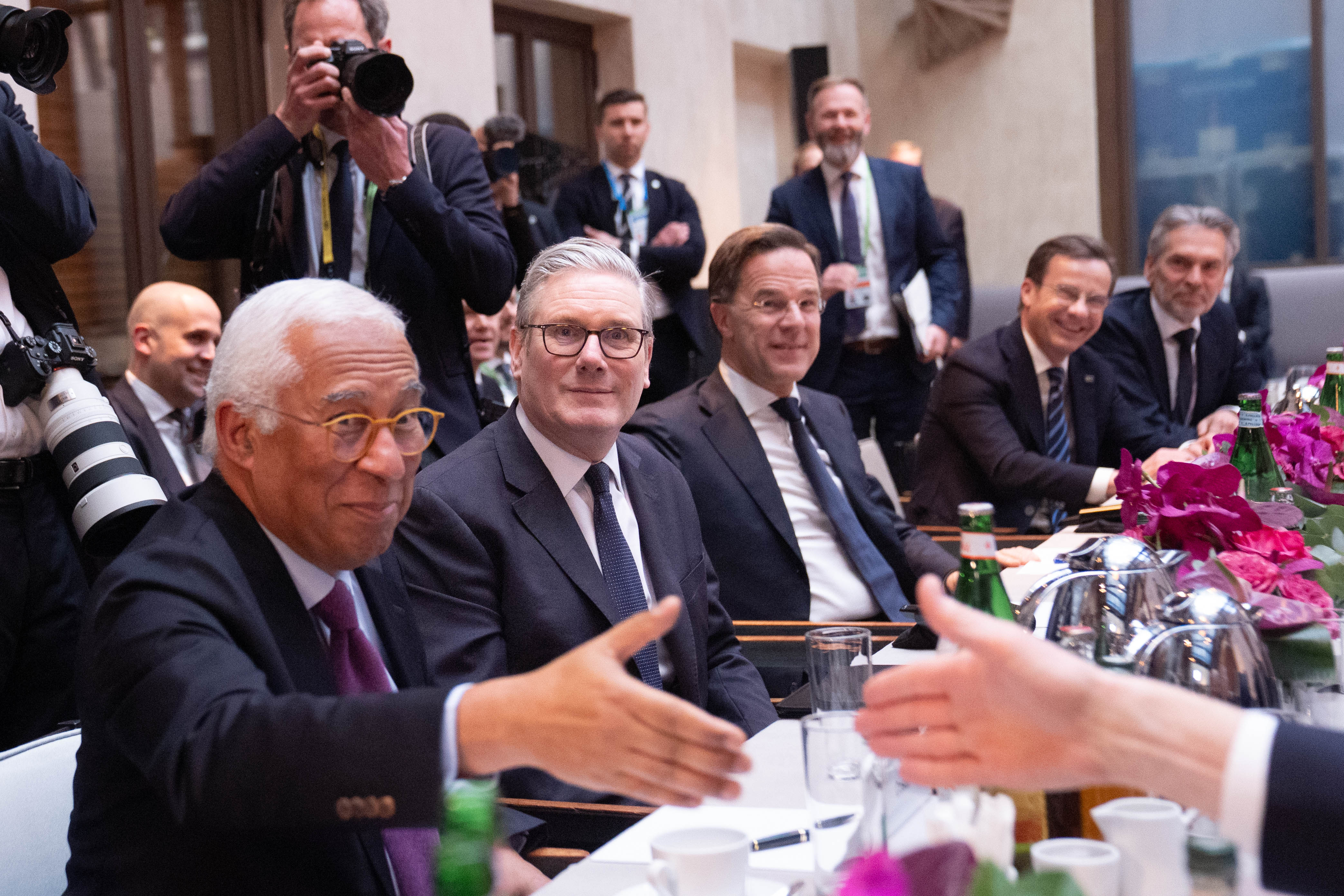
Antonio Costa, the president of the European Council, with Sir Keir Starmer and Mark Rutte, the secretary-general of Nato, at the Munich Security Conference in Germany on Friday, February 13
STEFAN ROUSSEAU/PA
Starmer has repeatedly said he aspires to lead a “security” government. Last March, he told workers at a shipyard in Barrow-in-Furness, where the next generation of Dreadnought-class nuclear-armed submarines are under construction, that the country’s security “depends on you”.
But Rachel Reeves, the chancellor, has been accused of falling into the trap of “Treasury orthodoxy”, by refusing to budge on her fiscal rules which prioritise lowering debt and allow borrowing only for investment, not day-to-day spending.
A Labour adviser said there was a case to be made that rearmament could “power high-quality vocational education and expand skilled blue-collar employment” across Britain. “But that case is not being made and the Treasury is standing in the way,” they said.
Last week, several former military chiefs wrote to the prime minister to say the armed forces had been “hollowed out by years of chronic underfunding”.
It called for a resolution to the delayed defence investment plan and accused Labour of being “in denial” about the state of the military. It included signatures from Shapps and Sir Ben Wallace, another former defence secretary, Sir Richard Dearlove, the former head of MI6, General Lord Dannatt, the former chief of the general staff, and Admiral Lord West of Spithead, the former first sea lord.
Britain’s armaments and infantry levels are significantly lower than those of European allies. Britain has just 67 fighter aircraft and around 190 tanks ready to deploy. In contrast, France has 180 aircraft and 340 tanks.
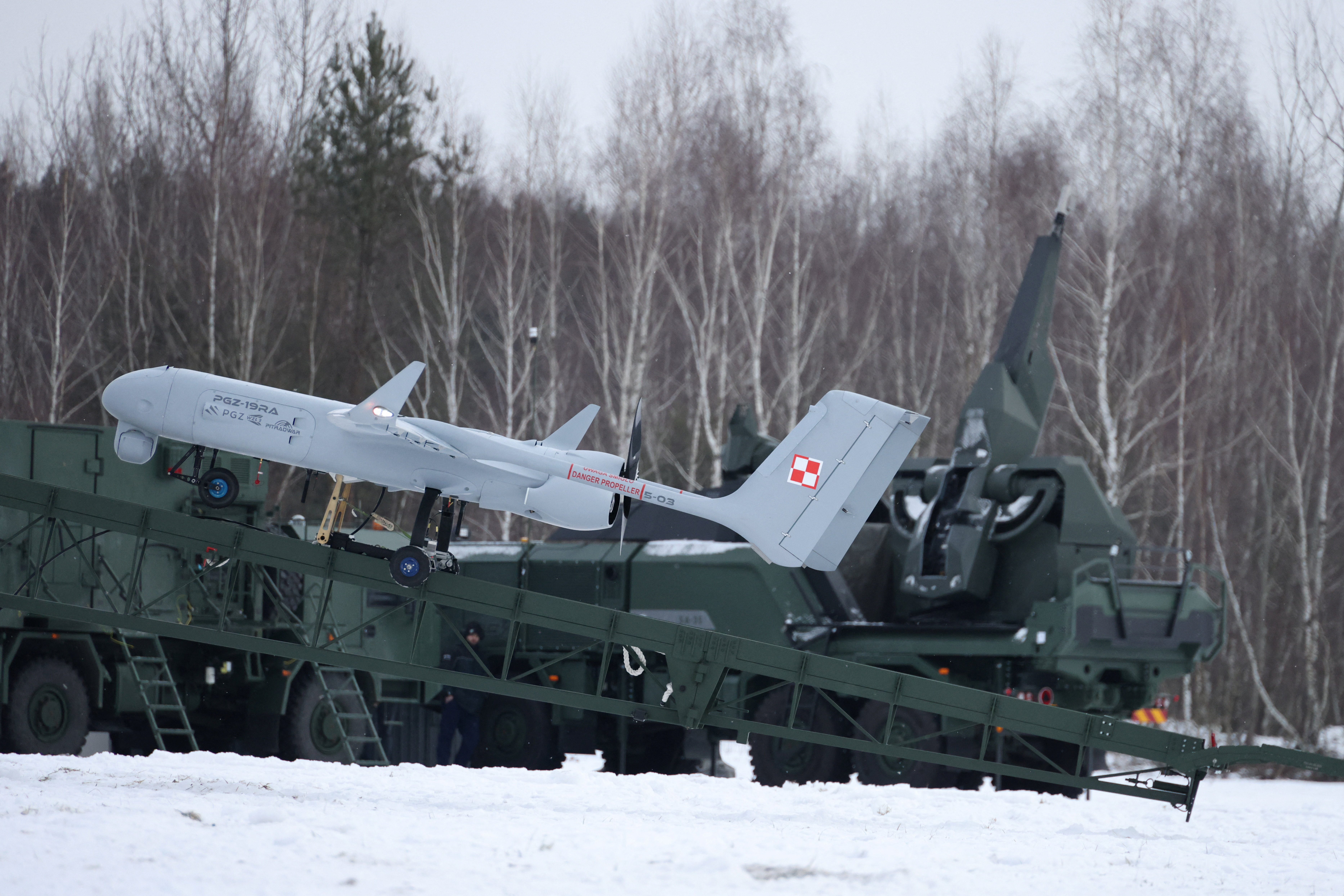
A Polish-made PGZ-19RA Orlik unmanned aerial vehicle
KUBA STEZYCKI/REUTERS
Poland has bought almost 1,000 tanks and dozens of aircraft. Last month, Warsaw pledged to increase the size of its infantry to 500,000 personnel by 2039.
• Trump’s scepticism on Nato means Europe must be self-sufficient
Britain’s entire armed forces, not all of which are deployable, amounts to around 180,000 personnel. Russia has about 1.32 million active service personnel, more than 500 aircraft and almost 4,000 tanks ready to deploy.
Asked about the Nato officials’ interventions, a government spokesman said: “The UK is the third-highest defence spender of all Nato nations, and we are a leader in the alliance — from committing our nuclear deterrent to Nato to recently doubling the number of personnel to be deployed for Arctic and High North security.
“We are delivering the largest sustained increase in defence spending since the end of the Cold War, hitting 2.6 per cent of GDP from 2027, and the UK defence budget will total £270 billion across this parliament alone.
“The UK has also made the historic pledge to hit 5 per cent of GDP spend on national security, with a target date of 2035. With our allies, we are ready to deter together and fight together and we welcome the increased spending on defence across Nato.”