
Not all losses are equal and England’s past two have been so galling as to surrender much of the goodwill built up by 12 consecutive Test victories over the preceding year.
These defeats have also featured recurring themes. Scotland and Ireland looked like they had studied England’s successful run and had tailored plans to nullify their strengths. Both sides bossed the aerial battle, defended more robustly and attacked with greater fluency.
Steve Borthwick, the England head coach, is fastidious and will pick through the wreckage. But there are two particularly difficult truths from the Ireland game. First, the scrum was the only area that remained consistently effective over the 80 minutes. Second, pillars of England’s success in 2025 appeared to crumble, leaving awkward questions for Borthwick.
Attacking issues: selection or strategy?
Afterwards, Borthwick bemoaned England’s inability to exert “scoreboard pressure” by seizing early chances. A failure to convert territory into points can hold up a mirror to several issues, such as indiscipline and ball security.
Over the past fortnight rivals look to have benefited from the balance of England’s team and a relative lack of punch. When defending their own tryline, sides push 14 or even 15 men up into the front line. Navigating these crowded spaces requires slick ball movement, tackle-breaking power or both.
Here, in the 12th minute, England have crossed the Ireland 22 — as they did a whopping 12 times in the match — and made it to within five metres of the whitewash thanks to strong carries from Henry Pollock, Ollie Lawrence and Ellis Genge. Watch Freddie Steward sweep around from England’s right to left here:
He almost reaches a position where George Ford can feed him behind the “front door” run of Fraser Dingwall. With Ben Earl and Henry Arundell (out of shot) further wide and Robert Baloucoune as Ireland’s widest defender, a pull-back to Steward would have almost certainly led to an England score.
However, perhaps because Steward does not call for that pass or does not quite end up tight enough to become an outlet for his fly half, Ford transfers to Dingwall. Jack Crowley stands firm and Ireland dip into the breakdown to slow the next ruck.
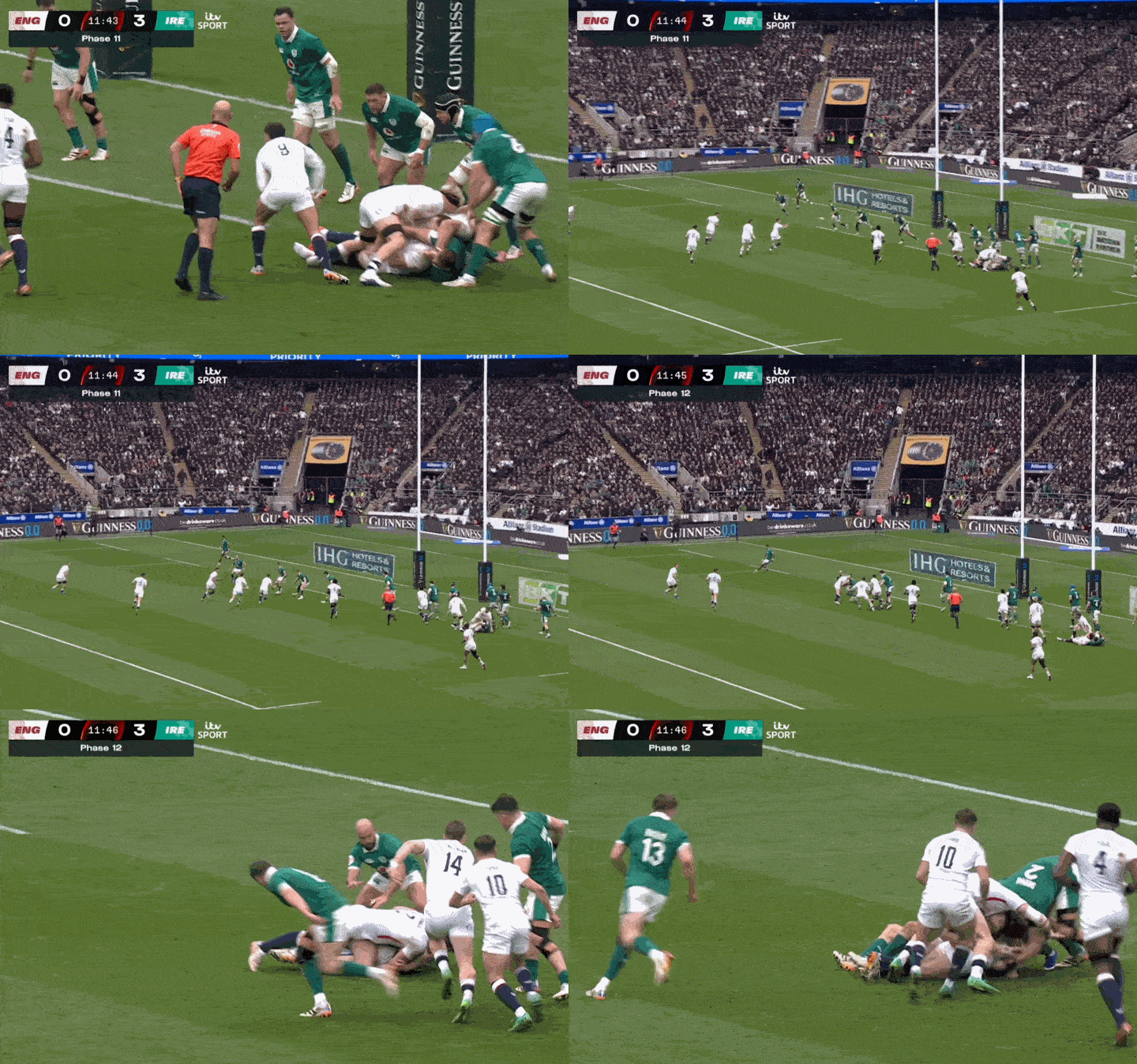
Ireland’s defence is in a far better place on the following phase, with Jamie Osborne circling around to fill in at full back.
Alex Mitchell loops a pass towards Steward. Baloucoune, excellent on both sides of the ball, jams in and a fumble results.
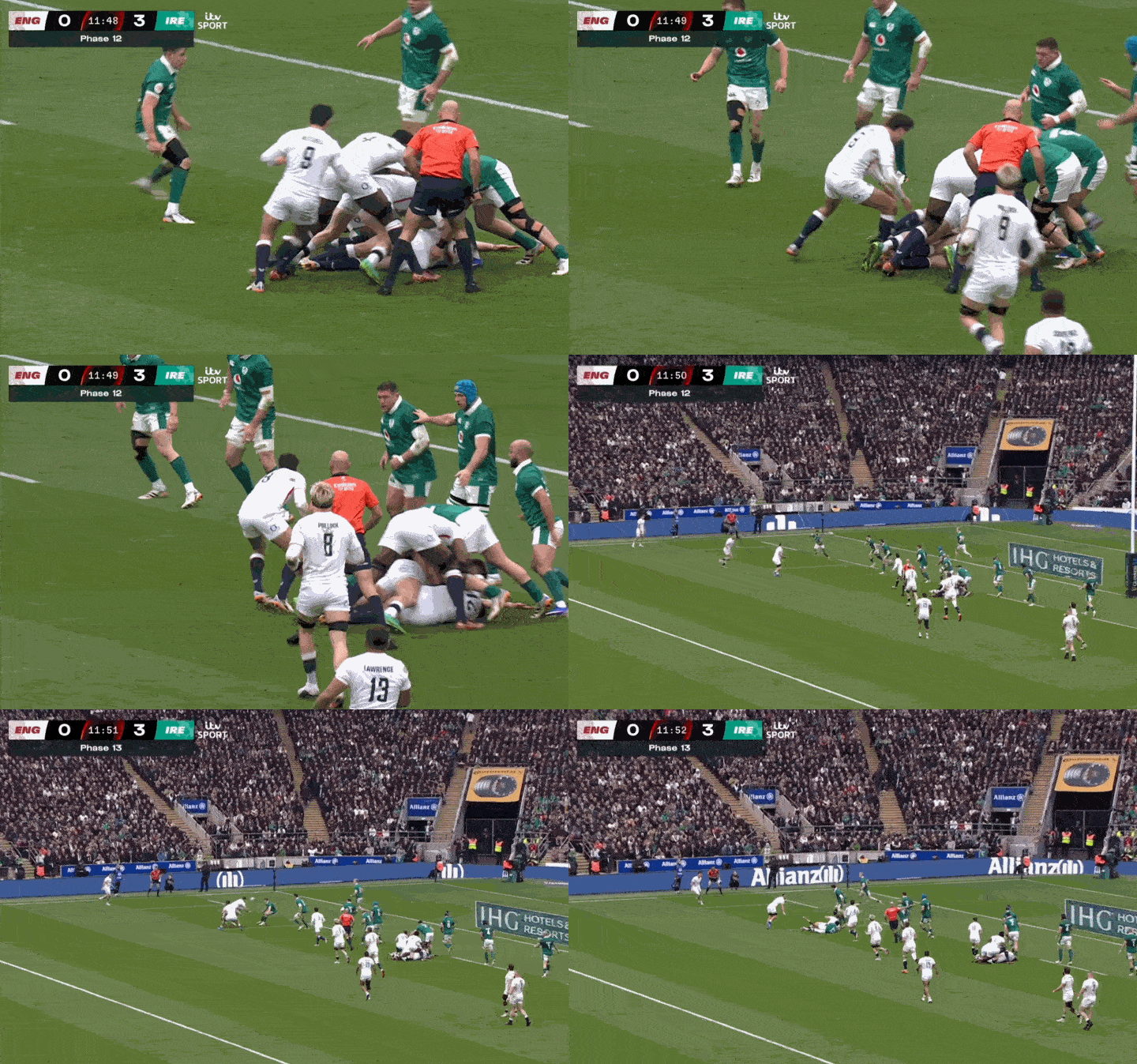
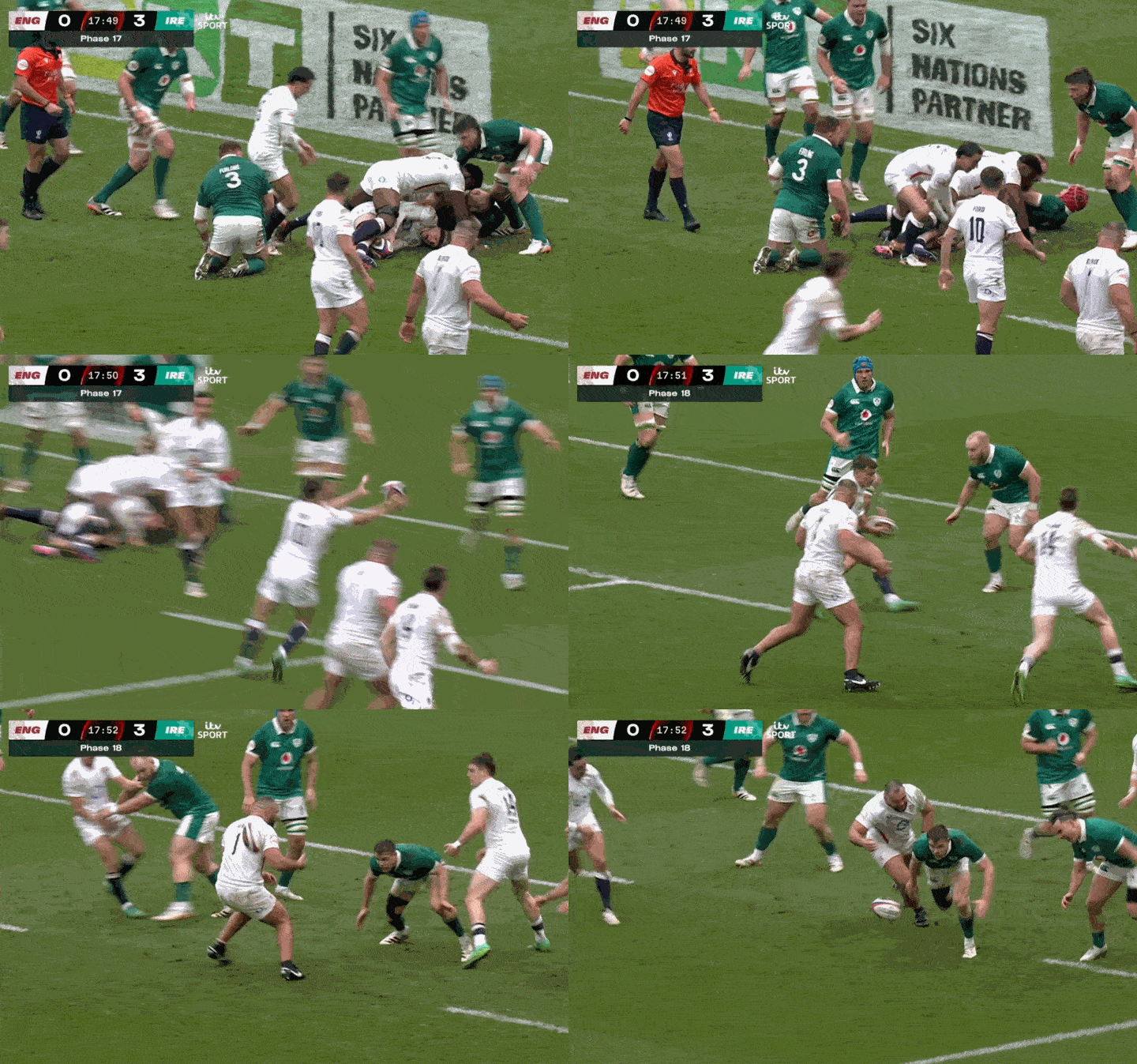
Some five minutes later, England breached the 22 once more. However, after keeping the ball for 17 phases, they seemed to punch themselves out. On the final phase, three attackers are on different wavelengths.
Ford is holding his depth, probably to draw a defender on to him and create a hole, but has to reach for Mitchell’s pass. Tommy Freeman is arcing around wider, eventually overrunning the play, and Genge does not expect the short ball that comes.
Even if Lawrence added thrust, neither Ford nor Dingwall are devastating runners in one-on-one situations. The latter punches above his weight and often slips two or three metres through half-gaps to generate quick rucks. Conversely, Stuart McCloskey was a one-man wrecking ball. Here, in the build-up to Ireland’s first points, Crowley feeds his inside centre from a slow ruck under pressure from Maro Itoje. McCloskey surges through Ford and stands tall as Luke Cowan-Dickie and Genge join the tackle before offloading to Jamison Gibson-Park.
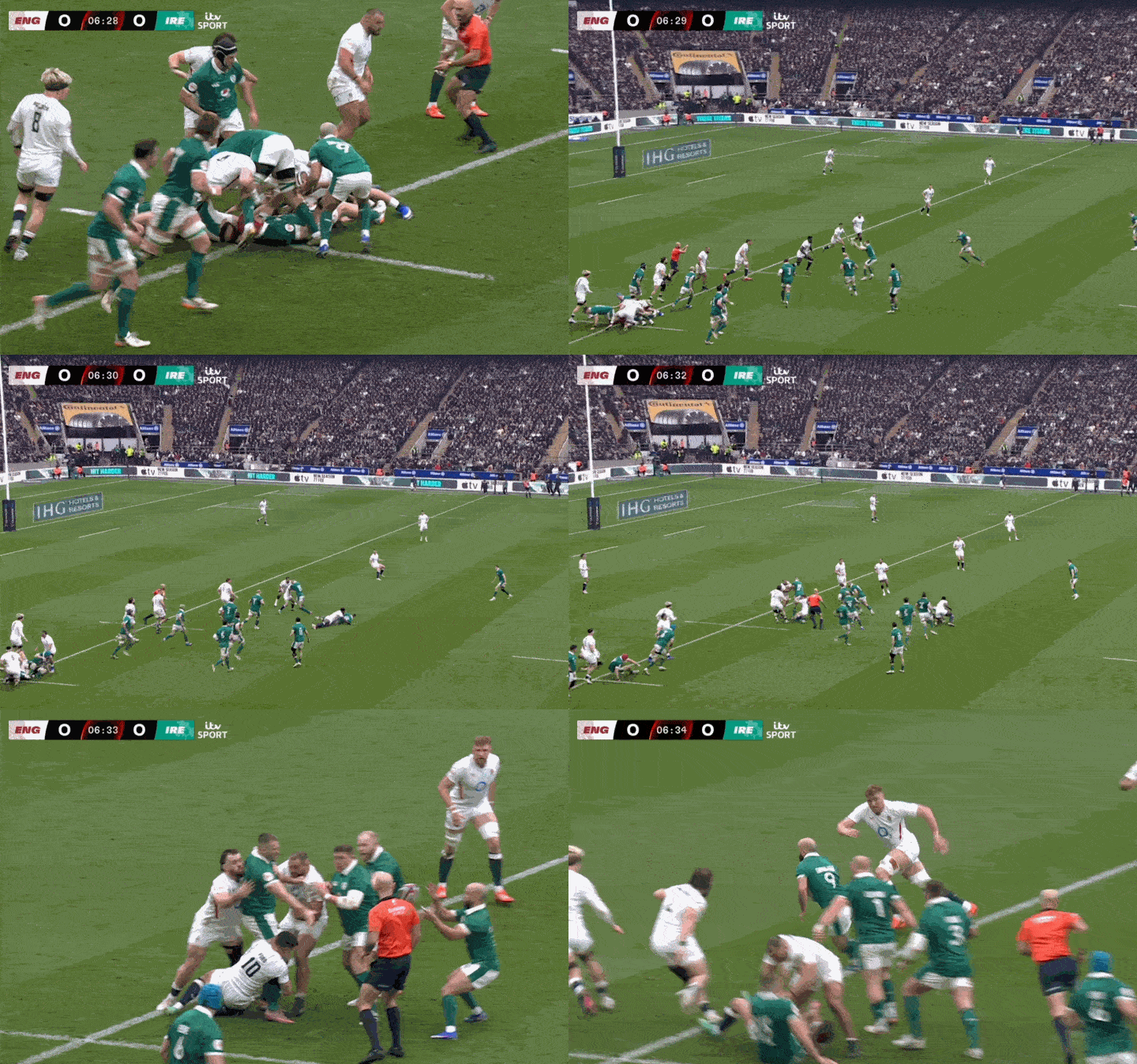
McCloskey has added a different dimension to Ireland, though they can still find their flow in phase attack. At a point in the match when Ireland had gone through seven phases with the ball, watch how they regained impetus as Crowley and Osborne linked up behind a flat line of forwards.
Crowley takes a pull-back from Tadhg Beirne in a second layer and launches Osborne through a fractured defensive line.
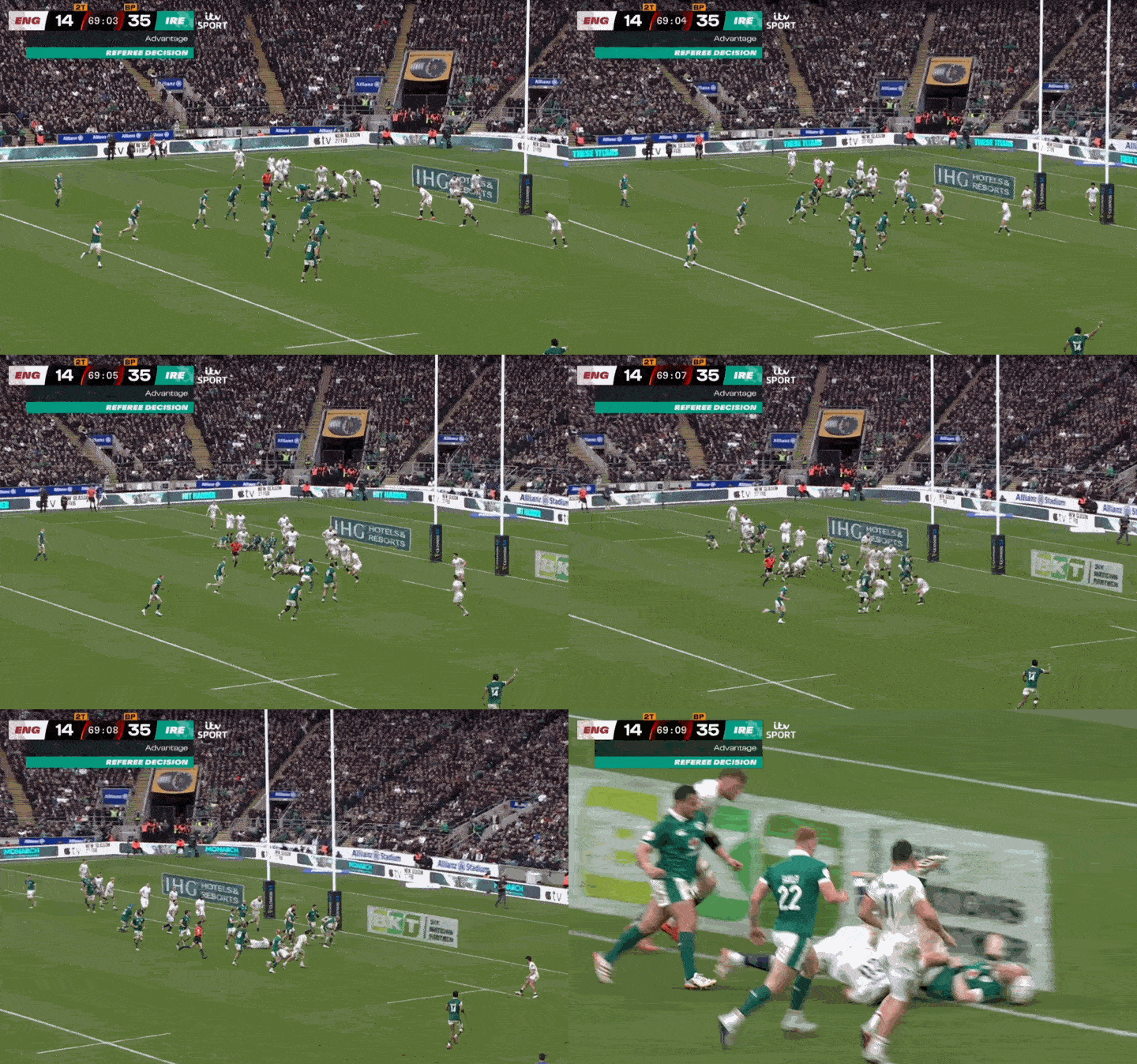
Ireland’s incision contrasted with England’s toil in the opposition 22.
What about alertness and conditioning?
Fruitless forays in the early stages sapped England’s energy and the collective lethargy was such that one wondered whether there had been a sickness bug in camp. After a week in which players had acknowledged their lack of intent and verve against Scotland, it was jarring.
Ireland’s first try, scored by Gibson-Park after a quick tap penalty, summed it up and began a horribly sluggish spell from England. From the restart that followed Baloucoune’s finish, and Steward’s yellow card, there was a defensive lapse that caused howls of frustration around Twickenham.
Ireland set up a four-man pod, made up of Tadhg Furlong, Joe McCarthy, Dan Sheehan and Josh van der Flier with Crowley sitting in behind.
England know this pattern well. Sheehan fed Jack Conan to set up a break in Dublin 12 months ago. The reverse angle shows how the hosts are split again. Ollie Chessum bites on to Sheehan and Earl is fixed by Crowley out the back. Van der Flier can saunter up the middle.
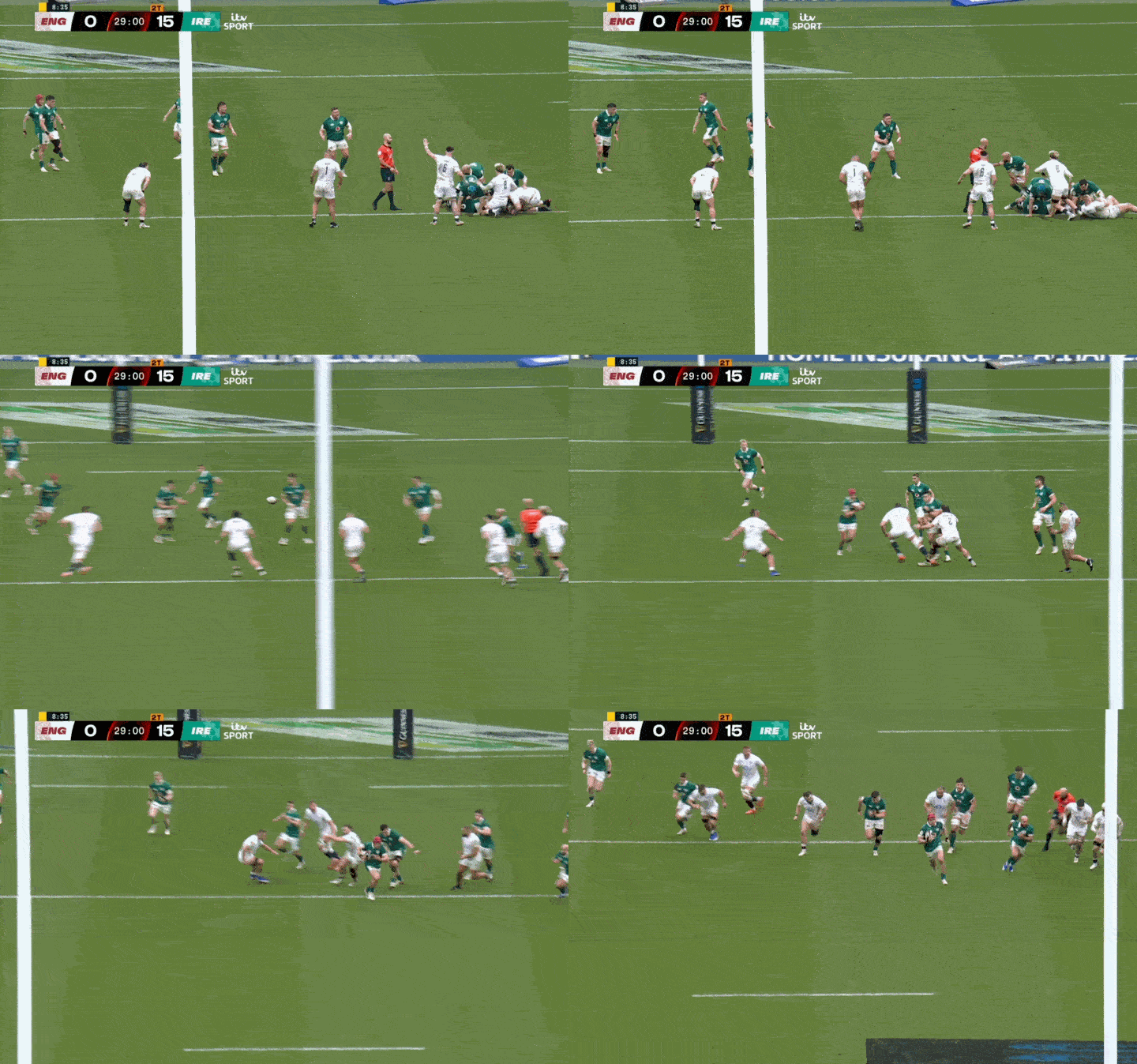
Itoje being replaced with 25 minutes remaining was a concession that he is not match-sharp and Lawrence looked like a man who had not played in a month. The team performance was reminiscent of a World Cup warm-up fixture in the midst of a heavy fitness schedule, which is damning.
Poor decisions blighted England further. Here, at the end of a ten-minute period against 14 men that England actually lost 3-0, Guy Pepper loses his patience and is penalised at the breakdown. You can see Earl telling him to withdraw and then reacting furiously.
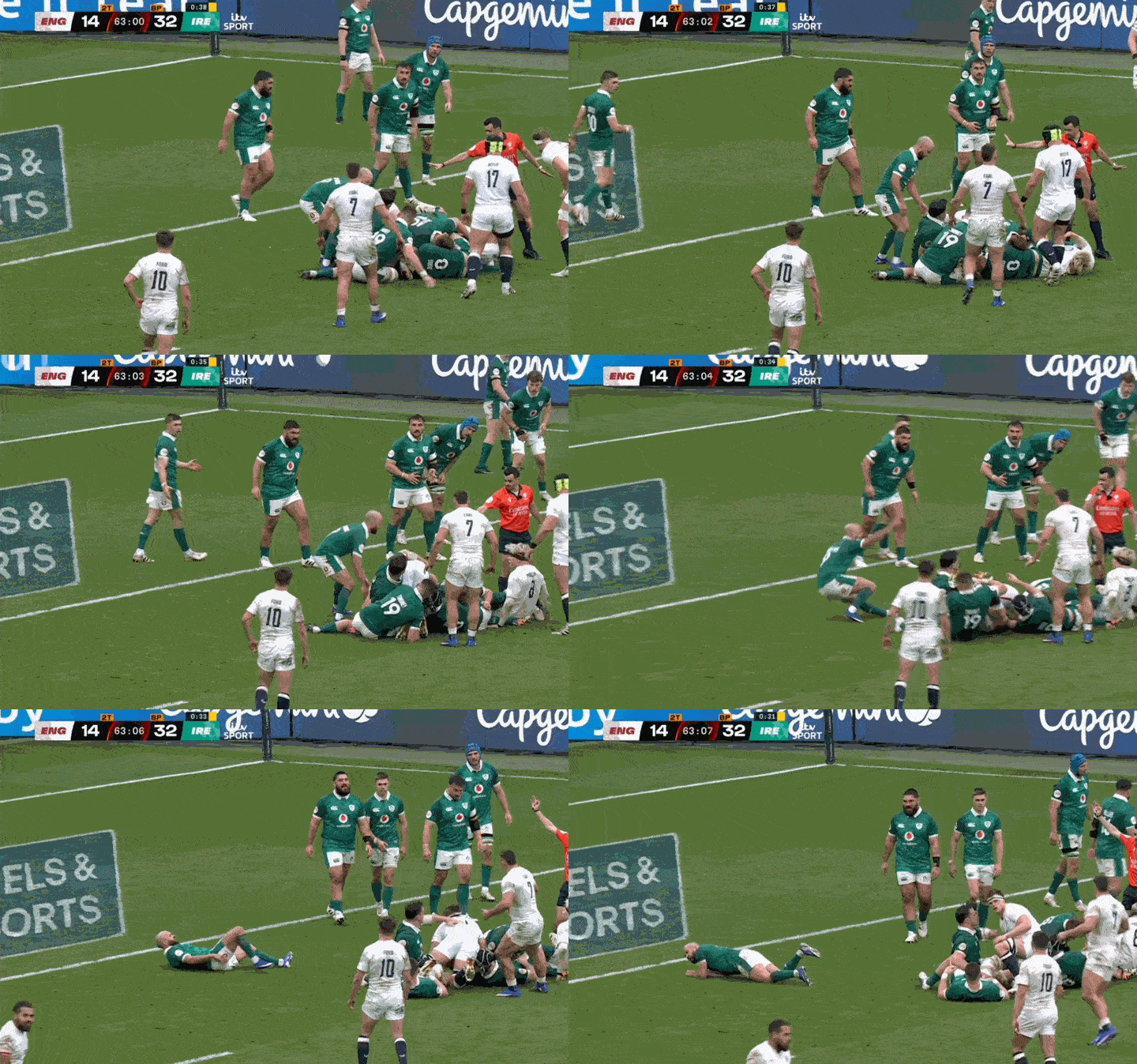
This suggests that England will review their shortcomings robustly.
Does the back five and ‘Pom-squad’ bench need a rethink?
Without both George Martin and Tom Willis, Borthwick has prioritised mobility over heft in his pack. Ireland went the other way, at least with their starting line-up, by picking Beirne at blind-side flanker to complement a second-row partnership of McCarthy and James Ryan.
England’s trade-off was accentuated by their early lineout woes. Beirne was immense, forcing turnovers at the breakdown and with his choke tackle on a hapless Ford. Earl, who registered 31 metres from 20 carries, was industrious but well contained and Ireland won the back-row battle.
Chandler Cunningham-South, last seen in a white shirt during a two-minute cameo off the bench against New Zealand, is the one member of the wider training squad who could add bulk. Greg Fisilau has a similar athletic profile to Earl. He is an explosive carrier with deft footwork rather than a battering ram.
Ethan Roots, another Exeter Chiefs player, gave a rugged edge to the England A side that beat Ireland at Thomond Park recently. Jack Kenningham and the unfancied Ted Hill are two of the most natural jumping back-rows in the country, while Borthwick is obviously curious about Emeka Ilione.
England’s glut of flankers is an undoubted strength. But they have now been beaten by two teams that have opted for a five-three bench, and a six-two split clearly restricts their scope to change up the back line, as does the fact that Marcus Smith seems to be seen solely as an auxiliary full back. Will either of those things change for the remaining two rounds?
Can they work on their kick-run blend?
The kicking data from Saturday makes for interesting reading. Ireland ruled this area, putting boot to ball 31 times to England’s tally of 18. They were more assured under the high ball, attacked from the “crumbs” and controlled territory more convincingly. When England lose the aerial battle, they need variety. Scotland and Ireland have also been sharper at moving the ball through the hands, even from their own half.
England did show some willingness to run back kicks, with an Arundell counter leading to an early penalty, yet were blighted by players moving laterally on the ball as well as several passes that checked the stride of their intended recipient.
This attempt to run the ball out of their 22, after Osborne’s yellow card, never looked like unpicking Ireland. McCloskey and Tommy O’Brien do well to press up and cut off Marcus Smith’s passing options.
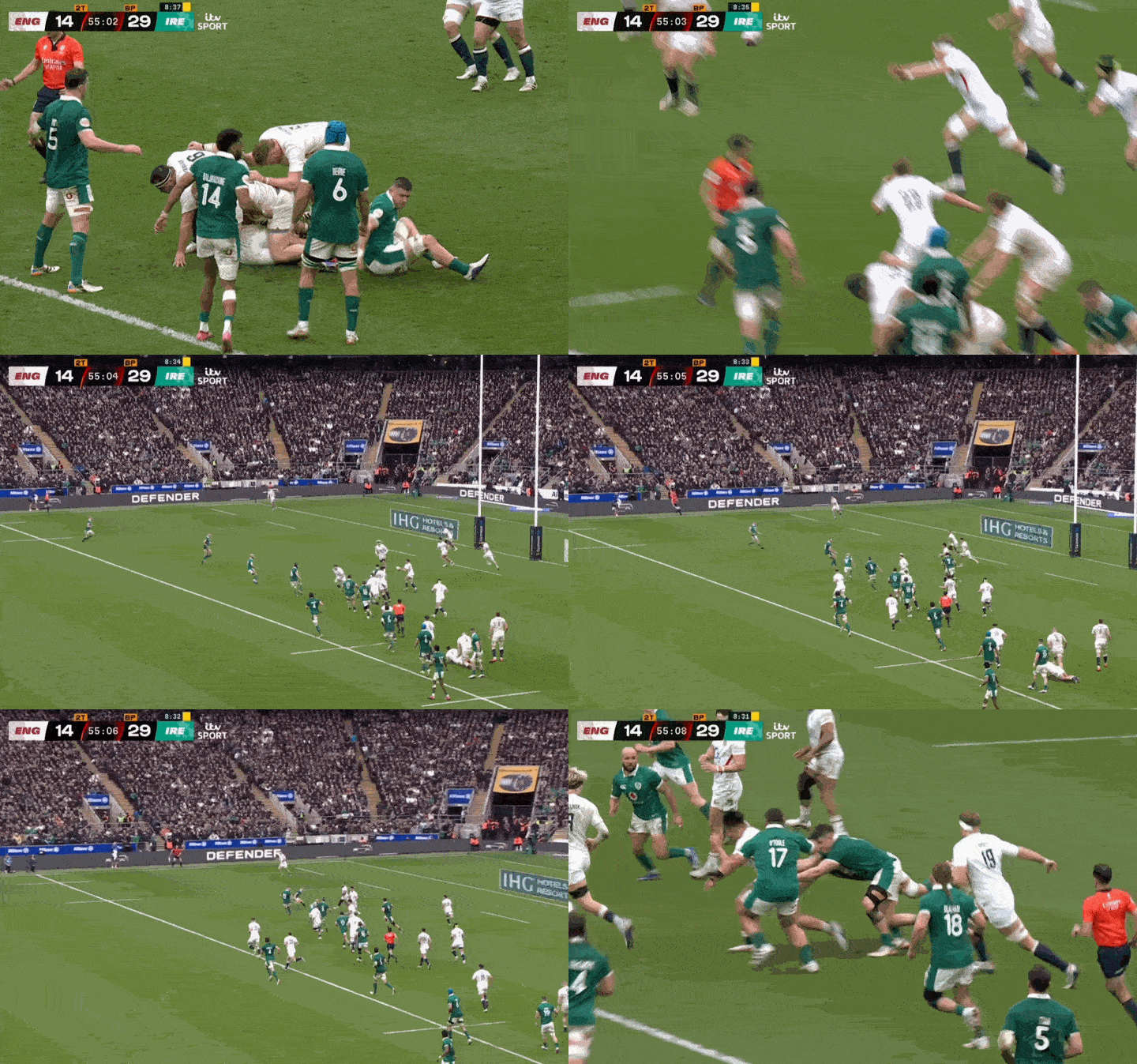
There was a knock-on from Earl a couple of phases later. Lee Blackett, a popular and diligent attack coach, will have identified areas to improve.
With two weeks to reset before taking on an Italy team capable of posing problems in similar areas — as well as at the scrum — England must get to work.