

Questions remain over where extra SEND money will come frompublished at 13:33 GMT 23 February
13:33 GMT 23 February
 Ben Chu
BBC Verify policy and analysis correspondent
In UK news, the government has said it plans to invest an extra £4bn in children with special educational needs and disabilities (SEND) in England over the next three years, including funding for schools and more specialist teachers.
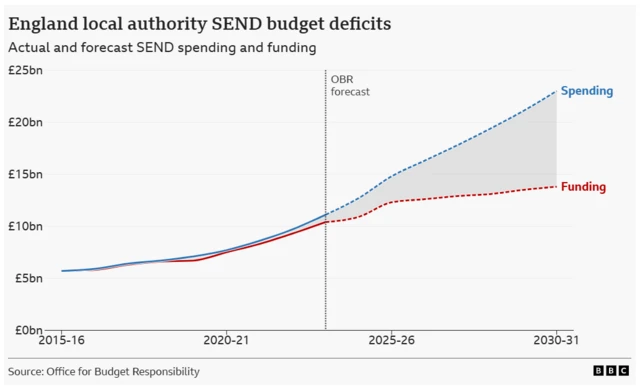
In the Budget last November, the Office for Budget Responsibility (OBR) forecast the gap between government funding given to councils in England to spend on SEND and their actual spending on SEND would reach £6bn by 2028-2029., external
This calculation was based on the expectation there would be a rise in the number of new education, health and care (EHC) plans needed in England. These plans provide extra support for these children and young people up to the age of 25.
Education secretary Bridget Phillipson has suggested the extra investment and reforms to the assessment system could help bring down future spending pressure on the SEND system, but it’s not clear whether it will be enough to eradicate the expected £6bn deficit the OBR has projected for 2028-2029.
It’s also unclear where the additional £4bn of spending over the next three years will come from.
The education department’s SEND reform consultation document released today, external states its budgets will rise as a result of today’s new investments relative to what was previously planned.But the department’s annual budgets were fixed in cash terms up to 2028-29 in the June 2025 Spending Review.
The Treasury has clarified to BBC Verify that while it doesn’t expect a wholesale re-opening of the 2025 Spending Review, it does now expect the cash budget of the Department for Education to increase in 2028-29 by around £4bn pay for these new investments. It says that this additional sum will be found from within overall government resources and will not require cuts to other department budgets or tax increases.
Update: This post was amended after the Treasury clarified its position to say that it expects the cash budget of the Department for Education to increase in 2028-29 by around £4bn to pay for these new investments. It says this will be found from within overall government resources and will not require cuts to other department budgets or tax increases.