
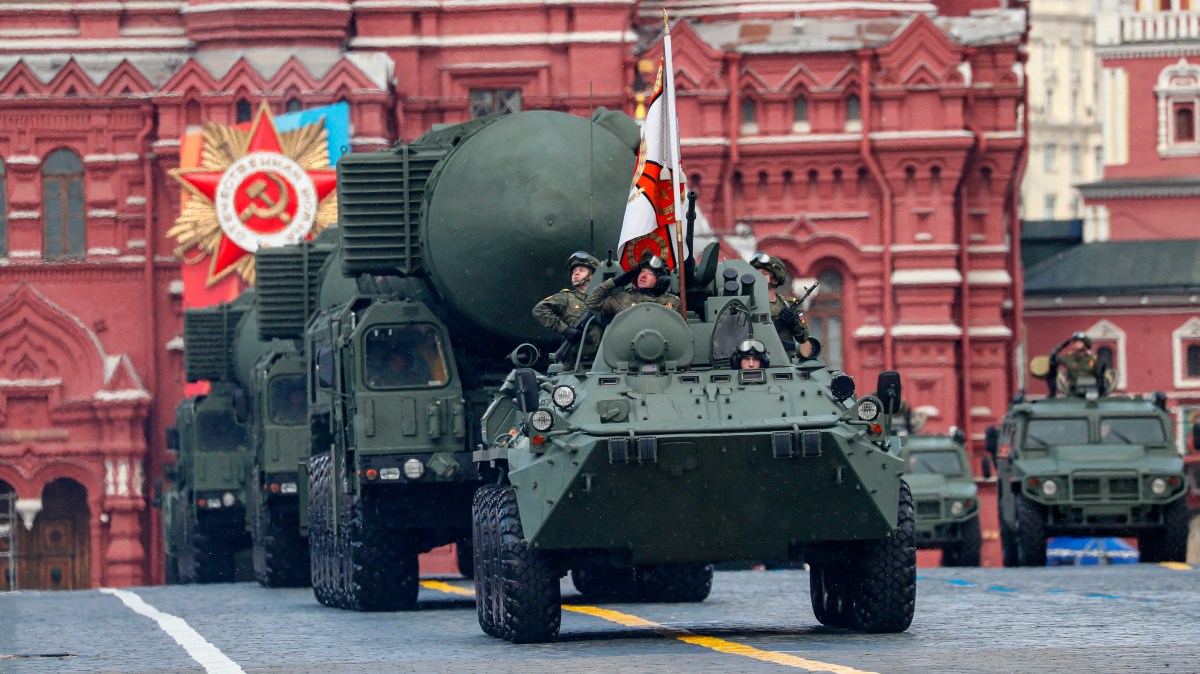
Russia has said it could renew the deployment of short and intermediate range nuclear missiles amid mounting tensions with the United States.
Moscow said on Monday that it no longer considers itself bound by its self-imposed freeze on the deployment of the missiles.
The move came after President Trump said he was repositioning two US nuclear submarines in response to nuclear threats from Dmitry Medvedev, the former Russian president who is now a senior security official.
Posting on social media for the first time since Trump’s order, Medvedev said on X that Moscow’s latest decision “is the result of Nato countries’ anti-Russian policy”. He added: “This is a new reality all our opponents will have to reckon with. Expect further steps.”
• Putin loves to play with nuclear weapon threat, says president’s profiler
Trump withdrew the US from the Intermediate-Range Nuclear Forces (INF) treaty in 2019, effectively killing the landmark Cold War deal, which was signed in 1987 by President Reagan and Mikhail Gorbachev, the last Soviet leader.
At the time, Moscow said that it would not deploy missiles — as long as Washington did not do so. The INF treaty stipulated the elimination by both countries of ground-launched ballistic and cruise missiles with ranges of 500-5,500km.
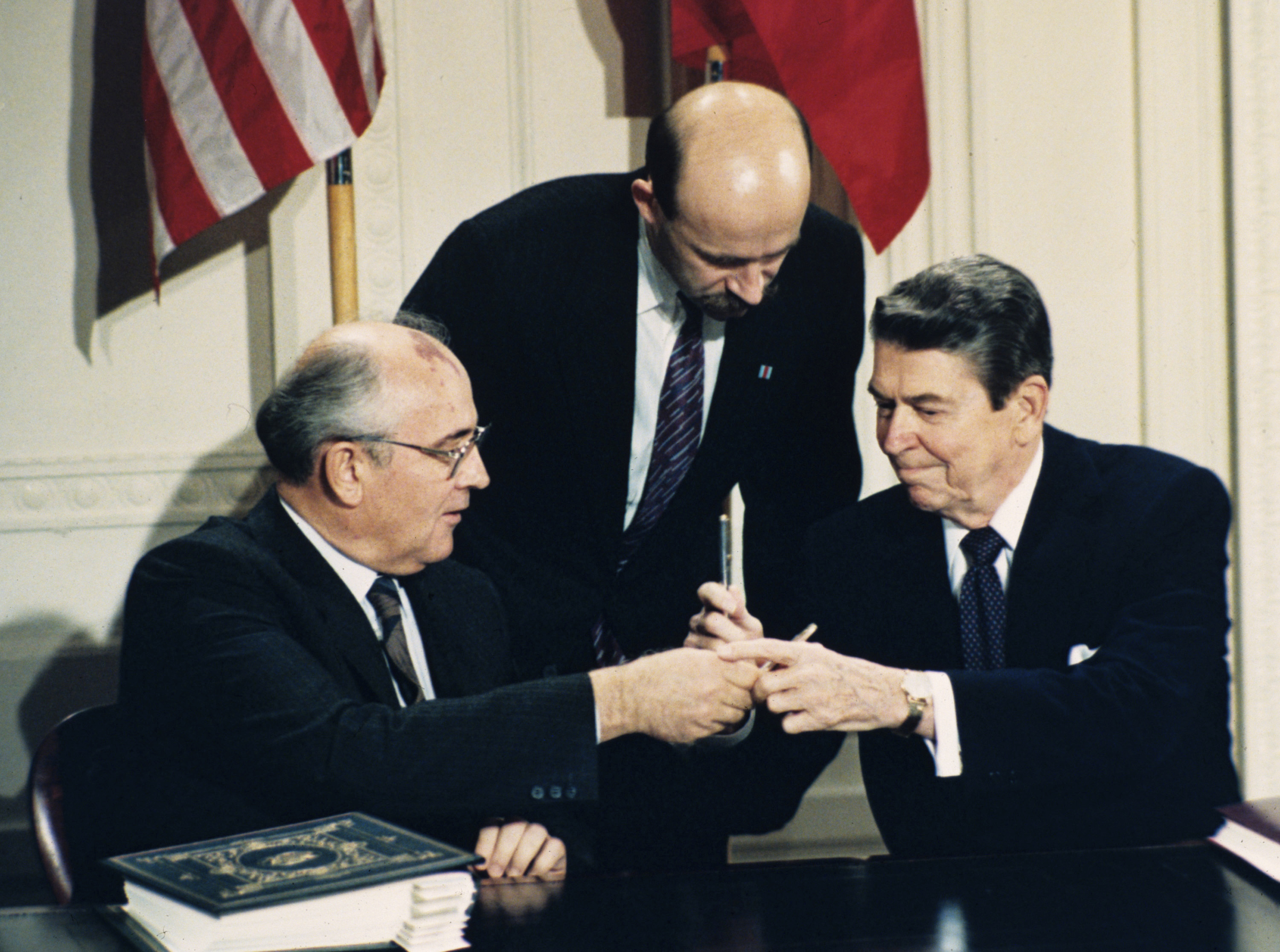
Ronald Reagan and Mikhail Gorbachev exchange pens during the Intermediate Range Nuclear Forces Treaty signing ceremony at the White House in 1987
BOB DAUGHERTY/AP
Russia said it was reversing that decision over what it said were threats to its national security from Washington’s deployment of Typhon launchers carrying Tomahawk cruise missiles to the Philippines. Tomahawk missiles can reach both Russia and China from the Philippines.
Moscow also accused the US of transferring land-based missile launchers to Nato member states in Europe for military exercises with “a clear anti-Russian focus.”
“Since the situation is developing towards the actual deployment of US-made land-based medium and short-range missiles in Europe and the Asia-Pacific region … the conditions for maintaining a unilateral moratorium on the deployment of similar weapons have disappeared,” the Russian foreign ministry said.
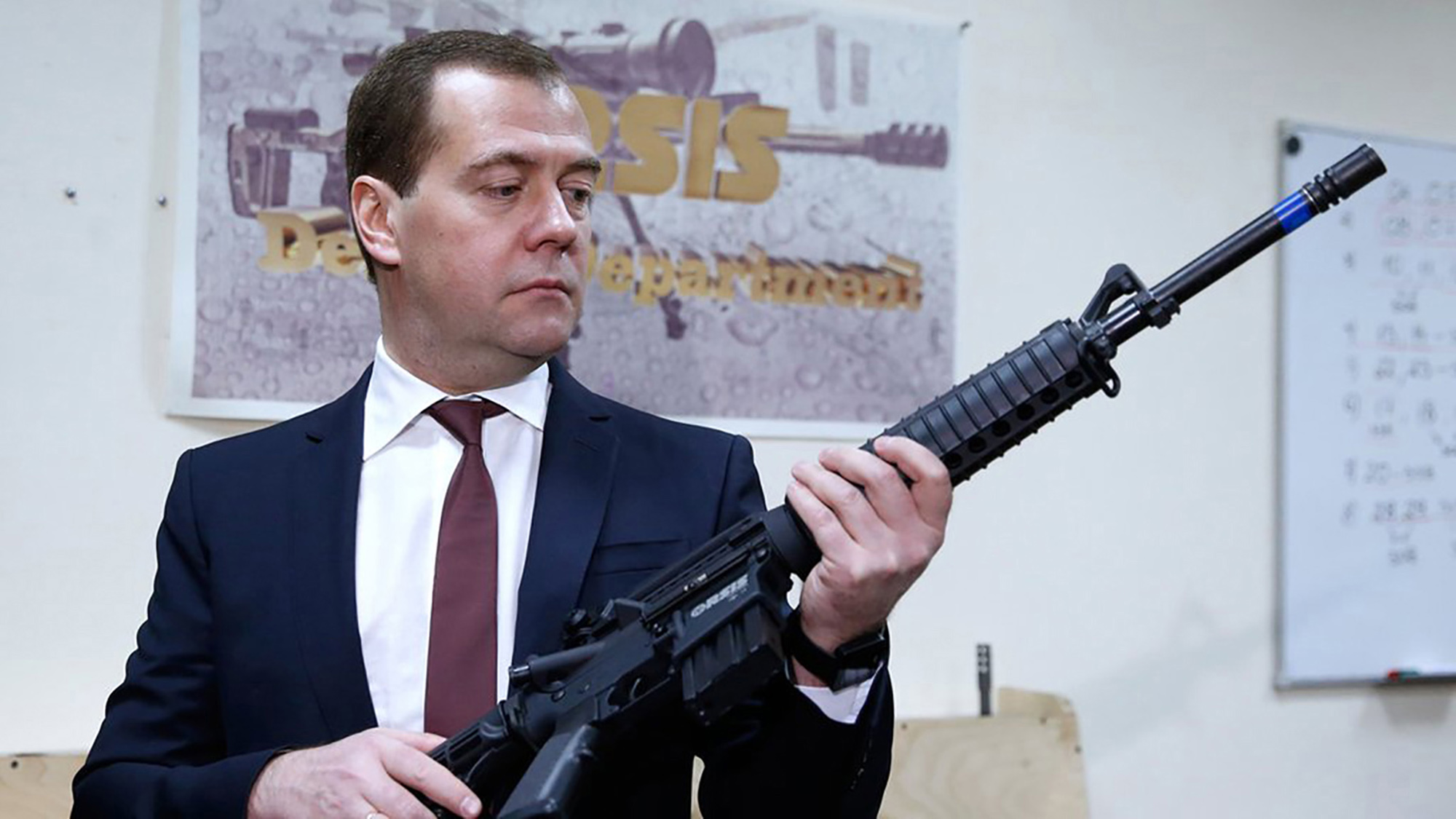
Medvedev has warned US support for Ukraine could spark a war
EAST2WEST
It made no mention of Trump’s response to Medvedev’s threats. However, Dmitry Peskov, the Kremlin spokesman, had previously urged Trump to proceed with caution. “We believe that everyone should be very, very cautious with nuclear rhetoric,” he said.
Trump indicated last week that he was deploying the two US nuclear submarines closer to Russia as a response to what he called “highly provocative” comments by Medvedev. He said on Monday that they were “in the region” but gave no further details, such as whether he meant the submarines were nuclear-powered or carrying nuclear missiles.
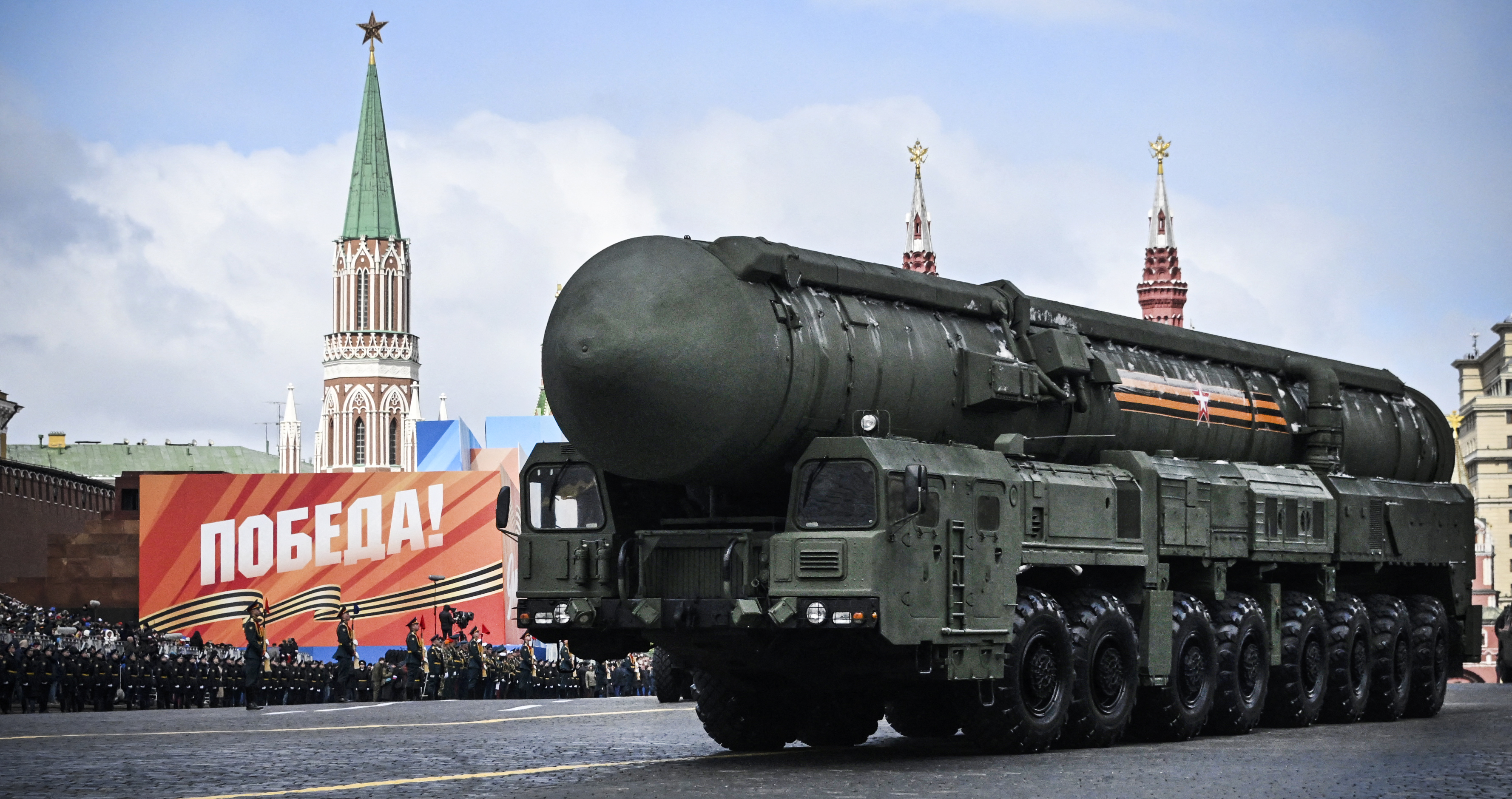
A Russian Yars intercontinental ballistic missile launcher during the Victory Day military parade in central Moscow in 2024
ALEXANDER NEMENOV/AFP
Medvedev had warned that US support for Ukraine risked sparking a war between Russia and the United States and made reference to Moscow’s “dead hand” automatic nuclear retaliation system.
Kremlin propaganda on Monday portrayed Russia’s move on the treaty as a threat to Europe. “If American foreign policy has any clear aims this century, it’s making sure that in case of war it is the spires of European cathedrals that go up in flames first,” Margarita Simonyan, the head of the RT media outlet in Moscow, said.
Since the start of Russia’s full-scale invasion of Ukraine, President Putin and his allies have made a series of nuclear threats against Kyiv’s allies, including Britain. Putin said this week that Moscow had begun mass production of its new Oreshnik hypersonic missile and that it would soon begin deploying them to its ally Belarus.
Moscow first used the Oreshnik, which means “hazelnut” in Russian, in a strike on the central Ukrainian city of Dnipro in November. The experimental weapon was not carrying an explosive charge, however, and caused relatively little damage.
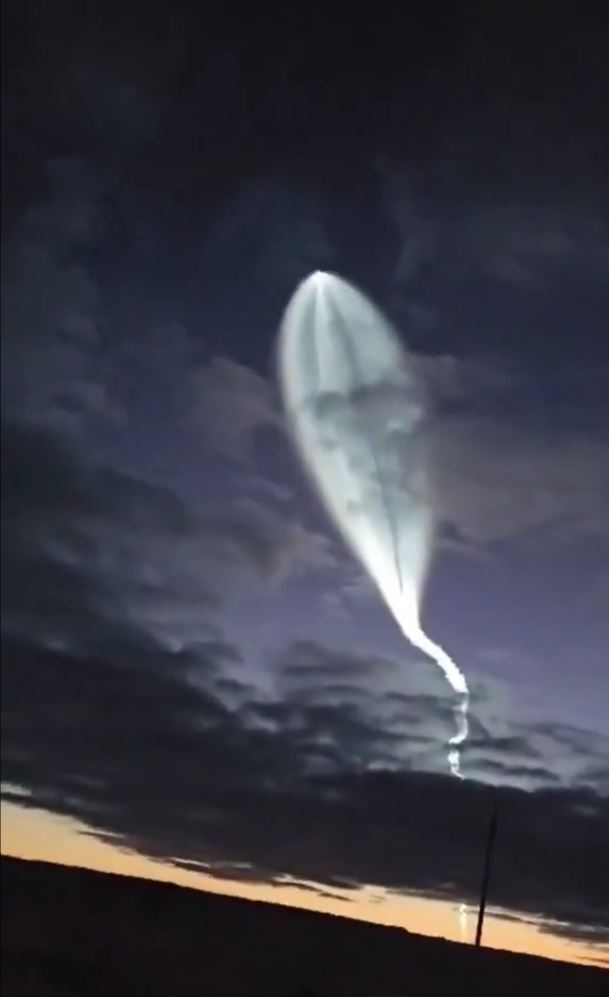
Video still shows a Oreshnik hypersonic missile ripping into outer space before blitzing the Ukrainian city of Dnipro
@MARIONAWFAL/X
Putin has said the Oreshnik missiles travel at ten times the speed of sound and are impossible to intercept. He also claimed they were “comparable in strength to a nuclear strike” if enough of them were used at once.
In 2023, the Russian leader said that Moscow had also deployed tactical nuclear missiles to Belarus. These missiles carry smaller warheads and are designed for use on the battlefield, rather than to destroy enemy cities.
With the end of the INF treaty, the last remaining deal limiting US and Russian nuclear weapons is the 2011 New START treaty, which places restrictions on strategic nuclear arms, including intercontinental missiles. It came into force while Medvedev was Russia’s president and is set to expire in February.
A failure to replace it would likely lead to a new arms race, analysts have warned. The Kremlin said in April that it was “very difficult to imagine” how talks on its replacement could begin amid tensions over the war in Ukraine.