
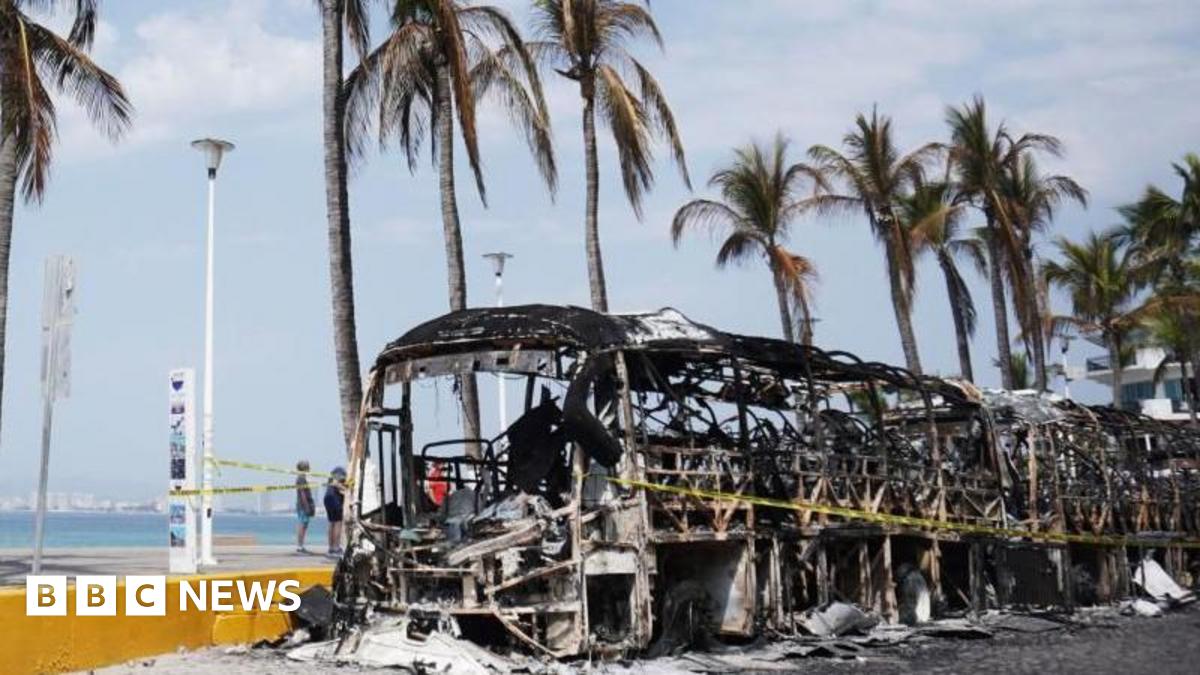
Many fear that the strategy of taking down top leaders will only beget more fighting.
“The execution of the kingpin strategy in Mexico over the last two decades – the extraction or the killing of major leaders like El Mencho – has always resulted in the same thing: more violence,” says drug war expert Deborah Bonello, who is the managing editor of the Insight Crime think tank.
She continued: “When you take out a major leader, there’s a detonation of a struggle to take control in that vacuum. So, you’ll see these squabbles for power in different parts of the country.”
One of those parts could well be Guadalajara, which is due to host thousands of international football fans for the Fifa World Cup in June. One of the exciting prospects on the pitch is the line up between Spain and Uruguay at the city’s main stadium.
But fans would be forgiven for thinking twice about attending the game following this week’s shocking scenes.
Anwar Montoya emits a short whistle of disbelief when I mention the competition.
“I’ve never been to a World Cup, so I don’t know how they work in other countries. But I don’t think this is a safe place for the World Cup,” he says.
Mariana Casillas agrees, telling the BBC there are several “very painful crises” unfolding in Jalisco. These include what she describes as the “crisis of violence, which we just saw in its maximum expression”, as well as the “crisis of the disappeared”.
Tens of thousands of people have been reported as missing in Mexico – almost all since 2007, when Calderón launched his “war on drugs”.
In many cases, those disappeared have been forcibly recruited into the drug cartels – or murdered for resisting.
The Mexican government insists Guadalajara is ready and able to host tens of thousands of visitors from around the world in a colourful celebration of sporting excellence.
But Casillas is adamant: “The people here don’t want the World Cup. They want security, they want clean water and they want their disappeared relatives back.”