
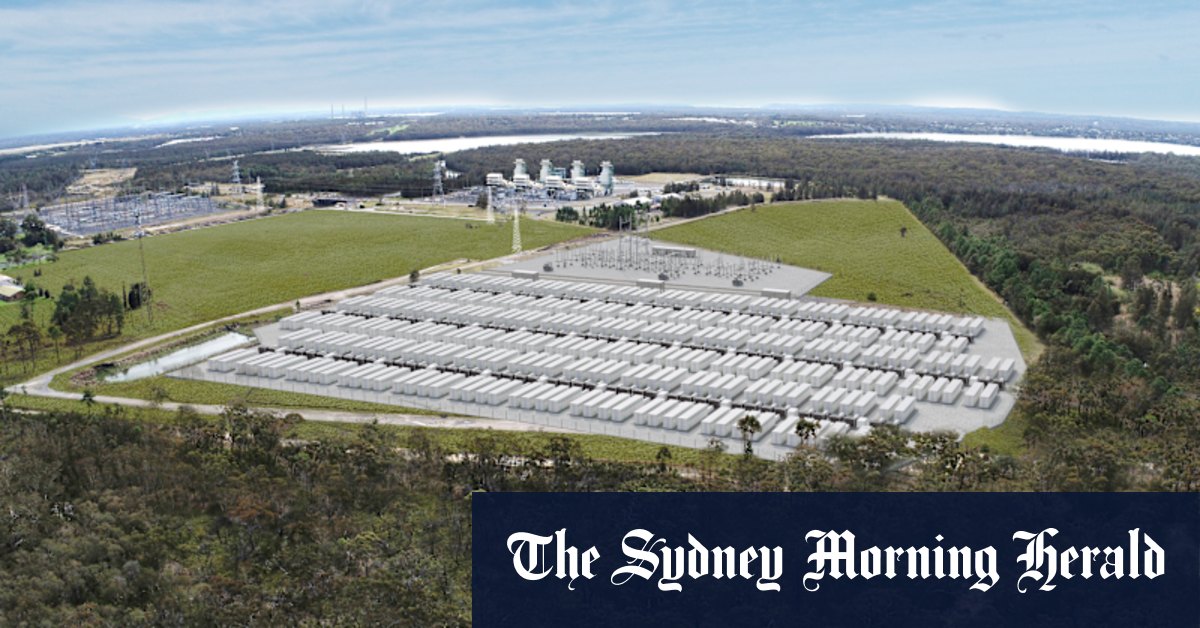
To help balance wild swings in supply and demand before the next wave of coal plant closures, Australian governments, utilities and investors are pouring billions of dollars into developing large, flexible battery storage systems across the grid.
Loading
The Australian Energy Market Operator has been calling for greater investment in “firming” assets, including batteries and hydroelectric dams, alongside a new fleet of fast-ramping, gas-fired power stations to prepare the grid for a rapidly approaching future without coal.
Switching on the Waratah Super Battery was a “win for our grid, and a win for households and businesses”, said Hannah McCaughey, chief executive of NSW government-owned EnergyCo, which is overseeing the project’s delivery.
“It will help provide clean, reliable and affordable energy to the people of our state and the national electricity market,” she said.
Akaysha Energy chief executive Nick Carter described the start-up of the first 350 megawatts of the Waratah Super Battery as a “major milestone, and a moment of real pride” for the Melbourne-based company, which was bought by BlackRock in 2023.
Transgrid, which owns and operates the high-voltage transmission network in NSW, said the Waratah Super Battery had been contracted to provide automated real-time system monitoring services for 36 transmission lines to detect overloading and respond within seconds.
“In network contingency events such as lightning strikes, the System Integrity Protection Scheme acts as a shock absorber to return the network to a stable condition and maintain continuity of supply for consumers,” Transgrid general manager Jennifer Hughes said.
“It’s like an insurance policy for NSW, and the whole system is triggered automatically, making it fast and reliable in responding to a system event or fault.”
The Market Recap newsletter is a wrap of the day’s trading. Get it each weekday afternoon.