
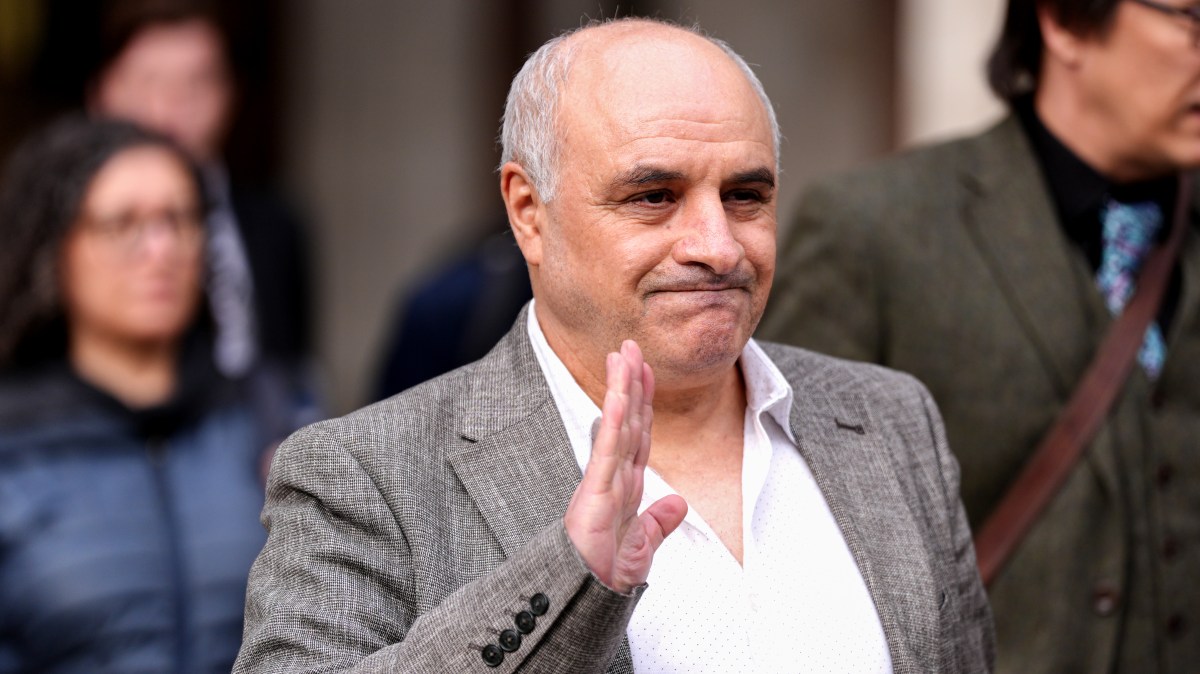
Judges have backed the decision to clear a man who burnt a Quran outside the Turkish embassy in London.
In a landmark legal case, Hamit Coskun was found guilty of a religiously aggravated public order offence after shouting “f*** Islam” and holding the flaming text aloft during a protest in Knightsbridge on February 13 last year.
Coskun, an atheist, appealed against his conviction in June last year. It was overturned in October.
Mr Justice Bennathan said at the time that the right to freedom of expression “must include the right to express views that offend, shock or disturb”.
The Crown Prosecution Service had challenged the overturning of the conviction. Lord Justice Warby and Ms Justice Obi, sitting at the Royal Courts of Justice in London, have now dismissed the appeal.
Coskun said: “In England, I hoped that I would be free to speak about the damage of sectarian politics and Islamism. I am relieved that, after a year, the courts have ruled that I am free to do so.”
• Criticising religion should be exempt from harassment laws, say MPs
Last week lawyers for the CPS and Coskun argued whether burning a book in public amounted to disorderly behaviour.
David Perry KC, for the CPS, said: “Our submission is that burning a book in a residential or commercial part of central London … is in itself disorderly and all the more so when the book is a holy text, whatever the religion, and all the more so when the burning is accompanied by offensive and provocative language.”
Tim Owen KC, on behalf of Coskun, said the court risked putting in law that burning books in central London is always disorderly. “What you’re being asked to do — as far as I’m aware, for the first time in history — is to rule that there is a concept of intrinsic disorderliness,” Owen said.
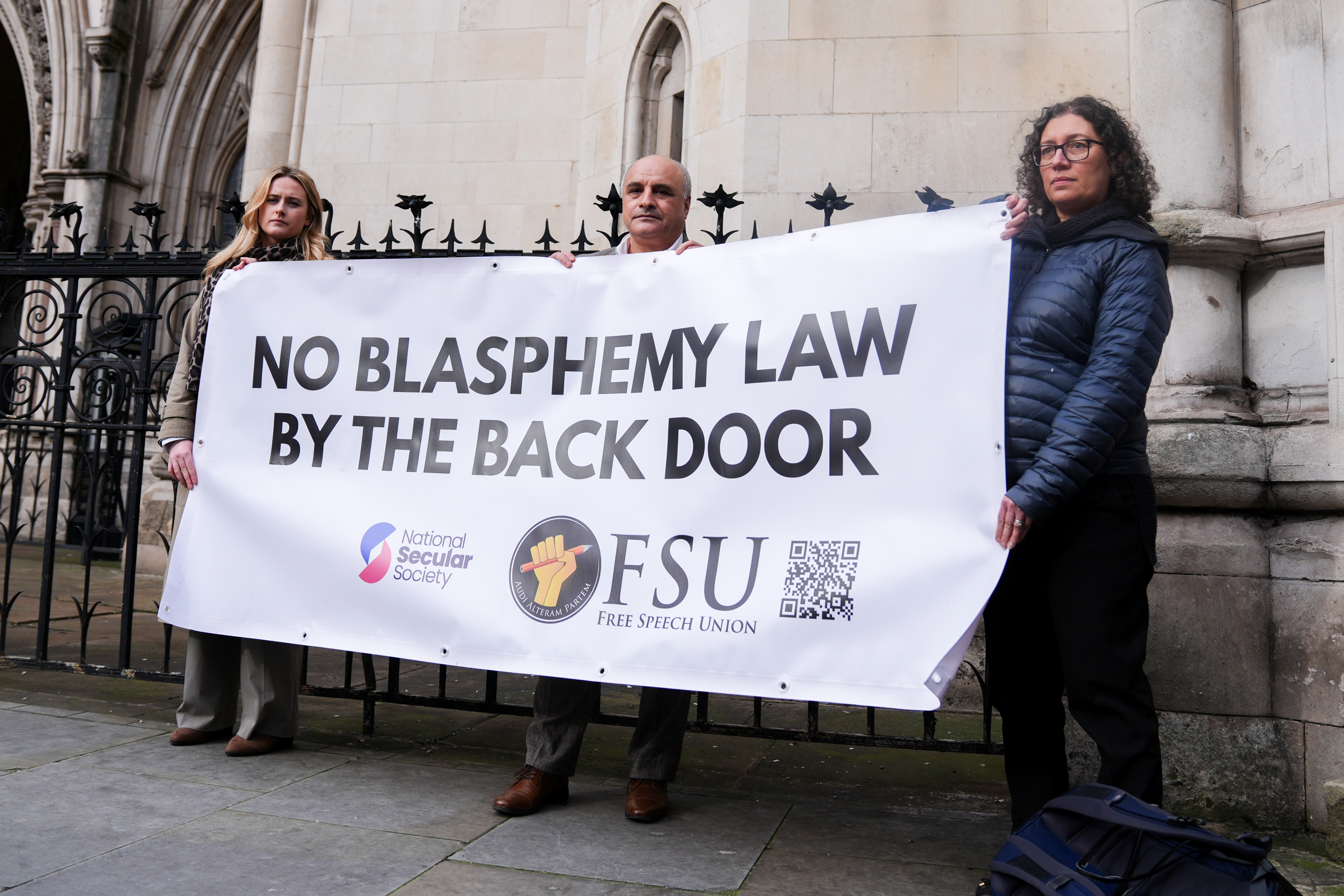
Coskun with supporters at court last week
BEN WHITLEY/PA
The 14-page judgment released on Friday said: “This is not a re-hearing of the case at which we reach our own decision about the facts and legal merits of the charge against Mr Coskun.”
Instead, the judgment said, the appeal hearing had to re-examine whether the crown court had appropriately applied the law.
“We are not persuaded that the court left any material factor out of account or relied on an immaterial factor,” it said. “The evaluation of the facts, their relevance, and their weight, was a matter for the crown court. We do not consider its reasoning contained any logical flaw of the kind we have referred to. We are satisfied that the conclusions arrived at were rationally open to the court … the appeal is dismissed.”
• Kathleen Stock: One person’s blasphemy is another’s religious belief. You can’t ban it
The judgment stated the crown court had considered that Coskun’s conduct “was not aimed at a person”; consulates “are recognised locations for political protest”; Coskun was by himself; it was daylight; and his protest only lasted two or three minutes.
The court ruled in October that convicting Coskun “would be incompatible with the right to freedom of expression guaranteed by the common law and Article 10”
The crown court’s written decision at the time said, “Causing upset, even grievous upset … is not of itself a criminal offence. That would be incompatible with the right to freedom of expression guaranteed by the common law and Article 10 [of the European Convention on Human Rights].”
Lord Young of Acton, the general secretary of the Free Speech Union, called on Stephen Parkinson, the UK’s chief prosecutor, to resign.

“This appeal should never have been brought by the Crown Prosecution Service, just as Hamit should never have been prosecuted,” Young said.
“We have not had blasphemy laws in this country for 18 years and, for that reason, this prosecution was bound to fail.
“Yet the CPS has spent hundreds of thousands of pounds trying to bring one back via the back door — and one that just enforces Muslim blasphemy codes, not Christian ones.
“In light of this humiliating defeat, I think the director of public prosecutions has no choice but to resign.”
The CPS said: “There is no law to prosecute people for ‘blasphemy’ and burning a religious text on its own is not a criminal act. Our case was always that Hamit Coskun’s words, choice of location and burning of the Quran amounted to disorderly behaviour, and that at the time he demonstrated hostility towards a religious group. The High Court has made a ruling [and] we will review its decision carefully.”
Coskun, who was born in Turkey, is half-Kurdish and half-Armenian. He sought asylum in the UK, claiming Islamic terrorists had destroyed his family’s life, but told the Telegraph he could be forced to flee to the US if the CPS won its case.
The High Court was told this month that the Home Office had agreed to provide accommodation for him.