
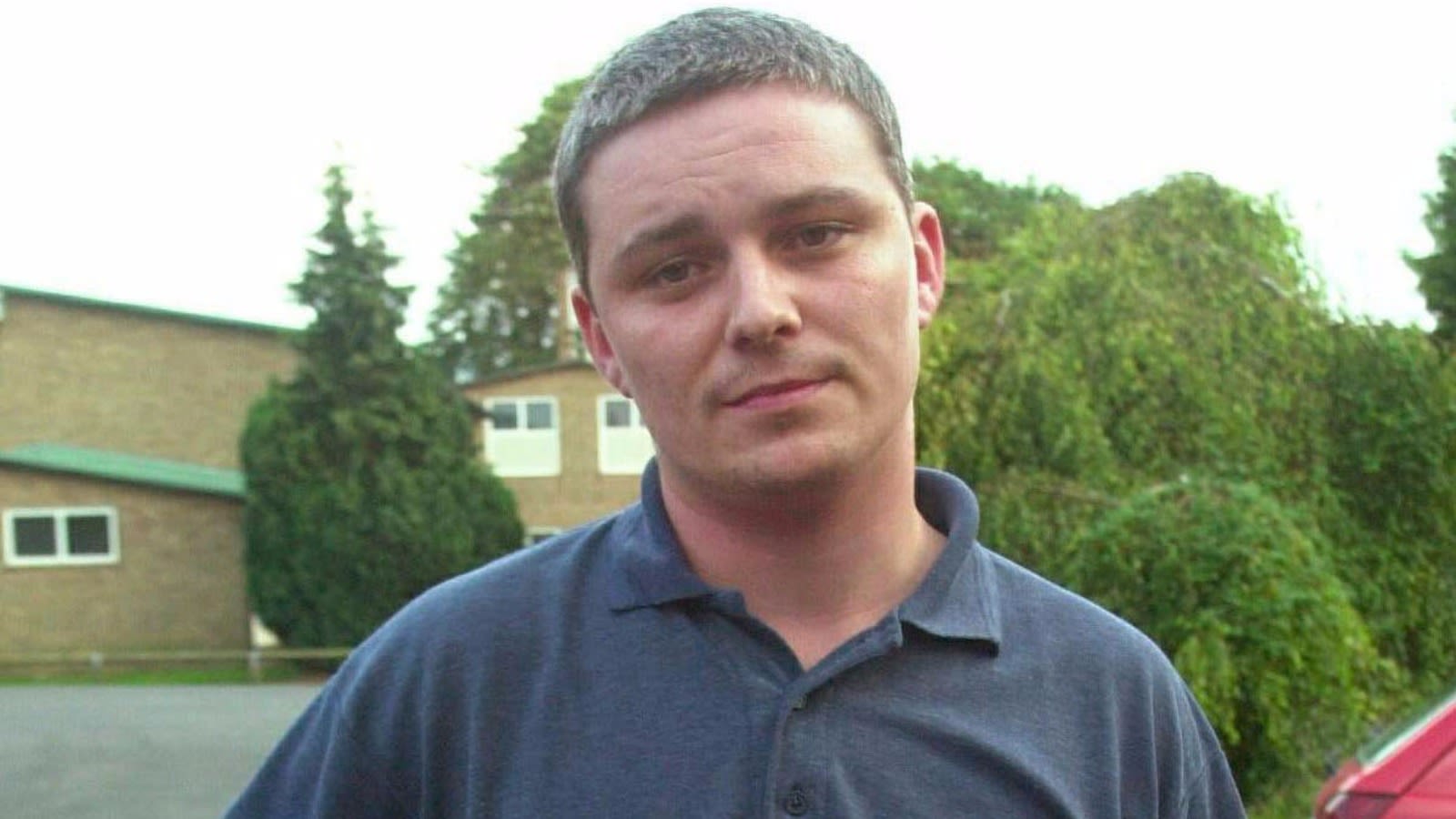
Soham child killer Ian Huntley has spent another night under armed guard in hospital after being attacked in prison.
The former caretaker was assaulted in the workshop of HMP Frankland near Durham on Thursday, where he is serving a life sentence for the murders of Jessica Chapman and Holly Wells in August 2002.
He is being treated for head injuries at Newcastle’s Royal Victoria Infirmary.
Durham Constabulary said on Saturday that the 52-year-old’s condition had not changed and he remains in a ‘serious condition’ in hospital.
The bodies of Jessica Chapman, left, and Holly Wells were found 13 days after they went missing. Credit: Family photo
Huntley killed 10-year-olds Holly and Jessica after they left a family barbecue to buy sweets in Soham.
He dumped their bodies in a ditch 12 miles away in Lakenheath, Suffolk where they were found almost two weeks later.
Huntley denied their murder but was convicted in 2003 after an Old Bailey trial.
His then-girlfriend Maxine Carr was sentenced to three-and-a-half years in 2003 after being found guilty of conspiring to pervert the course of justice by giving him a false alibi.
She served 21 months and is now living under a new identity.
Huntley is understood to have been left in a pool of blood after the attack on Thursday.
He has been the subject of previous attacks in the same prison, including when a fellow prisoner slit his throat in 2010.
His attacker, Damien Fowkes had asked a prison officer: “Is he dead? I hope so.”
Fowkes described Huntley as a “notorious child killer, both inside prison and in society in general”.
After the murders, it was discovered Huntley had been able to get a job working with children at the college despite having been the subject of a series of complaints of rape and other sexual offences made to police.
In 2004 the Bichard Inquiry was launched, investigating the failings in police vetting and information which ultimately led to Huntley being appointed.
The report highlighted the failures of Humberside Police, which had been told of Huntley’s previous accusations, in how they handled intelligence and data protection.
It led to the creation of a Police National Database, to combine intelligences from 43 forces in England and Wales, and data from 150 computer systems.
Want a quick and expert briefing on the biggest news stories? Listen to our latest podcasts to find out What You Need To Know