
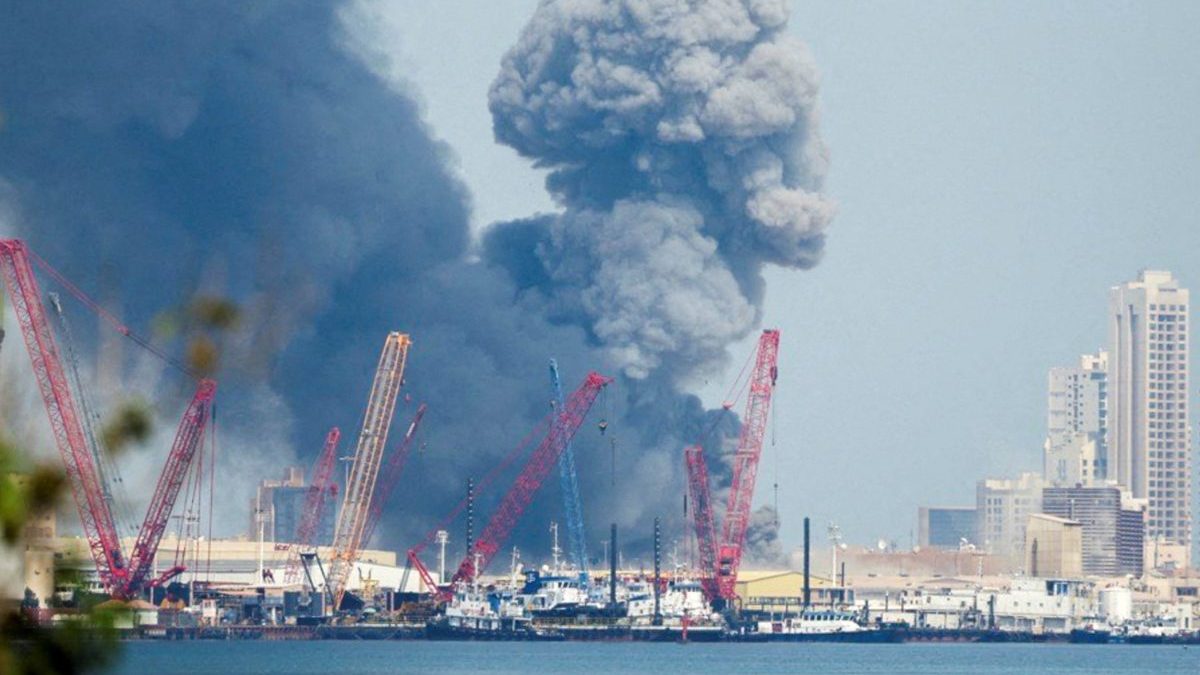
Hundreds of UK troops were just 200m away from an Iranian missile attack in Bahrain yesterday, The i Paper understands.
In another incident, the UK was forced to shoot down a missile heading towards service personnel in Iraq.
And a counter-drone unit in Iraq took out an Iranian weapon that was heading towards a Coalition base housing British troops on Saturday afternoon.
Iran has launched a wave of retaliatory attacks across the Middle East after the US and Israel began “major combat operations” which killed Iran’s Supreme Leader.
New FeatureIn ShortQuick Stories. Same trusted journalism.
The UK has military personnel across the Middle East working on counter-terrorist missions and embedded with US forces.
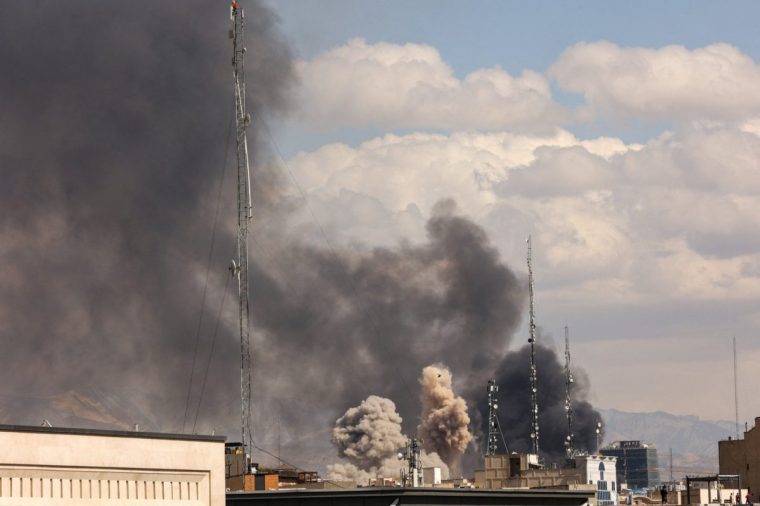 Smoke rises following an explosion in Tehran on Sunday after the US and Israel launched strikes (Photo: Majid Asgaripour/WANA via Reuters)
No British troops have been injured in the air strikes, but there have been several close calls at bases across the region.
Approximately 300 British personnel are stationed at a US naval base in Bahrain which was targeted by Iranian missiles and drones, and they came within 200m of one strike.
British forces in Iraq, working on counter-Isis operations, were within 400m of another.
Two Iranian missiles were fired in the direction of Cyprus, where the UK operates the British Sovereign Base Areas of Akrotiri and Dhekelia, but Whitehall sources said these were not assessed to be targeted at the island.
British personnel could be withdrawn or moved depending on the threat assessment, sources said, with force protection measures – which the UK does not reveal details of – at their highest level for all troops in the Middle East.
Defence Secretary John Healey said that the Iranian regime was “lashing out in an increasingly indiscriminate and widespread way. People will be really concerned that it’s not just military targets, but civilian airports, like Kuwait.
“Hotels in Dubai and Bahrain are being hit. And so that’s why we’ve strengthened the UK defences in the region. We are active in regional defence operations.”
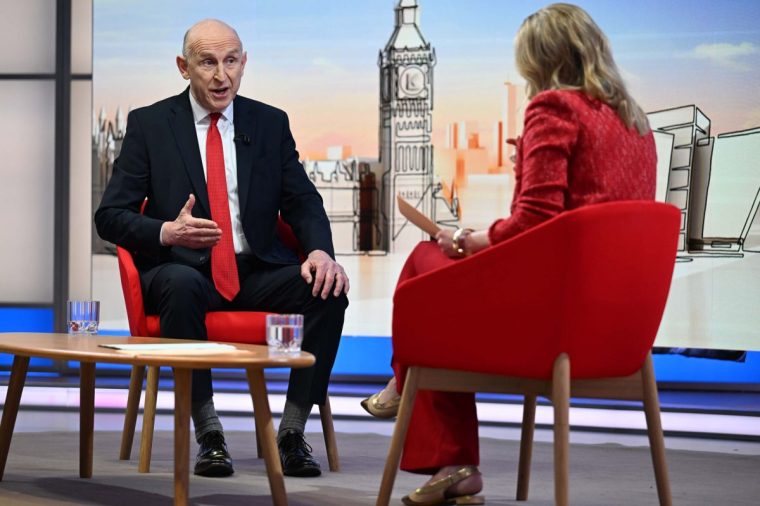 John Healey appearing on Sunday with Laura Kuenssberg (Photo: Jeff Overs/BBC/PA)
Iran has launched more than 25 waves of missiles and drones at targets across Israel, Bahrain, Qatar, the United Arab Emirates, Kuwait and Iraq since the start of the escalation, according to regional officials and state media reports.
In Israel, the Israel Defence Forces (IDF) said two people were killed in retaliatory missile attacks.
IDF spokesperson Effie Defrin said in a briefing that air defence systems were “still not foolproof”, urging civilians to follow safety instructions. Israel’s health ministry said 456 people had been taken to hospital since the start of the attacks, with 86 remaining in intensive care.
In a statement on the Iranian government’s official Telegram channel, Iran’s President, Masoud Pezeshkian, said the killing of Ayatollah Ali Khamenei was an “open war against Muslims, especially Shiites, in all corners of the world”. He said Iran considered “bloodshed and revenge against the perpetrators and instigators of this historical crime as its legitimate duty and right”.
Iranian state media reported that the Islamic Revolutionary Guard Corps (IRGC) had attacked nearly 30 US military bases across the Middle East as part of what it described as its “most-intense offensive operation” ever.
Reuters reported that Ahmad Vahidi had been named the new commander-in-chief of the IRGC following the death of his predecessor in the opening strikes.
Donald Trump said Iran could face “a force that has never been seen before” if it escalated further, and indicated that military operations would continue.