
On Monday morning, a number of social media accounts circulated what they believed was an example of lasers intercepting Hezbollah rockets. The video showed rockets being launched from Lebanon, and many of the rockets appeared to explode soon after lift-off. The video did not show lasers intercepting rockets, but the mass interest in the new technology is clear.
Israel has pioneered the deployment of ground-based laser air defenses. The development of lasers for military uses has taken place for decades. Israel, the US, and other countries have worked on this technology. However, recent advances in technology have enabled lasers to finally become more practical for military uses.
What this means is that lasers can now be developed that can be packaged into a relatively small and mobile unit. The lasers can also reach ranges of around ten kilometers. Lasers are inexpensive to use, meaning that they can help cut down on the cost of using large numbers of missile interceptors to take down threats such as the relatively cheap Iranian-made Shahed 136 drone. The arms race for cheap systems matters. The US is also investing in one-way attack drones, similar to the Shahed. Lasers are a good way to stop cheap threats. What this means is that the promise of lasers has now arrived; there are still many limitations.
Israel has been working on lasers for years. In 2022, Prime Minister Naftali Bennett said, “We have successfully completed a series of tests on our new ‘Iron Beam’ laser air defense system. This may sound like science fiction, but it’s real.” At the time, Israel’s Rafael Advanced Defense Systems was working on a ground-based laser system that was supposed to work alongside the Iron Dome air defense system.
Iron Dome is one part of Israel’s multi-tiered air defense systems. It works as the shorter-range defense system alongside David’s Sling and Arrow. The lasers are short-range. At the same time as Israel was working on the ground-based system, Israel’s Elbit Systems was also working on a laser system that might be used from the air. Mounting a laser on an airplane or drone can expand the capabilities of the system greatly because it can hover over areas and project the laser from the sky, rather than from the ground.

Laser launched from the ground is impeded by obstacles such as terrain. This means that they can’t be shot through buildings or mountains. They have to be able to see the thing they are shooting at because the laser has to be able to hit the target for a period of time to burn it and destroy the threat.
This means that laser defenses are impacted by terrain and time. They are also impacted by atmospheric interference, such as bad weather or dust in the sky. Lasers are small beams, and if the beam is blocked by particles in the sky, then they are less effective. One can mitigate some of this problem by using numerous small lasers and alternating them rapidly to make sure they get to a target consistently. However, the overall problem remains the same and makes lasers different than missiles, which can maneuver as they fly.
Over the last few years, Israel’s laser air defenses have come into use. The lasers were first used during Israel’s multi-front war. In May of 2025, Israel’s Ministry of Defense announced that the lasers had “successfully intercepted scores of enemy threats.” This success was followed by Rafael unveiling one variant of the defense system, known as Iron Beam 450, at the defense show DSEI in the UK. Iron Beam 450 is one of several variants of the system Rafael has made. Iron Beam 450 is named for the 450 millimeter aperture of the system.
The lasers Israel developed have different strengths. They are all high-energy lasers. These include the Lite Beam, which is a 10Kw laser, while Iron Beam-M is a 50Kw laser. The Iron Beam-M, which, like the Lite Beam, is mobile, can be mounted on a vehicle. The much-awaited laser defenses were deployed with the IDF at the end of December, 2025.
Israel’s Ministry of Defense noted at the time that “the system, which proved its effectiveness in an extensive series of tests against various threats and successfully intercepted rockets, mortars, and UAVs, will be integrated into the IAF and incorporated into Israel’s multi-layered aerial defense array as a complementary capability to the Iron Dome, David’s Sling, and Arrow systems.” One of the variants of the system is called Or Eitan in Hebrew.
With the lasers finally in the hands of the IDF and being deployed in larger numbers, the question about their future can now be weighed. Lasers evoke a kind of Star Wars future. However, unlike X-Wing fighters in Star Wars and the Death Star, the actual use of lasers today is still very limited. Lasers on the battlefield today, in Israel, and also being used by other countries such as the US, occupy a space similar to the first tanks being used in the First World War. While the lasers exist, it is still not clear “what” they actually will become. It is not clear how many will be deployed or how they will be used.
Currently, lasers are limited by their short range. Ten kilometers is not that far when dealing with long-range aerial threats. For instance, the Iranian Shahed 136 drone has a range of some 2,000km. That means only the last minutes of the flight path can be intercepted by the laser. Even if you mounted lasers on a plane or drone, you’d have to hunt down the Shahed to shoot it with a laser.
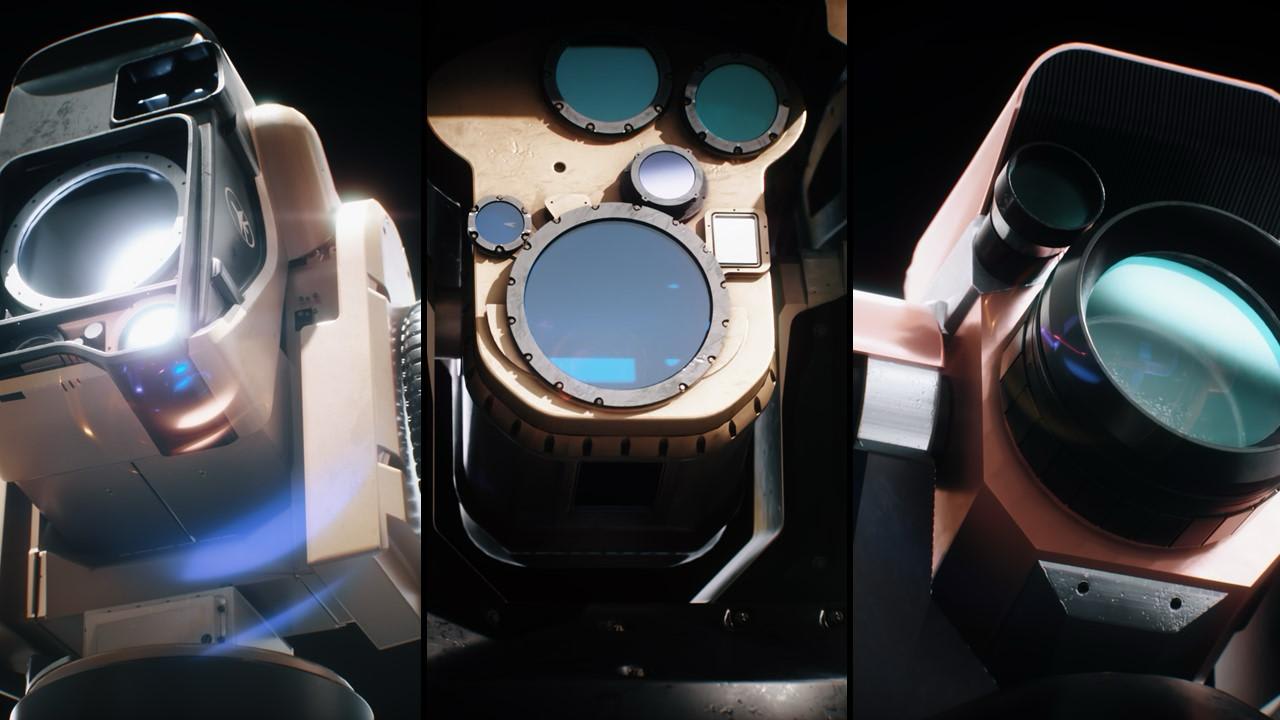
That means detecting the Shahed long before it arrives. It also means being able to maneuver to chase the drone. The range of lasers may increase. However, they will still have several challenges. Lasers are operated from a device that looks like a large camera or telescope, basically. This shoots a beam that destroys a target. One beam takes time to get to a target and destroy it. This can take seconds. You have to lock onto the target and maintain the beam on it to burn a certain part of the target.
This means one limitation of a laser air defense is that you can’t fire multiple lasers at multiple targets from the same device. If you have ten rockets incoming or a swarm of drones, you need time to destroy them, or you need lots of lasers. Iron Dome, which uses missile interceptors, can fire numerous missiles at targets at the same time. This means it can confront multiple threats.
Radar is also used to track multiple targets at the same time. The laser air defense today is therefore best used against a limited number of targets where there is time to shoot them down and no terrain obstructs the view. It is best used as a complement to other types of “hard-kill” defenses, like Iron Dome, Patriot, or other systems.
While laser systems have not reached their Star Wars X-Wing moment of being the only system one needs, they are certainly on the way to being a system that may transform warfare in the future. Lasers also have other applications in war. As the technology develops, the ways in which it can be used will also proliferate.