
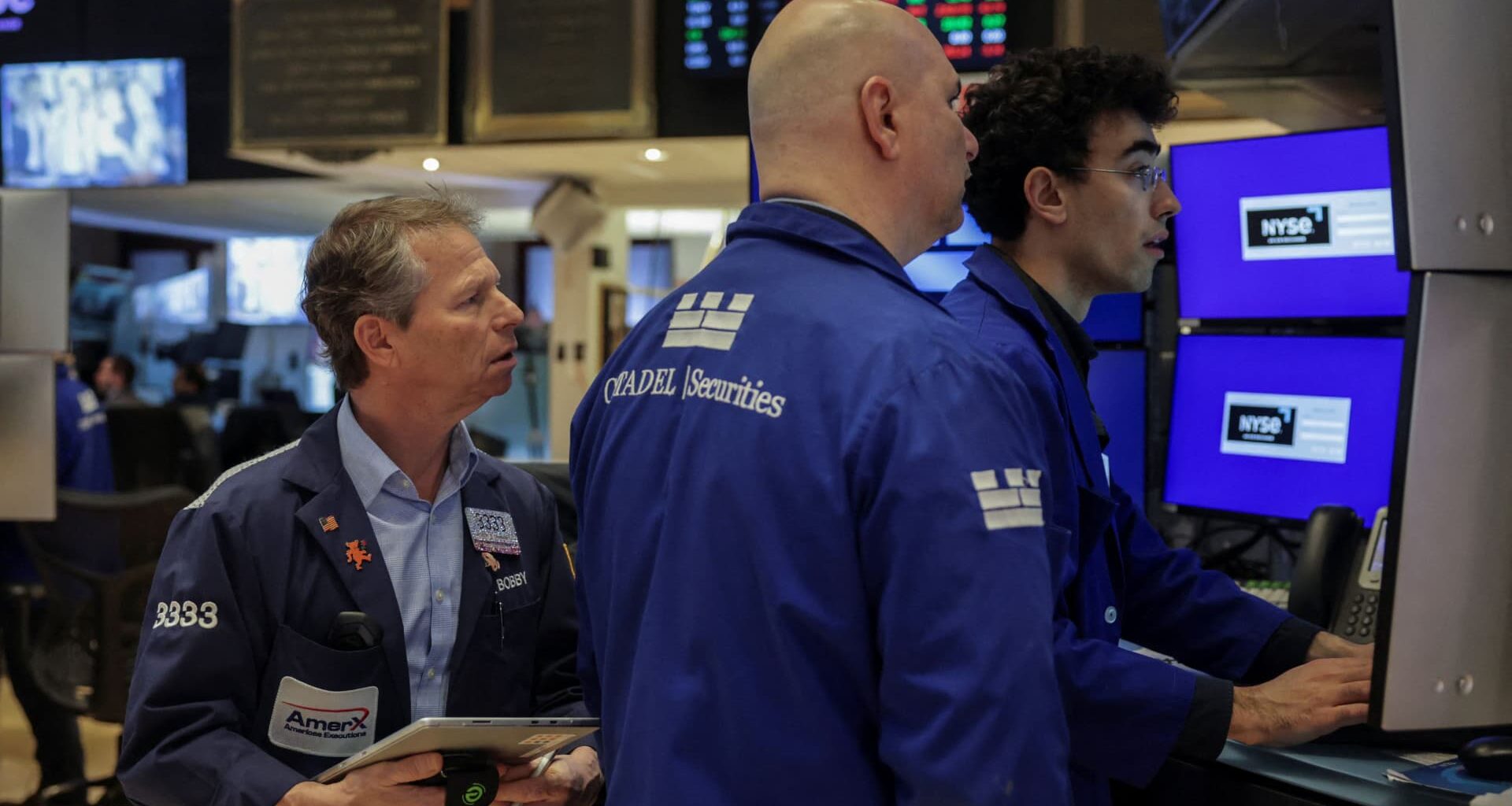
Traders work on the floor at the New York Stock Exchange (NYSE) in New York City, U.S. February 24, 2026.
Jeenah Moon | Reuters
U.S. Treasury yields moved higher on Monday even after the U.S. and Israel launched attacks on Iran over the weekend as investors failed to use the U.S. bond market as a safe haven.
A spike in oil prices raised inflation worries, helping to push yields higher.
The benchmark 10-year Treasury yield rose more than 5 basis points to 4.019%. The 30-year Treasury bond also added more than 4 basis points to yield 4.676%. The yield on the 2-year Treasury note was up more than 7 basis points at 3.453%.
One basis point equals 0.01%, and yields move inversely to prices.
U.S. and Israeli strikes on Iran over the weekend killed Iran’s Supreme Leader Ayatollah Ali Khamenei. Meanwhile, more than 200 people were killed in the country, according to state media.
Iran has launched retaliatory strikes against U.S. bases within the Middle East region. Three American service members have been killed in the operation, and five have been seriously wounded.
President Donald Trump told CNBC’s Joe Kernen that U.S. military operations in Iran are “ahead of schedule,” and has separately warned that the conflict could last up to four weeks, with further American casualties expected.
Geopolitical conflict would typically cause Treasury prices to rise and yields to fall, but it appeared concerns about rising oil prices’ impact on inflation and the potential for a drawn-out conflict with the U.S. going it mostly alone trumped the safe-haven bid.
WTI crude oil prices were last up about 8% to above $72 a barrel.
Other safe havens like gold were higher.
On the economic data front, investors are looking ahead to several important releases on Friday, including February’s jobs report, retail sales figures for January, and February’s unemployment figures. Ahead of those, investors will be keeping an eye on the ISM manufacturing report on Monday and ADP employment figures on Wednesday.