
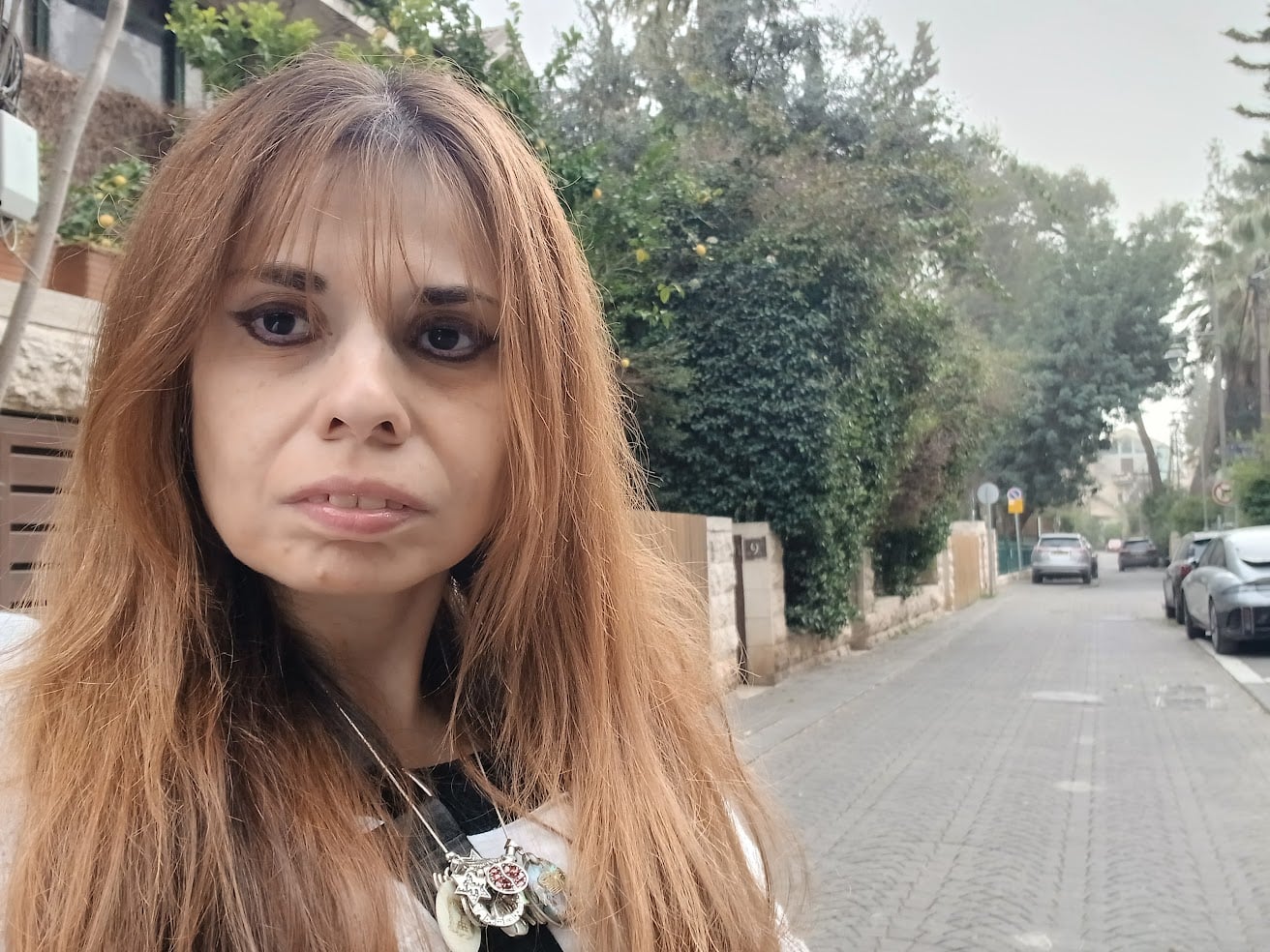
Arrival in Wartime
I made aliyah in July 2024, in the middle of war. There was no gentle entry into Israeli life, no gradual acclimation to normalcy. Within months, I experienced the Iranian missile barrage on October 1, 2024, and by June 2025, the confrontation with Iran had escalated into open warfare. I learned quickly what it means to live with sirens. I downloaded the Home Front Command app, along with Red Alert and Tzofar, like everyone else. I located the protected space in my apartment. I counted the seconds it would take to reach it. These were not theoretical exercises. They were part of daily life.
This year, I left Israel temporarily for a personal emergency in Montreal. It was not a departure from Israel as a commitment, but a necessary interruption. My apartment remained there, my books on the shelves, my neighbors in place. Israel was still home.
The Siren in Montreal
Then, on a Shabbat morning in Montreal, I woke before dawn to the sound of sirens emanating not from the street but from my phone. I had forgotten to close it before Shabbat. The alerts came in rapid succession from the Home Front Command app, Red Alert, and Tzofar. Iran had launched missiles toward Israel.
For a moment I was disoriented. Montreal was silent. The street outside my window was calm. However, I knew exactly what was happening thousands of miles away. I could picture the sequence with unsettling precision. The seconds ticking down in Jerusalem. The rush into stairwells and safe rooms. Parents gathering children. The distant thud of interceptions overhead. The waiting for the all clear. The checking of phones once it came.
There is a profound difference between following a war from a distance and having lived through it. Before July 2024, I understood Israel’s security situation intellectually, historically, politically. After living through October 7’s aftermath, the October 2024 Iranian barrage, and the June 2025 escalation, I understood it physically. War in Israel is not simply news. It is choreography. When a siren sounds, entire buildings move at once. Doors open in unison. Neighbors who may not have spoken all week gather in a protected space and stand together in shared vulnerability. The experience is frightening, but it is communal.
The Collective Pull to Return
From Montreal, what struck me most was not only the danger unfolding in Israel, but the absence of that communal reflex around me. The alerts pierced my phone, but the city did not respond. No footsteps in the hallway. No doors opening. No shared exhale after the interception reports. The contrast was stark. A country was mobilizing in real time, and I was physically removed from its movement.
After October 7, many Israelis who were abroad rushed home. Flights were rerouted through Athens, Rome, and Dubai. Some flew to Cyprus in search of boats. At the time, the urgency seemed almost counterintuitive. Why run toward danger. Now I understand that instinct more deeply. It was not about safety. It was about presence. In moments of national crisis, Israelis seek not distance but solidarity. Shared danger, paradoxically, reduces isolation.
Living in Israel during wartime reshaped my understanding of belonging. Belonging is not only cultural or ideological. It is participatory. It means that when sirens sound, you know where to go, and you know that everyone around you is moving with the same urgency. On the night of the October 2024 Iranian attack, I remember standing outside my building after the all clear. Neighbors emerged into the night air. There was nervous laughter, quick exchanges of information, glances at the sky where faint trails from interceptions still lingered. No one minimized the threat, but no one faced it alone.
In June 2025, as tensions escalated again, the pattern repeated. WhatsApp groups activated instantly. Municipal updates circulated quickly. Volunteers checked on the elderly. There is a compression that occurs during war in Israel. The country feels smaller, not geographically but socially. The line between private and public dissolves. Individual fear becomes collective experience.
Private Crisis and National Crisis
In Montreal, the emergencies I am confronting are urgent but solitary. They unfold in offices, in legal notices, in financial calculations and deadlines. They do not echo across an entire city at once. They do not trigger synchronized movement. That Shabbat morning, as Iran’s missiles were intercepted over Israel, I felt acutely the difference between private crisis and national crisis. One isolates. The other, despite its danger, unites.
The June 2025 war clarified something I had not fully articulated even to myself. Israel is no longer an abstract commitment or a symbolic homeland. It is an embodied reality. When sirens sound, even across an ocean, my internal clock aligns with Israeli time. I measure the minutes until the all clear. I imagine the stairwell in my building. I think of my neighbors descending together. The physical distance does not sever that connection.
War does not create identity, but it exposes it. Making aliyah in July 2024 meant entering Israeli society at a moment of profound vulnerability. I learned the language of alerts before I learned the rhythm of ordinary peacetime life. I became Israeli not through ceremony but through shared risk. That shared risk generates a particular kind of cohesion that is difficult to replicate elsewhere.
Belonging Beyond Geography
On that Shabbat morning in Montreal, I did not close my phone. I heard every alert as it came through, including some that sounded quietly in my bag while I was at synagogue. Each notification marked another launch, another interception, another reminder that Israel was under attack. When the final alert faded, I sat in silence. Montreal remained calm, its streets undisturbed. Israel had just endured another barrage. The contrast did not produce detachment. It produced clarity. Being Israeli means participating in a collective fate, even when temporarily removed from its geography.
There is a paradox at the heart of Israeli life. The country exists under persistent threat. However, its society often demonstrates extraordinary solidarity in moments of acute danger. Fear is real, trauma is cumulative, and the toll is heavy. However, the response is rarely solitary. People move together. They speak to one another. They share information, resources, and reassurance. The siren, for all its terror, also signals interdependence.
From afar, I experienced that interdependence not as spectacle and not as sentiment, but as something steady and unmistakable. The war with Iran in June 2025 clarified that my sense of home is no longer defined primarily by physical location, but by participation in a shared national rhythm. Geography matters, but shared vulnerability shapes identity more deeply. When sirens sound in Israel, even across an ocean, they do not feel like distant alerts. They resonate in the bodies of those who have descended the stairwell, who have counted the seconds, who have stood shoulder to shoulder in protected spaces waiting for the all clear. That experience does not dissolve with distance. It lingers. It binds.
Bonnie K. Goodman, BA, MLIS, is a historian, journalist, librarian, educator, and artist. She holds a Diploma of Collegial Studies in Communications: Art, Media, and Theatre (specializing in Fine Arts and Jewish Studies) from Vanier College, a B.A. in History and Art History, and an MLIS from McGill University, with graduate study in Judaic Studies at Concordia University and Jewish Education at the Hebrew University of Jerusalem’s Melton Centre. She has recently pursued advanced training in drawing, painting, and sculpture at Bezalel Academy of Arts and was a 2025 participant in the Studio of Her Own professional development program for artists in Israel.
She contributed to the landmark reference work History of American Presidential Elections, 1789–2008 (2011), edited by Gil Troy, Arthur M. Schlesinger Jr., and Fred L. Israel, and authored On This Day in History…: Significant Events in the American Year (2024). A former Features Editor at the History News Network, where she launched influential series such as Top Young Historians and History Doyens, Goodman has also worked as a political reporter at Examiner.com, covering U.S. politics, universities, religion, and culture.
Her academic and journalistic writing bridges historical scholarship and public engagement, focusing on American political history, Jewish identity, and the intersection of education and culture. Goodman writes and teaches on topics that explore the relationship between history, collective memory, and cultural expression. Her recent research and essays have appeared in The Jerusalem Report, The Times of Israel, and History News Network. Through both her historical writing and visual art, Goodman seeks to illuminate the continuities between the Jewish past and present and to highlight how memory and creativity shape national and spiritual identity.