
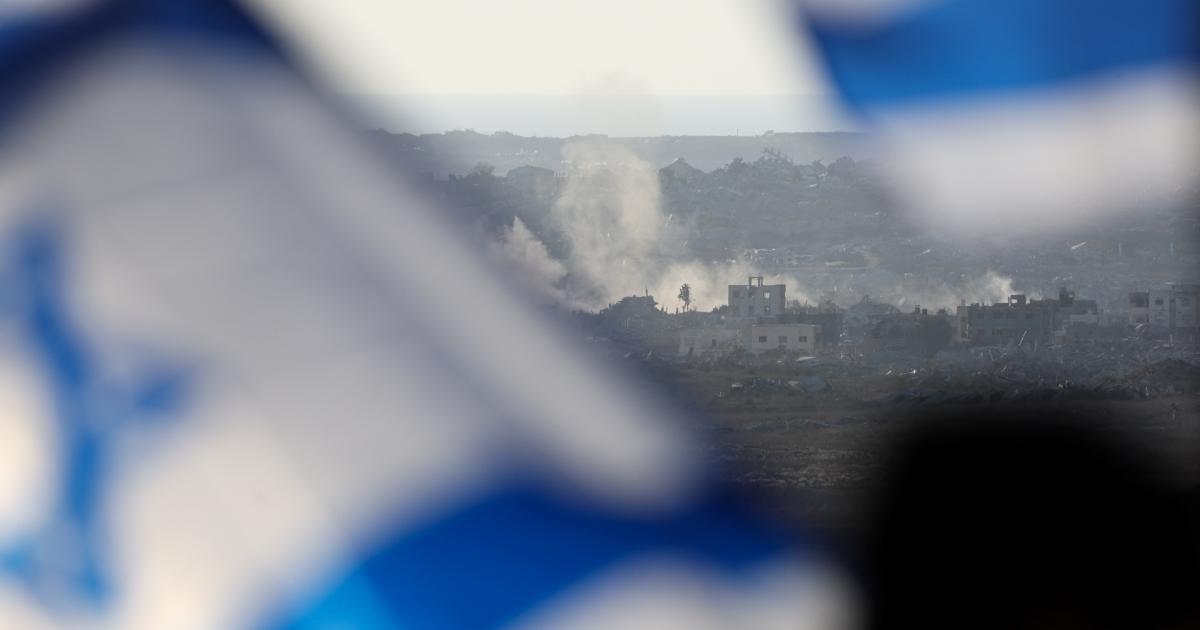
The war that erupted after the Hamas-led massacre of October 7, 2023, has become the most transformative conflict in the Middle East since the Arab Spring. Yet more than 22 months after the Israel Defense Forces launched a campaign to destroy Hamas, Israel still has no defined political endgame. Negotiations over a cease-fire in Gaza have faltered, and Israel’s failure to envision the war’s “day after” has deepened a humanitarian catastrophe in the strip, which now includes worsening hunger. As the conflict increasingly becomes a deadly regional and international problem, actors outside Israel are stepping in to try to bring resolution: last Monday, France and Saudi Arabia launched a plan at the United Nations to force a more conclusive end to the fighting, encouraging other countries to recognize the state of Palestine and support the creation of states along borders delineated in 1967 on the basis of UN Security Council resolutions. Canada, France, and the United Kingdom have said that they will recognize the state of Palestine by September unless the war ends.
Israel’s current government appears unable to change its approach, even though its principal military objective—to dismantle Hamas’s terror infrastructure—has largely been achieved. The absence of any long-term Israeli vision has left Israel, Gaza, and the broader region in a protracted state of chaos. Wars without a clear political goal cannot be won. They cannot be ended. The longer the vacuum in Israel’s planning persists, the more international actors will have to come together to prevent an even worse catastrophe than the one currently unfolding. They must do so not only for the sake of Israelis and Palestinians but for the region’s stability and their own interests. The war that followed Hamas’s October 7 slaughter was just. Today it is becoming unjust, immoral, and counterproductive, shifting responsibility for the humanitarian catastrophe in Gaza from Hamas to Israel.
CLIMATE CHANGE
Two events have reshaped the strategic landscape of the Middle East in the twenty-first century: the Arab Spring and the October 7 attacks. The Arab Spring, which began in late 2010, radically altered the internal dynamics of many Middle Eastern regimes. It empowered street movements and weakened autocrats’ traditional legitimacy, forcing even the most authoritarian leaders to become more responsive to their publics’ sentiment. Israeli and U.S. leaders should have understood that, in the long run, the Arab Spring would influence how a variety of regional actors responded to the Israeli-Palestinian conflict. The Palestinian cause has long served as a unifying banner for otherwise disparate actors—Sunnis and Shiites, Arabs and Persians, Islamists and nationalists. It provided ideological glue for Iran’s “ring of fire”: Hezbollah in Lebanon, Hamas in Gaza, the Houthis in Yemen, and Shiite militias in Iraq and Syria. These groups have often been at odds, but the cause of Palestine has served as a rallying point and a source of legitimacy in the wider Muslim world.
Ignoring this reality was a critical error by regional and global policymakers alike. The October 7 massacre was not merely an act of barbaric terrorism. It sent a deliberate political message, directly challenging the doctrine of “conflict management” that had defined Israel’s policy under Prime Minister Benjamin Netanyahu for over a decade. It was also a rebuke to U.S. assumptions that Arab states would proceed in normalizing their diplomatic ties with Israel without serious efforts to resolve the Israeli-Palestinian conflict.
That illusion shattered in the fall of 2023, exposing the fragility of a region held together by diplomatic pragmatism but roiled by unresolved grievances. The 2020 Abraham Accords, brokered by the United States, were celebrated as a diplomatic triumph. They formalized peace between Israel and several Arab nations—most notably Bahrain, Morocco, and the United Arab Emirates. But these accords rested on the dangerous, misguided belief that the Palestinian issue had become irrelevant in the region and that further normalization agreements could be reached while bypassing the Palestinian aspiration for self-determination. This strategic miscalculation emboldened Israel to deepen its control over the West Bank—through settlement expansion and the dispossession of Palestinian communities—and weaken the Palestinian Authority. It allowed Hamas to further fill the political vacuum in Gaza and sideline the hobbled PA, portraying itself as the sole defender of Palestinian rights.
In September 2023, U.S. President Joe Biden unveiled the India–Middle East Corridor, an ambitious economic plan to link India to Europe via routes through Israel, Jordan, Saudi Arabia, and the United Arab Emirates. Intended as a strategic counterweight to China’s Belt and Road Initiative, this project similarly marginalized the Palestinians, offering them only symbolic gestures. To Hamas, and particularly to its leader, Yahya Sinwar, the proposed corridor represented a betrayal by Arab leaders and international actors. It is now understood that the U.S.- and Saudi-led plan was a central factor in Sinwar’s decision to launch the October 7 attack.
The massacre and Israel’s subsequent military campaign redefined the political calculus of other regional rulers, including those in the Gulf monarchies. As Saudi Crown Prince Mohammed bin Salman candidly put it in September 2024 to U.S. Secretary of State Antony Blinken: “Do I care personally about the Palestinian issue? I don’t, but my people do.” This statement highlighted a broader truth: public opinion, even in autocracies, has become a force leaders cannot afford to ignore.
HARD FORK
Following its unprecedented military successes, Israel now stands at a historic T-junction. One path—the one Israel is now on—will lead the country toward the erosion of its current peace treaties with Egypt and Jordan, the deepening of internal polarization, and international isolation. It will encourage further radicalization across the region, more religious-nationalist violence from global jihadist organizations that feed on chaos, a decline in support among U.S. policymakers and American citizens, and an increase in antisemitism worldwide. To choose the other path—one that enhances security for Israelis and Palestinians alike and fosters stability and prosperity across the Middle East—Israel must head toward a regional agreement that includes a viable two-state solution.
This war is part of a persistent, deep-rooted struggle over identity, history, and belonging. It is a conflict shaped by asymmetric power but symmetrical fear. Its resolution must allow each side to craft a narrative of victory. This, in turn, requires active international engagement and leadership. Any durable resolution must be not only political and territorial but also psychological and symbolic. Only a regional framework with cohesive international backing can provide the external legitimacy, broader incentives, and political cover necessary for both sides to compromise.
The 2002 Arab Peace Initiative, introduced by Saudi Arabia and endorsed by the Arab League, remains the most comprehensive and underutilized framework for resolution. Unlike previous diplomatic efforts, it had two critical elements: a clear end goal—two states on the basis of the 1967 borders with agreed land swaps—and full regional participation in the negotiating process. It represented an inversion of the Arab League’s 1967 Khartoum declaration, transforming that statement’s infamous “three no’s”—no peace, no recognition, no negotiations—into a collective regional yes.
Successive Israeli governments ignored this proposal. But for Israelis, the initiative could now be understood as a strategic victory: the culmination of decades of diplomatic and military effort that resulted in broad Arab recognition of the Jewish state’s right to exist. Ze’ev Jabotinsky—one of the founders of Zionism and a key architect of Israel’s security doctrine—wrote in 1923 that true negotiations with the Arab world would be possible only once it recognized that the Jewish people were in the region to stay. For Palestinians, after more than 140 years of struggle, the nakba in 1948, civilian uprisings against occupation, and the heavy toll of successive wars, the framework proposed by the Arab Peace Initiative would offer a long-denied acknowledgment of national identity and statehood. Crucially, it addresses not only borders and sovereignty but also the regional security architecture necessary for lasting peace.
PREACH BEYOND THE CHOIR
Regrettably, the current Israeli government has demonstrated that it actively opposes a Palestinian state. So the time has come for international actors to move forward on a realistic, staged process inspired by the Arab Peace Initiative as well as the Egyptian and more recent French-Saudi proposals. The broadest possible group of countries, including United States, Saudi Arabia, and moderate Arab states, must issue a joint declaration: the goal is two sovereign states, Israel and Palestine, living side by side in peace and mutual recognition. The clarity provided by such a statement can break through the fog of mistrust between Israelis and Palestinians and allow both to imagine a future worth striving for.
The first practical step is to secure a cease-fire in Gaza and the release of all the remaining Israeli hostages. An interim, technocratic Palestinian government under U.S.-Saudi oversight could handle civil affairs in Gaza, while a regional Arab security force, potentially under an Arab League or multilateral mandate, could maintain order. Saudi Arabia and the United Arab Emirates, along with major international organizations, could lead the large-scale reconstruction of Gaza. Hamas can gradually be disarmed by Palestinian Authority forces with regional support.
Within 18 to 24 months of a cease-fire, internationally supervised elections should be held in the West Bank and Gaza, with the aim of creating a legitimate, unified Palestinian government capable of representing its people in final-status negotiations. Anchored in the Arab Peace Initiative, guided by existing UN resolutions, and conducted with robust international mediation, a final agreement would set permanent borders, involving land swaps based on security, demography, and territorial continuity. It would also establish security arrangements, negotiate solutions for Israelis wishing to reside in Palestine and Palestinians seeking to live in Israel, decide the status of Palestinian refugees and of Jerusalem, and affirm mutual recognition.
In a parallel process, the military achievements of Israel and the United States must be leveraged to launch comprehensive negotiations with Iran to stop it from acquiring nuclear weapons. The EU, the UN, China, Israel, Saudi Arabia (representing the Arab League), and the United Nations must coordinate this process and establish robust international inspections.
FROM STRENGTH TO STRENGTH
In a 1997 interview, Sheikh Ahmed Yassin, Hamas’s founder, made a chilling prediction, envisioning that by 2027, a unified Islamic state would rise between the Jordan River and the Mediterranean, governed by sharia law. When asked what could prevent that, he replied: “The only thing I fear is a reality in which Palestinians believe the Jews will allow a Palestinian state to exist alongside Israel.”
This admission revealed a core truth: Hamas’s power depends on hopelessness. It thrives on the absence of alternatives. But if a credible, internationally backed pathway to Palestinian statehood were offered, Hamas’s appeal would collapse.
Israel’s military deterrence has been restored. It has shown the capacity to defend itself and to deter its enemies. But force alone cannot dismantle Iran’s proxy network and deliver Israel lasting peace and security for its future generations. Only a regional agreement with strong international backing that ultimately yields a viable two-state solution can preserve Israel’s security and Jewish-democratic identity, end the cycle of violence, and transform the Middle East from a battlefield into a zone of cooperation. This is not utopian idealism. It is in the interest of regional and international actors. And for Israel, it has become a strategic necessity.
Loading…