
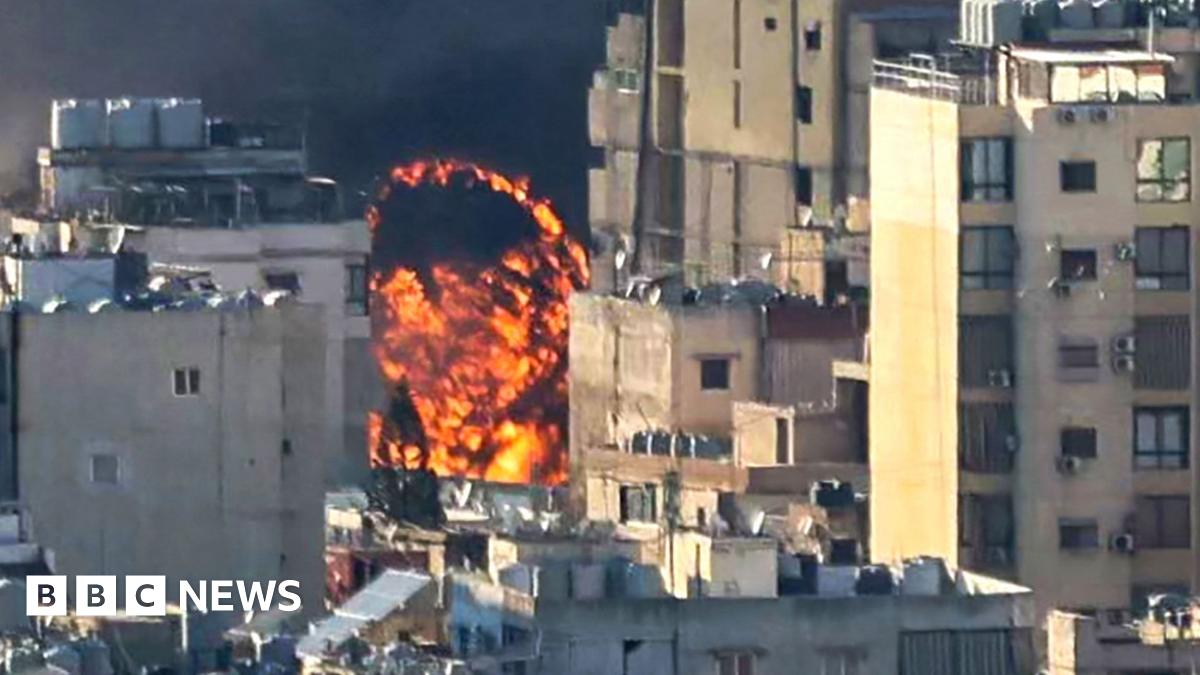
Lebanese President Joseph Aoun denounced the Israeli strikes while also warning against turning Lebanon into a battleground for conflicts “that do not concern us”.
He later chaired a cabinet meeting at Baabda Palace, where ministers also condemned the firing of rockets from Lebanese territory, saying it violated the November 2024 ceasefire agreement that ended a year-long war between Israel and Hezbollah.
Prime Minister Salam stressed that “the decision of war and peace” rested exclusively with the state, and said this “necessitates the immediate prohibition of all Hezbollah’s security and military activities as being outside the law, and obliging it to hand over its weapons”.
The move marked one of the clearest challenges yet to the Hezbollah’s long-standing parallel authority in Lebanon.
The head of Hezbollah’s parliamentary bloc, Mohammed Raad, said there was no justification for the “government to take impractical decisions against Lebanese who refuse occupation”.
“The Lebanese expected a decision banning aggression; instead, they face a decision banning the rejection of aggression,” he added.
Hezbollah, which is designated as a terrorist organisation by countries including the UK and US, has previously said its fighters will not disarm until Israel withdraws from southern Lebanon and stops its air strikes.
Hezbollah’s arsenal has long divided Lebanon, which is still scarred by its 1975–1990 civil war.
Calls for the group to lay down its weapons have grown louder since its last conflict with Israel, which began when Hezbollah fired rockets at Israeli positions in a disputed border area a day after Hamas attacked southern Israel on 7 October 2023.
Israel launched an intense air campaign and ground invasion against the group in September 2024, saying it wanted to ensure the safe return of residents displaced by the rocket attacks.
The war killed 4,000 Lebanese and 120 Israelis, and left Hezbollah significantly weakened. Qasem’s predecessor, Hassan Nasrallah, died in an Israeli strike in Dahieh.
Under the US- and French-brokered ceasefire, Hezbollah agreed to end its armed presence south of the Litani river, about 30km (20 miles) from the border with Israel. Israel also agreed to withdraw its forces from the area.
Since the truce, both sides have accused each other of violations.
Israel has accused Hezbollah of trying to recover its military capabilities, including in the south.
The IDF has also carried out near-daily strikes on targets it says are linked to Hezbollah, and its troops have continued to occupy at least five positions in southern Lebanon.
Additional reporting by David Gritten in London