
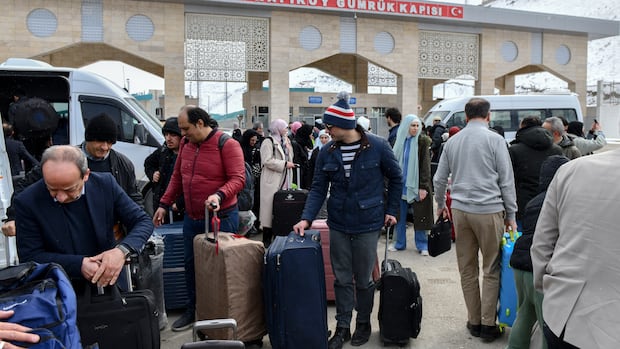
Omid Golabkesh dragged his suitcase down a long hallway marking the exit of the Kapikoy border crossing in eastern Turkey. He had nearly reached the end of an exhausting journey that included a 12-hour drive to the checkpoint from his home in Tehran.
The border crossing sits on a mountainous section of the more than 500-kilometre border between Turkey and Iran. It is one of three places where people can cross from Iran and the gateway provides a window into the country, which is largely cut off from the outside world due to near-total internet blackouts.
Like many who stepped out into bright sun and frigid air, Golabkesh initially appeared wary of the journalists and cameras gathered there.
But unlike most, he gave his full name, consented to being filmed and delivered a blunt assessment on camera in Farsi.
“Iran is done. Iran is done,” he said. “Iran didn’t care for its own people and now people aren’t supporting Iran. The situation is so messed up … only God can help.”
For the past two days, CBC News has been speaking with Iranians who recently left, including those who were at the border, and those who had relocated to the Turkish city of Van, 100 kilometres away. Those who shared their thoughts spoke often of fear, resolve and a hope that out of all of this, there will be peace.
Since Saturday, Iran has been hit by a wave of airstrikes from the U.S. and Israel, targeting the country’s military, defence systems, navy and its top echelon of political leaders. On March 1, Iran’s state media confirmed that Supreme Leader Ayatollah Ali Khamenei had been killed, creating uncertainty around the future of the regime overall.
WATCH | Fear remains for Iranians: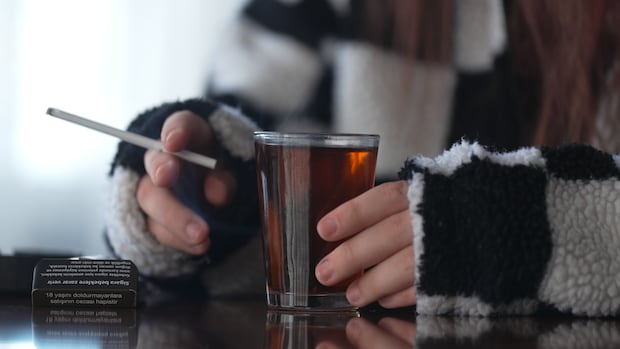
Khamenei may be dead, but fear still persists, Iranian says
An Iranian woman who fled Tehran during the January protests spoke of her hopes and uncertainty following the killing of Ayatollah Ali Khamenei.Window into Iran
Many Iranians whom CBC News interviewed feared speaking publicly. Often, when they agreed to interviews, they often requested that their name or image be withheld because they feared facing reprisal. Iran’s brutal clerical regime frequently imprisons and kills those seen to be expressing dissent.
Hundreds are crossing the border every day, including those who are returning to the country from abroad, and had to make the journey in by vehicle as the airspace over Iran has been closed.
Many of those who are leaving have dual citizenship or family or business opportunities abroad.
On Monday afternoon, a young Iranian man told CBC News his father was going to leave Iran on business, but the entire family decided to join him in Turkey because of what he called the “domestic situation.”
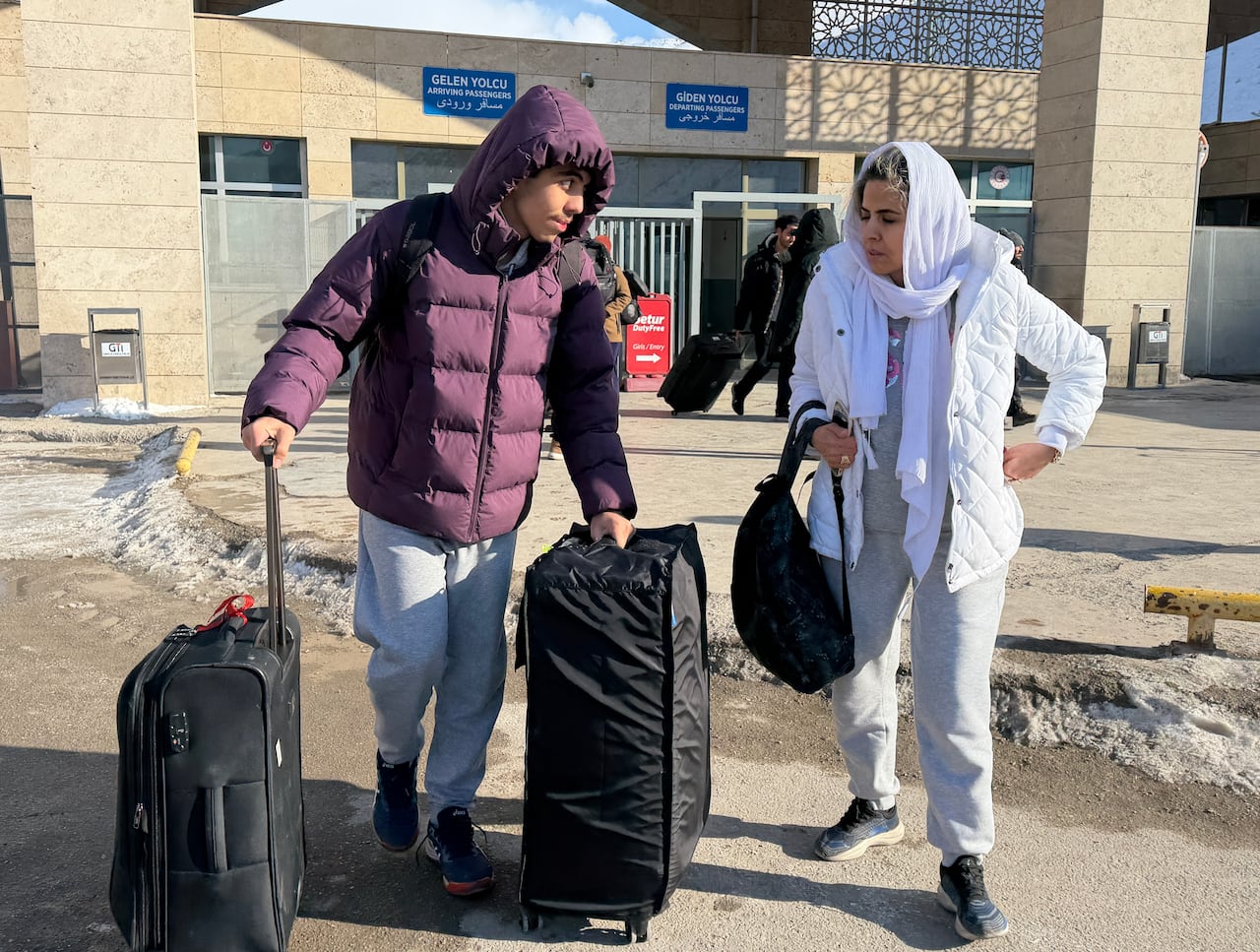 A young man, who only wanted to be identified as Sam, at the Kapikoy border crossing with his mother after leaving the families home in Tabriz, in northern Iran. (Briar Stewart/CBC News)
“Things are hard,” said the man, who said he only wanted to be identified by his first name, Sam.
They had left their family home in Tabriz, Iran, in the middle of the night.
“[The city] is, like, half-open, but the main hours of the day, people are staying at home, because they’re scared, of course.”
An Iranian American, who only wanted to be identified as Bridget, said she was scheduled to fly out of Tehran just as the U.S. strikes began. She was already on the plane when the pilot announced the flight would be grounded and everyone needed to get off.
It took her two days to reach and cross the border. Once she got there, she said she joined a small crowd of Iranians waiting to leave.
“People were actually asking me, you know, ‘The United States not gonna win, is it?’” she said.
“And I really thought they were joking…. I mean, we just have to see what the losses are here.”
Mounting strikes and deaths
It is difficult to get an accurate and verified picture of what is going on in the ground in Iran because the internet has been largely cut off, the media is controlled by the state and few journalists are allowed in to report. But the Iranian Red Crescent, a humanitarian organization working in the country, said that more than 550 people have been killed since the strikes began early Saturday morning.
On Monday, the U.S. military said it had hit 1,250 targets, while U.S. President Donald Trump warned during an interview with CNN that “the biggest wave” in its war with Iran hadn’t yet begun.
Trump had been threatening to strike Iran for several weeks.
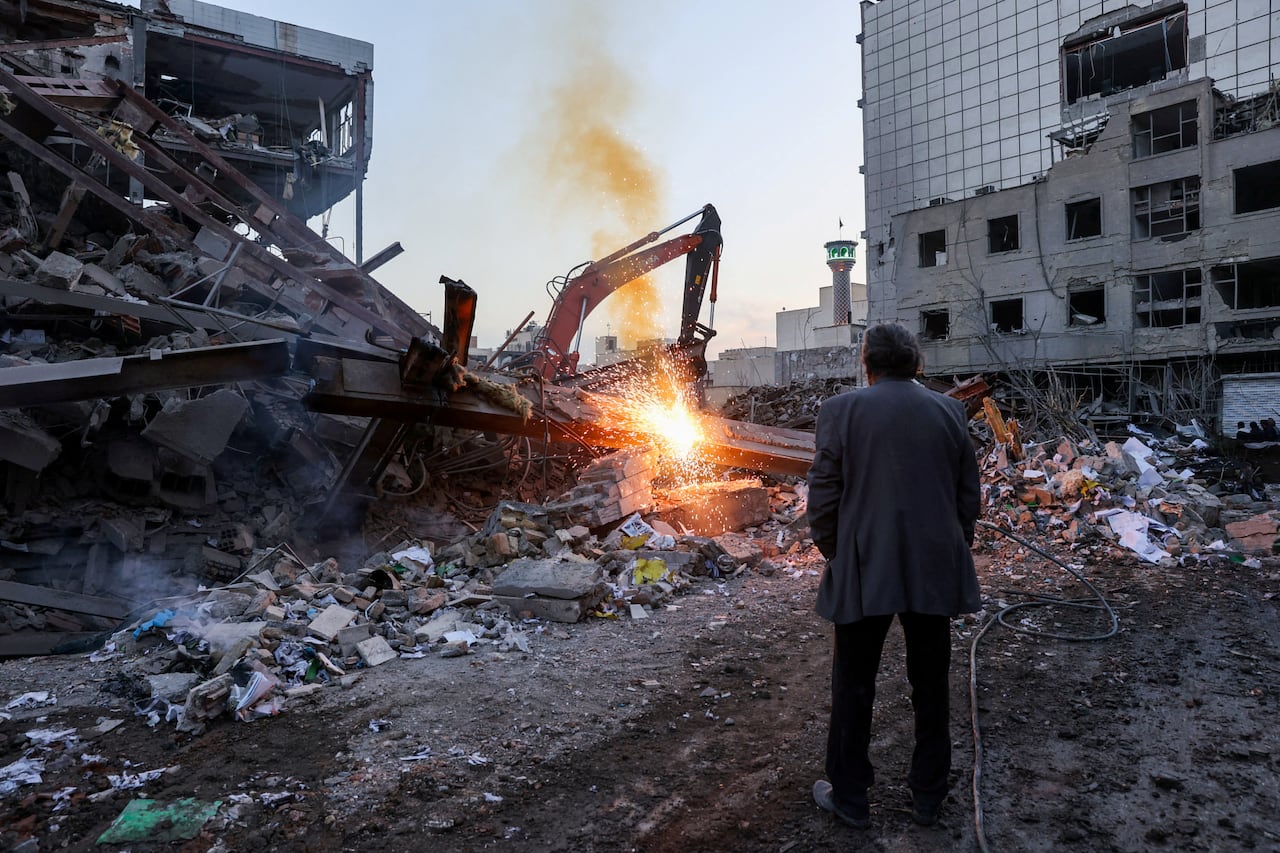 Aftermath of an Israeli and the U.S. strike on a police station, amid the U.S.-Israel conflict with Iran, in Tehran on March 2. (Majid Asgaripour/West Asia News Agency/Reuters)
After mass protests erupted in the country at the end of December, leading to ruthless crackdown and the deaths of thousands, Trump told Iranians to keep protesting, promising that “help was on the way. “
The missiles have already killed dozens of high-ranking officials including the long-ruling Supreme Leader Ayatollah Ali Khamenei. A 23-year-old Iranian told CBC News that was when her hands started shaking.
She was caught up in a wave of emotions, she said: fear for her family in Iran, and also joy that the war could mark the beginning of the end of Iran’s ruthless regime.
WATCH | What one man from Tabriz thinks: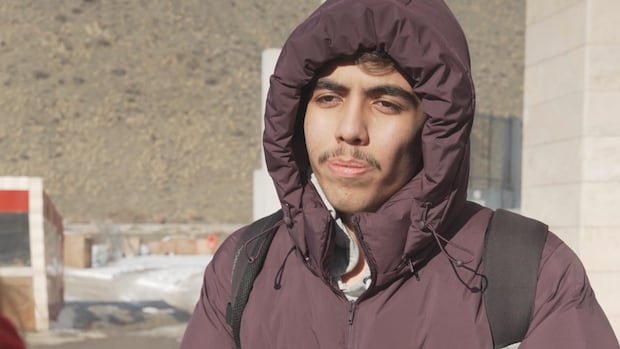
Iranian man crossing the border says people are afraid
An Iranian man from Tabriz says shops are closed and people are staying close to home because of the bombings.
The woman, who CBC News spoke with in Van, asked not be identified. She fled Tehran in January during the protests when she said authorities were firing into crowds killing indiscriminately.
She said some of her friends disappeared for days and returned with bruises on their bodies, after having been detained.
“I left Iran when I saw these things happening. Even when you stayed at home, it was still really scary,” she said to CBC News during an interview in Van, Turkey.
“You could hear the sounds, you could see everything was on fire.”
‘We all aspire to be free’
The woman had pre-purchased a bus ticket to return to the country on Monday as she didn’t want to overstay her 90-day legal limit in Turkey, but she said her mother called and urged her to continue staying away.
With the internet down, she has been unable to communicate with most of her friends. She hasn’t been able to reach her family through the phone lines, and has only been able to talk to them when her mother calls her phone.
“The last time I talked to my friends.… They were telling me it’s over. It’s the end. We are going to have a really big celebration,’” she said.
 This 23-year-old Iranian woman fled the country during the mass protests in January, and believes it is too dangerous to return now. She didn’t want to be identified as she was criticizing Iran’s regime. (Adrian Di Virgilo/CBC)
“But I don’t really know what’s going to happen yet, because it won’t end with just Khamenei dying.
“The whole regime has to fall. “
In the months before Khamenei’s death, there were reports that he was working on a succession plan. On Sunday, Iran formed a council to assume leadership duties and govern the Islamic Republic until a new supreme leader can be chosen.
In a pre-recorded video address announcing the start of the operation that Washington has dubbed “Epic Fury,” Trump told Iranians they were about to have an opportunity to “take over” their government,” adding that it could be their only chance for generations.
The 23-year-old said many of the people she knew were waiting for Trump to do something. Now that the U.S. is striking the country, she believes it will only be a matter of time before people rise up again, like they did in January.
“They will come back. They are just waiting for a signal,” she said.
“We really don’t know about the future; we only want this regime removed. We all aspire to be free.”