
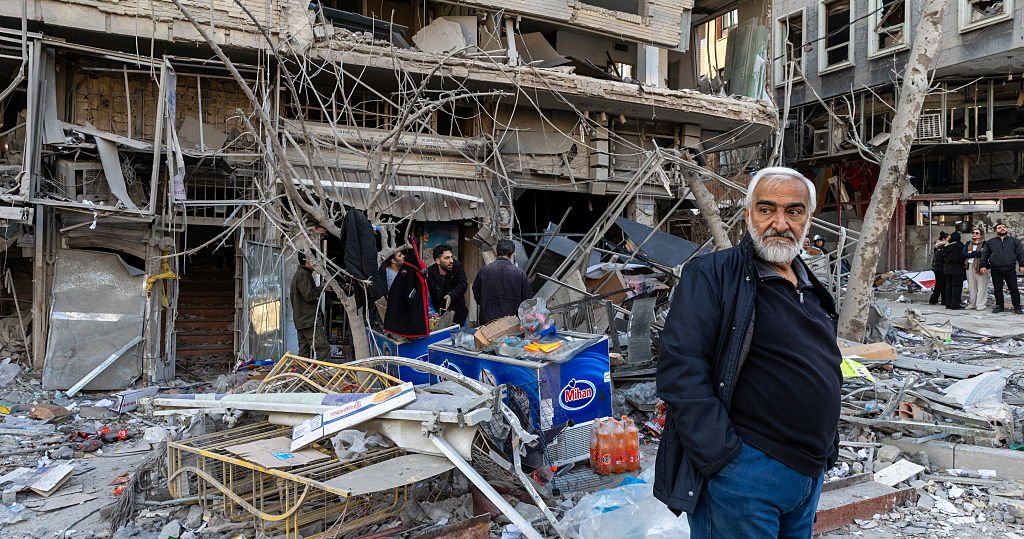
Iran – one of the world’s largest oil producers – is being attacked by the US and Israel, while the country itself has retaliated with attacks across the Middle East. Global Witness stands with the UN and other voices calling for an immediate ceasefire
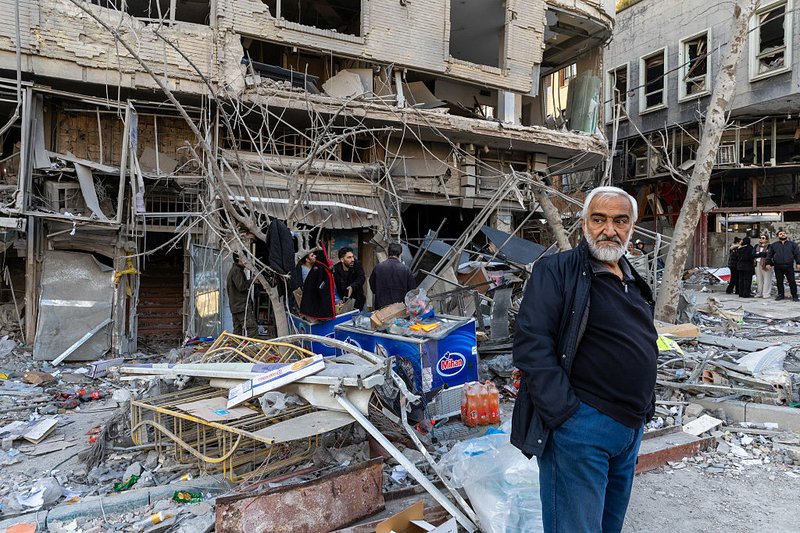
People in Iran and across the Middle East are being hit hard by the conflict. Majid Saeed / Getty
As the sun rose on 28 February, the US and Israel launched a series of aerial attacks across Iran, killing the Islamic Republic’s Supreme Leader Ayatollah Ali Khamenei and several senior regime officials.
US-Israeli bombing raids and missile strikes have targeted cities and military installations across Iran, killing more than 750 people – including 175, most of them children, sheltering in a school in the south of the country.
In response, Iran has launched missiles and drones at US allies across the Gulf, hitting US military locations, oil and gas installations, and civilian areas in Saudi Arabia, Bahrain, Qatar, the United Arab Emirates (UAE), Kuwait, Jordan, Cyprus and Iraq.
Hostilities have quickly spread throughout the region, with dozens killed in Lebanon by Israeli raids following rocket fire from the Iran-aligned Hezbollah militia.
Why did the US and Israel attack Iran?
The conflict comes after months of US military build-up in the region and repeated failed negotiations between the US and Iran over Tehran’s nuclear programme. President Donald Trump said the “massive and ongoing military operation” was launched now because Iran had “rejected every opportunity to renounce their nuclear ambitions.”
Israel has long viewed the Islamic Republic, established during the Iranian Revolution of 1979, as an existential threat, and fought a punishing 12-day war against Iran with US support in June.
Both Israel and the US claim that Iran still seeks to own nuclear weapons, despite the 2015 US-Iran nuclear deal and Trump’s claim following last year’s conflict that Iranian nuclear facilities had been “obliterated.”
Omani mediators reported on the night before the US-Israel attack that the latest round of US-Iranian nuclear talks were close to a breakthrough, meaning “Iran will never ever have nuclear material that will create a bomb.”
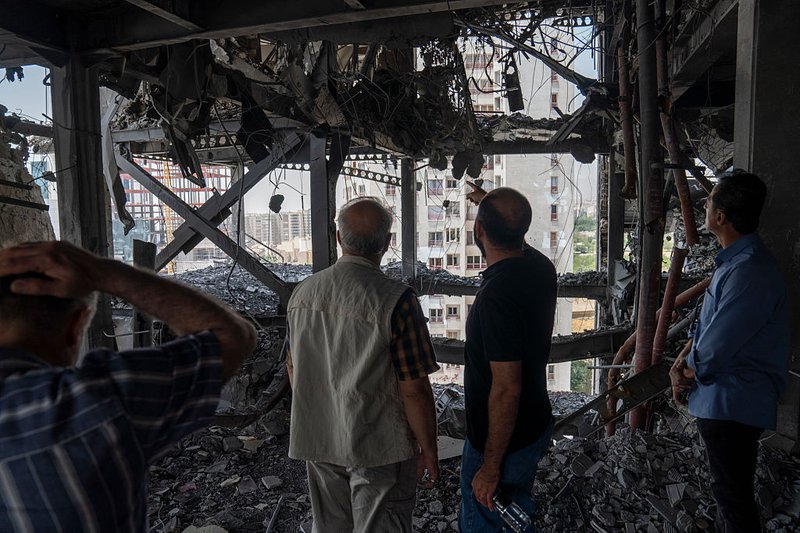
Iranians survey damage to a residential building in Tehran, which was attacked at the start of 2025’s 12-day war. Majid Saeedi / Getty Images
US Secretary of State Marco Rubio, three days after the initial strikes, said the US attack pre-empted one by Israel on Iran, and was launched to minimise retaliation on US assets in the region.
Iranians themselves have endured years of economic turmoil, made worse by US and EU sanctions on Iran’s oil sector over its alleged nuclear ambitions, financial links to international terrorism, and human rights abuses.
Over the New Year, authorities launched a deadly crackdown on protesters following the sharp collapse of the country’s currency. While reporting restrictions make the exact death toll impossible to know, reports from inside Iran suggest as many as 30,000 people were killed by their own security forces.
Trump repeatedly threatened to attack Iran if authorities did not end the bloodshed and return to nuclear talks.
Although it is ruled as a theocracy with only limited power delegated to its elected parliament, Iran is culturally and ethnically diverse. Under the Islamic Republic, reformist movements have been repeatedly throttled, and while there are a number of opposition parties with widespread support, their leaders are either in exile or under heavy state surveillance.
How will the attack on Iran affect oil prices?
Oil has not been the stated justification for the US and Israel’s attack on Iran. But their attack, and Iran’s response, is already causing major disruptions to oil and gas supplies – disruptions that may affect people around the world for a long time.
Iran is one of the world’s largest producers of oil and gas. Despite US sanctions, in 2025 the country pumped out more fossil fuels than any other country save the US, Russia, Saudi Arabia and Canada, according to the energy data firm Rystad. Much of this has gone to China, with Iranian oil making up over 13% of its seaborne imports.
Surrounding Iran, and well within range of the country’s missiles and drones, are some of the world’s other largest oil and gas producers, including Saudi Arabia, Iraq, Kuwait, Oman, Qatar and the UAE.
Together with Iran, these countries produce over 20% of the world’s fossil fuels, according to Rystad. And Iran has said it will prevent tankers from travelling through the only shipping lane through which most of these fuels pass – the Strait of Hormuz.
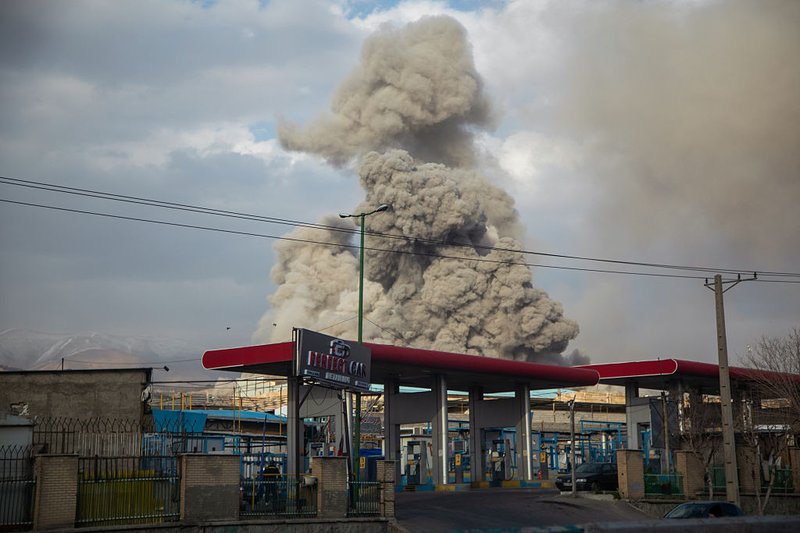
Smoke rises after an explosion in Tehran, Iran. Oil supplies already face disruption globally days into the conflict. Majid Saeedi / Getty Images
The conflict has already begun disrupting these energy supplies, and it appears to be escalating quickly. Oil and gas facilities in Saudi Arabia, Kuwait and Qatar have shut following attacks by Iranian drones, while tankers near the Strait of Hormuz have also been attacked.
Fossil fuel prices have spiked. On the day that Iran started attacking its neighbours’ facilities, oil prices jumped by 10% and gas by 50%.
It remains to be seen for how long, and how significantly, the conflict destabilises oil and gas trade. China can weather some disruption to Iranian supplies, having built up its reserves. But the Russian invasion of Ukraine suggests that international markets can take up to a week for war-driven energy spikes to hit petroleum consumers in regions like the US or Europe.
If the conflict does not end quickly, oil prices could jump from their pre-conflict level of $67 per barrel to above $100.
Who wins and who loses in an Iran war?
The attacks by the US and Israel, and the counterattacks by Iran and its allies, have already killed many people and, if the conflict continues to widen, will kill many more. It is critical that hostilities end immediately.
It is also essential that the people of Iran are allowed the right to elect a representative government that respects human rights at home and abroad.
There is a real risk, however, that hostilities will not end quickly.
If this happens there will, of course, be winners. Following the latest outbreak of hostilities, the stocks of many oil companies and arms manufacturers are doing well.
More important, however, are those whose lives and livelihoods are at risk, both in Iran and across the Middle East. Too many have been killed already, and the UN has called for an immediate ceasefire and deescalation. It is crucial that this call is heeded.
At the same time, this conflict looks likely to harm people around the world who still depend on the region’s fossil fuels for their energy supply – an increasingly common side effect of our continued reliance on oil and gas.
In recent years, war and oil have been closely linked, from Russia and Ukraine to Venezuela. In the case of the former, the war caused oil and gas prices to jump, leading to an energy crisis, widespread inflation and food insecurity across the globe. There is a real risk – in Europe, in the UK and across Asia – that it may happen again.
Authors