
(Bloomberg) — Oil wiped out earlier gains on a report that Iran indirectly reached out to the US in a bid to end the war in the Middle East, while the conflict continues to menace vital global energy flows.
Brent steadied near $81 a barrel, after surging in the previous two sessions. The New York Times reported that operatives from Iran’s Ministry of Intelligence reached out to the CIA through another country’s spy agency with an offer to discuss terms for ending the conflict.
Most Read from Bloomberg
Meanwhile, Saudi Arabia said there was an attempt to attack its Ras Tanura refinery. The kingdom also confirmed it’s diverting supplies away from the Persian Gulf to the Red Sea as part of a plan to keep operations running. An Indian refiner told customers it was suspending fuel exports as global prices soar.
The oil market has been pitched into turmoil by the US-Israeli war against Iran, with strikes and counter-strikes spreading across Persian Gulf nations, forcing major producers to shut output and all-but stopping traffic through the Strait of Hormuz. Trade disruptions beyond oil are raising the specter of a global energy crisis.
President Donald Trump said on Tuesday the US International Development Finance Corporation would offer insurance to vessels to help ensure the flow of energy and other trade, providing a naval escort “if necessary.” But the shipping industry sees it — at best — as only a partial solution to a historic crisis and few details about the plan have emerged.
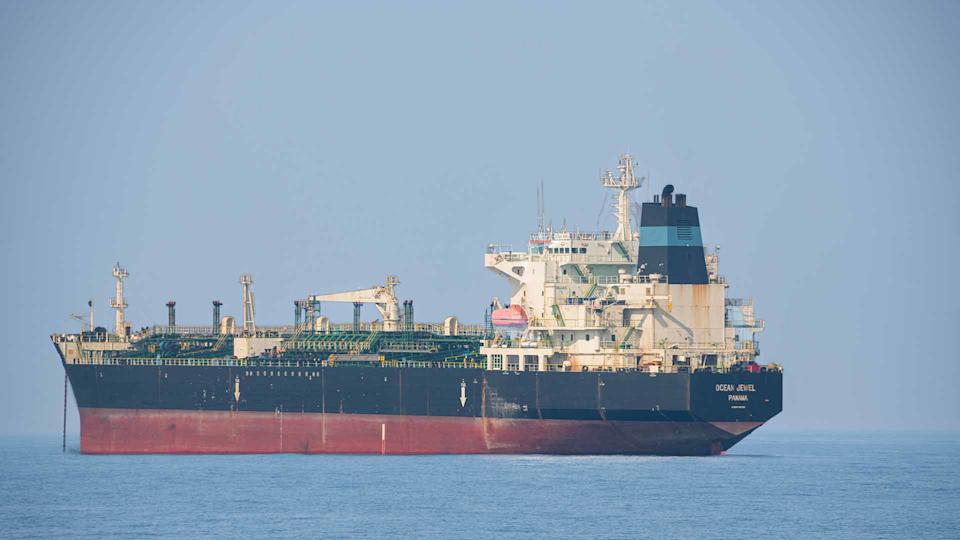 President Donald Trump said the US would provide insurance guarantees and naval escorts to ensure safe passage for oil tankers and other vessels through the Strait of Hormuz, intending to head off a potential energy crisis caused by the war with Iran. Bloomberg’s Tyler Kendall reports on what’s at stake.Source: Bloomberg
A quick resumption of flows through Hormuz, the chokepoint for about a fifth of the world’s oil and liquefied natural gas shipments, is crucial for Gulf nations to be able to sustain production as storage fills up. The war is also causing a slew of output disruptions as Iran’s neighbors come under attack.
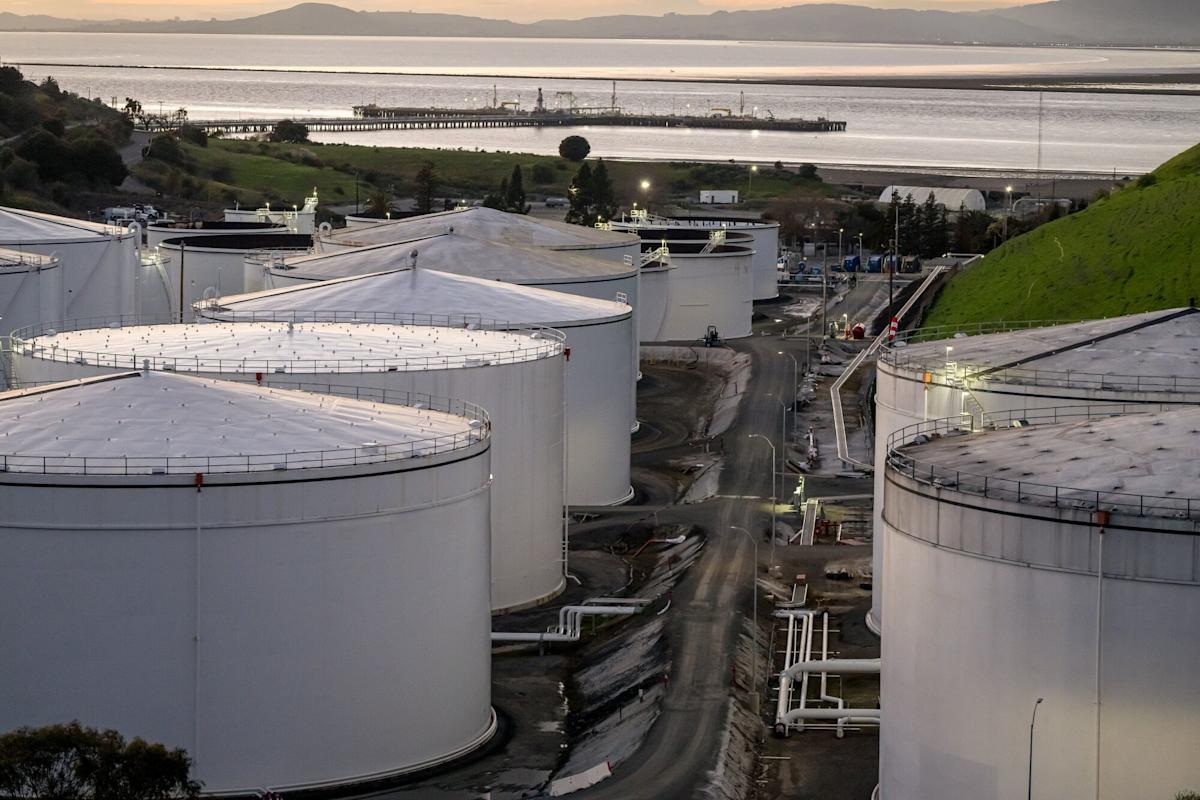
Major oil storage sites in Saudi Arabia are rapidly filling up, according to Kayrros. Four of the six tanks at the Ras Tanura refinery were full and the Ju’aymah terminal on the country’s east coast is quickly running out of spare capacity, they said.
“We assume that Brent will trade in the $80s in March as the market processes mixed signals with some relief from a potential gradual recovery in Strait of Hormuz flows but also some renewed concerns as evidence of production cuts grows,” Goldman Sachs analysts including Daan Struyven wrote.
The bank lifted its forecasts for the second quarter by $10 a barrel to $76.
Washington’s move to encourage flows through Hormuz follows signs of mounting disruption for producers in the region from the effective closure of the key trade route. Iraq — the second-biggest OPEC producer — has begun shutting the Rumaila oil field, the nation’s biggest, and the West Qurna 2 project, according to people familiar with the matter. When complete, the halts will stop a majority of the country’s output.
After Trump’s comments, Tehran reiterated a warning to vessels. The Strait of Hormuz is under wartime conditions and ships sailing through it “could be at risk from missiles or rogue drones,” the Islamic Revolutionary Guard Corps said in a statement. Iran has already struck more than 10 tankers, it added.
Defense Secretary Pete Hegseth said the US and Israel are on the cusp of taking complete control of Iran’s airspace as he laid out plans to step up attacks deeper in the country, adding “Iran’s capabilities are evaporating by the hour.”
The effective closure of Hormuz presents a huge challenge for oil and gas importers, including Asian economies that are heavily reliant on the flows. Some, including China, have stockpiles that will help to buffer any short-term disruptions, but a sustained conflict threatens to quickly drain those. Alternative supplies from outside of the Middle East will likely be more expensive, with soaring freight rates adding to spiraling costs.
Prices for fuels are also soaring. Diesel markets in Europe posted their biggest two-day gain on record, while jet fuel prices are also leaping. Higher refined fuel costs are likely to add inflationary pressures to the global economy if sustained for any period of time.
The “market won’t calm down unless it sees proof of traffic resuming toward normalcy,” said Vandana Hari, founder of analysis firm Vanda Insights.
Most Read from Bloomberg Businessweek
©2026 Bloomberg L.P.