
Twenty-five years ago, my husband and I made a choice that would define the trajectory of our lives. We were a young family, newly returned to Israel after two years of mission work with the Jewish community in Buenos Aires. Before Argentina, we had spent a decade in Jerusalem, completing our Master’s degrees and laying the first bricks of our life together. But those two years abroad changed us.
Living outside of Israel crystallized something within me. As a young mother, I found myself constantly weighing where we should plant our roots. Ultimately, it was our distance from Israel that led us back to its heart. We decided to move to the Galilee, not because its beautiful nature or the “quality of life” often promised in brochures. In fact, it was a significant sacrifice of the comforts and opportunities of the center. We moved out of a deep-seated Zionist conviction that the security and continuity of Israel depend entirely on the strength of its frontiers: the North and the Negev.
We didn’t move to the Galilee to be spectators of its lush green ridges or its quiet morning mists; we moved because we believed that being there was simply the “right thing to do.” We chose a life rooted in purpose over a life rooted in convenience.
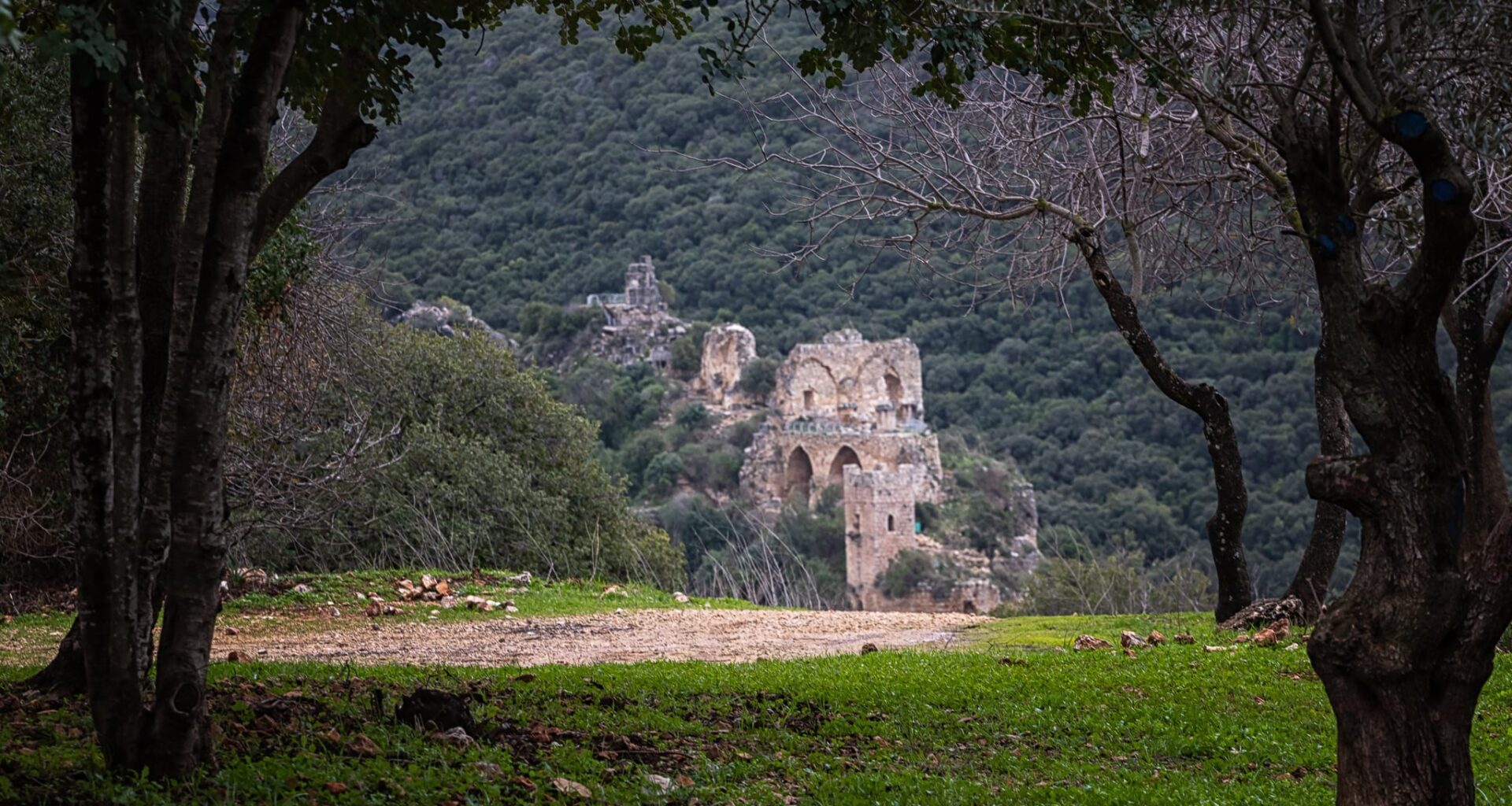
Back then, the horizon felt infinite. Today, as I look at that same majestic landscape, the view is too often framed by plumes of smoke and the jarring echoes of missile interceptions. Yet, despite the sirens, the grueling uncertainty of ‘Swords of Iron,’ and the escalating strikes by Hezbollah against the heart of our Galilee, my answer remains unchanged. If you asked me if I would make the same choice today, it would still be a resounding yes.”
My journey in the North has been a twenty-five-year masterclass in resilience. I have raised my children between wars, witnessing the ebb and flow of life in the Galilee through the dual lens of a mother and a professional in the philanthropic sector.
I remember the urgency of 2006. My children were just two and five years old. I conducted my work from a bomb shelter tucked just behind the kitchen of our small Galilean home, vis-à-vis our London office. Serving in a British charity during the Second Lebanon War, those days were a blur of frantic coordination: emergency aid, shelter renovations under fire, and immediate relief for families huddled in the dark. Back then, philanthropy was our “first responder.” It was the oxygen mask we reached for when we couldn’t breathe.
But as the years passed, and as we moved from that conflict into the shadow of our current multi-front reality, my perspective shifted. I realized that the people of the North are not “victims” in need of charity; we are the strategic anchor of the entire nation.
When a family chooses to stay in a border community, or when a “first-generation” student insists on finishing their degree despite being called to reserve duty for months at a time, they are exercising a form of sovereignty. They are the human shield of Israel’s civilian spirit.
For the global Jewish community, the question of “where should my impact go?” has never been more critical. In the past, philanthropy was often a reactive gesture of solidarity. Today, it must be a proactive investment in the “Day After.” The North is at a crossroads. While the physical destruction is visible, the invisible challenge is the potential erosion of our human capital. To ensure Israel’s North remains a vibrant, innovative heartland, we must move beyond “emergency checks” toward “strategic building.”
Investing in the North today, whether through world-class medical education, social mobility initiatives, or community building, is the ultimate Zionist statement. It tells the world, and more importantly, it tells us, that the Galilee is not a temporary outpost; it is a permanent, flourishing home.
Looking back over a quarter-century, I see more than a timeline of conflicts; I see a timeline of growth. My children grew up with the roar of jets above, but also with the values of courage and deep-rooted belonging. They learned that home isn’t just where you live; it’s what you protect.
I see this in my daughter, who chose to defer her military service to spend a gap year in Sderot, serving the communities of the Gaza envelope, completing her mission just weeks before October 7. I see it in my son, who, despite being on the autistic spectrum and eligible for an exemption, insisted on long-term volunteering for the IDF. This is the future generation of the North. This is the future of Israel.
We didn’t just move to the North; we rooted ourselves in it. And those roots, tempered by fire and nourished by the unwavering partnership of our global family, are exactly what will hold this nation together as we rebuild: stronger, deeper, and more resilient than ever before.
Sharon Steinbaum is a professional with decades of experience working with Jewish communities across Israel and worldwide. Originally from the Western Galilee near the Lebanese border, she has been based in Haifa with her family since October 7, 2023. After years of building partnerships rooted in community building, resilience, remembrance, and renewal, she has also embraced design as a second career and a creative form of expression. Writing is her passion and a personal way to honor legacy and bridge generations.