
CHICAGO — Pope Leo XIV’s South Side church, a slew of Chicago union halls and the Art Institute of Chicago’s Stock Exchange Trading Room are among Chicago’s eight most endangered structures this year, according to local preservationists.
Preservation Chicago released its annual Most Endangered Buildings list Wednesday. The nonprofit, which advocates for the preservation of local architecture, has released editions of the list since 2003, spotlighting buildings and structures that are “endangered” by demolition or neglect.
The buildings and structures in these lists are also often “cornerstones of our communities and neighborhoods across Chicago,” said Ward Miller, Preservation Chicago’s executive director.
“These are buildings that are important to Chicagoans architecturally, historically and culturally and oftentimes cornerstones of our communities. So we find our work to be very important to growing a healthy city and healthy neighborhoods.”
The buildings and structures:
The Chicago Stock Exchange Trading Room and McKinlock Court at The Art Institute of Chicago, 111 S. Michigan Ave.
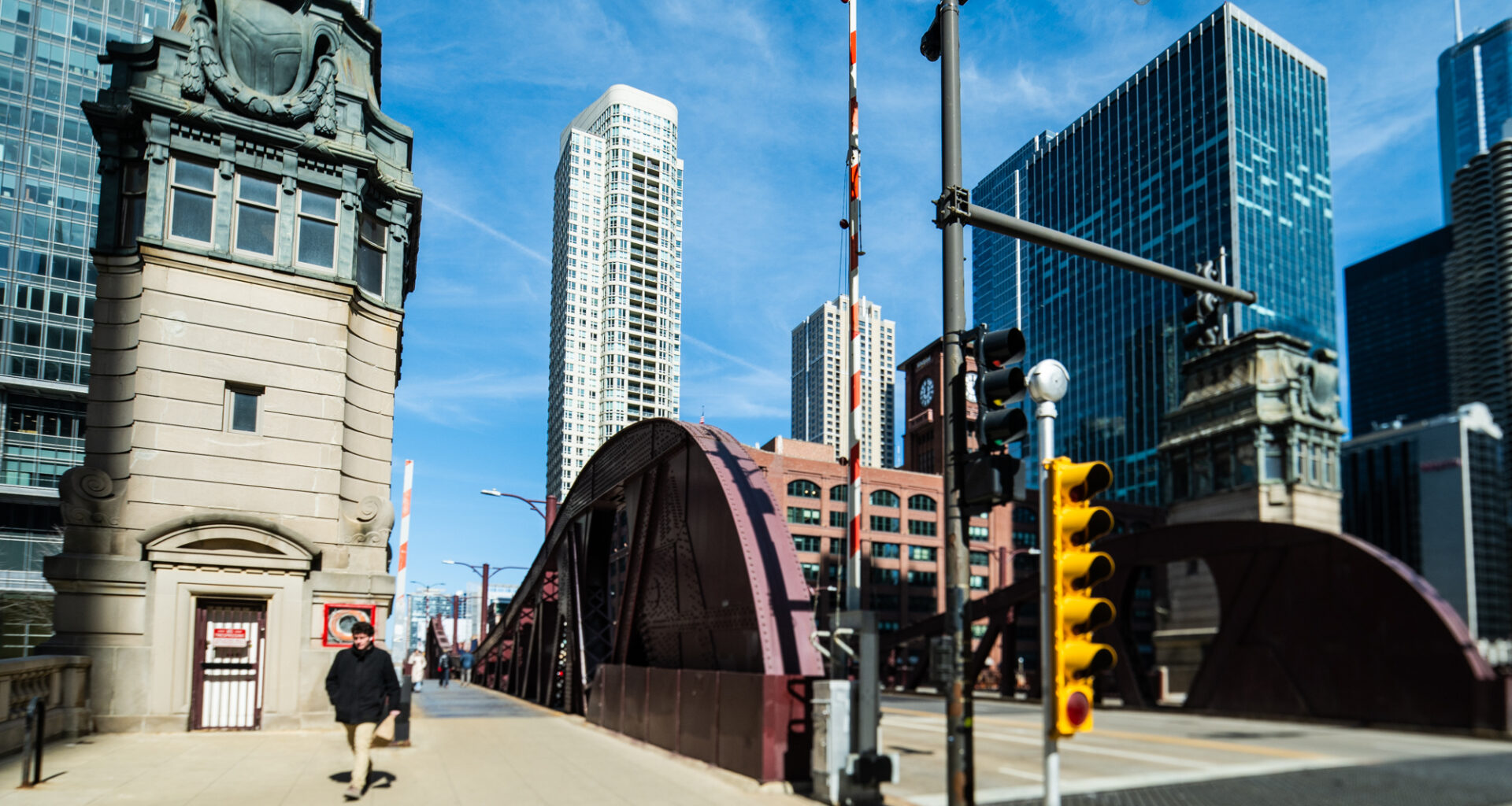
Chicago River bridges and tender houses
St. Mary of the Assumption Roman Catholic Church, 310 E. 137th St.
Chicago’s labor union halls
Chicago Loop Synagogue, 16 S. Clark St.
South Park Terrace Apartments, 6116-6134 S. Martin Luther King Jr. Drive
Yukon Building, 400 S. Clark St.
St. Mark Roman Catholic Church Campus, 2516 W. Cortez St.
Some of this year’s nominees are “thematic,” such as Chicago River bridges and Chicago labor union halls, while others are physical rooms, spaces or buildings, Miller said.
The goal is to raise awareness among Chicago residents, city officials and other stakeholders — which is crucial for the repair and preservation of these buildings and structures, Miller said.
“They are Chicago’s 7 Most Endangered until they’re resolved,” Miller said. “But we have a very high success rate for … our advocacy efforts, and so many of them are really uphill efforts.”
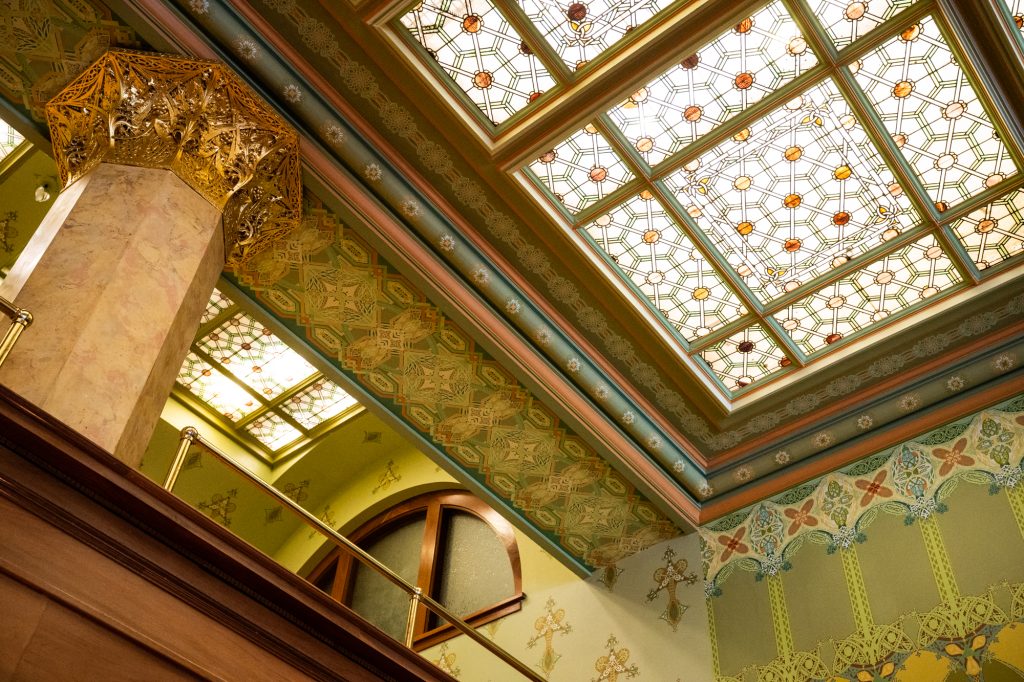 The Stock Exchange Trading Room at the Art Institute of Chicago in the Loop on March 2, 2026. The McKinlock Court and the Stock Exchange Trading Room at the Institute were included in the 2026 Chicago 7 most endangered list by Preservation Chicago. Credit: Colin Boyle/Block Club Chicago
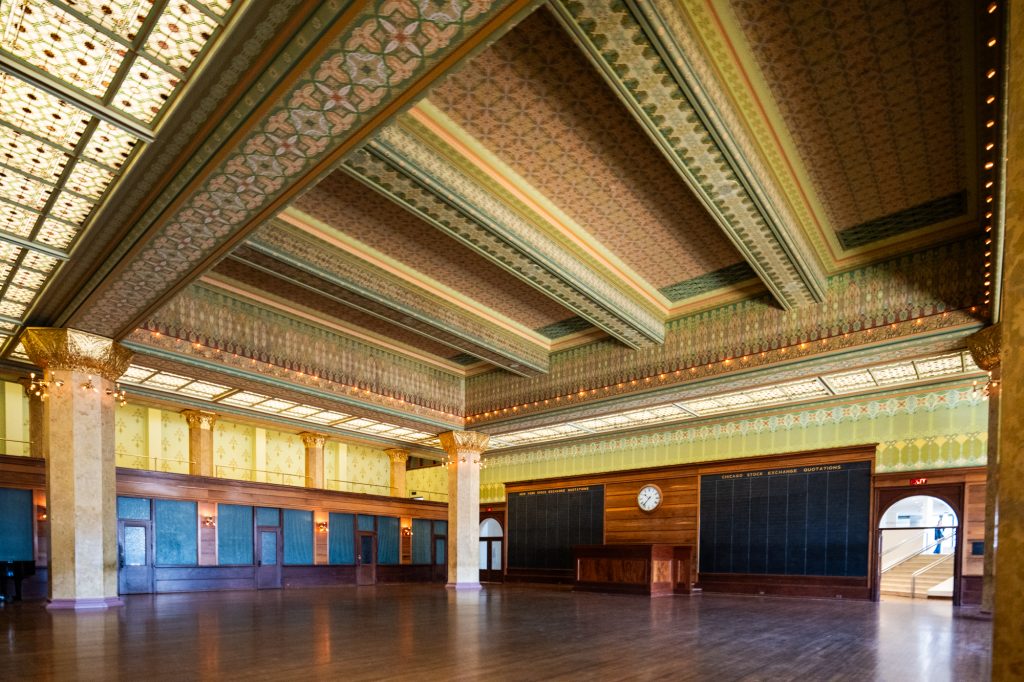 The Stock Exchange Trading Room at the Art Institute of Chicago in the Loop on March 2, 2026. The McKinlock Court and the Stock Exchange Trading Room at the Institute were included in the 2026 Chicago 7 most endangered list by Preservation Chicago. Credit: Colin Boyle/Block Club Chicago
The Chicago Stock Exchange Trading Room And McKinlock Court At The Art Institute of Chicago
Two spaces at The Art Institute of Chicago — the Chicago Stock Exchange Trading Room and McKinlock Court — are on the list.
Designed in 1893-1894 by Chicago architects Dankmar Adler and Louis Sullivan, the original 13-story Chicago Stock Exchange Building was demolished in 1972 despite protests from local preservationists. Sections of the building’s Trading Room — including Sullivan’s elaborate stenciled decorations, molded plaster capitals and art glass — were salvaged and used in the 1976-1977 reconstruction of the room at the Art Institute.
For nearly 50 years, the Art iInstitute’s Trading Room has been used as a reception room for events, lectures and celebrations.
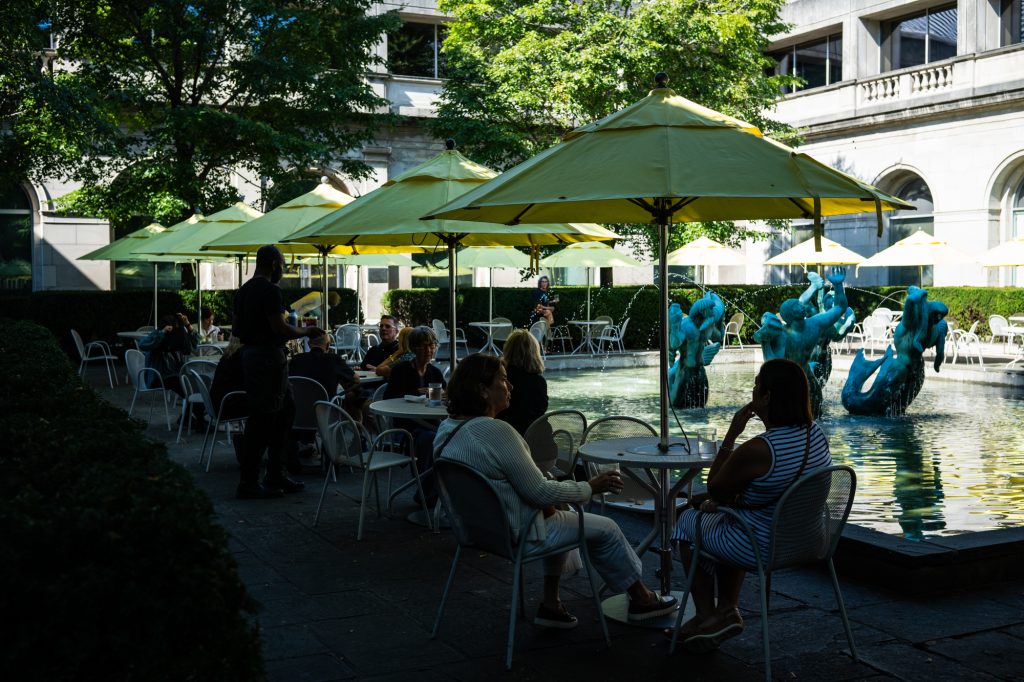 The McKinlock Court at the Art Institute of Chicago in the Loop on Oct. 3, 2025. The court and the Stock Exchange Trading Room were included in the 2026 Chicago 7 most endangered list by Preservation Chicago. Credit: Colin Boyle/Block Club Chicago
The McKinlock Memorial Building, Courtyard and Garden were constructed in 1924, designed as a series of art galleries that wrapped around a central open courtyard. The space mirrored aspects of Grant Park with formal and symmetrical gardens, and the courtyard featured a bronze sculpture by Swedish sculptor Carl Milles. It continues to be a place for relaxation and dining at the museum.
As part of the Art Institute’s expansion plans, the museum is considering the demolition of both spaces, according to Preservation Chicago.
A spokesperson from the Art Institute reached out to Block Club, saying:
“We are currently exploring ways to increase gallery space and put more of our collection on view for visitors.
As we have assessed which part of our campus has the most potential for expansion, the east side of the building — where the Trading Room is located — represents the area where gallery space could increase the most.
If our campus evolution did impact the Trading Room, our first priority would be to work with partners to find a new location for the space. No decisions have been made at this time.
We have no plans to remove McKinlock Court.”
Preservation Chicago believes the museum’s plans should be shared with the general public since it rests within the boundaries of Grant Park, a publicly owned property stewarded by the Park District. Various important spaces and features of the museum should also be considered for Chicago Landmark designation and protections, per the nonprofit.
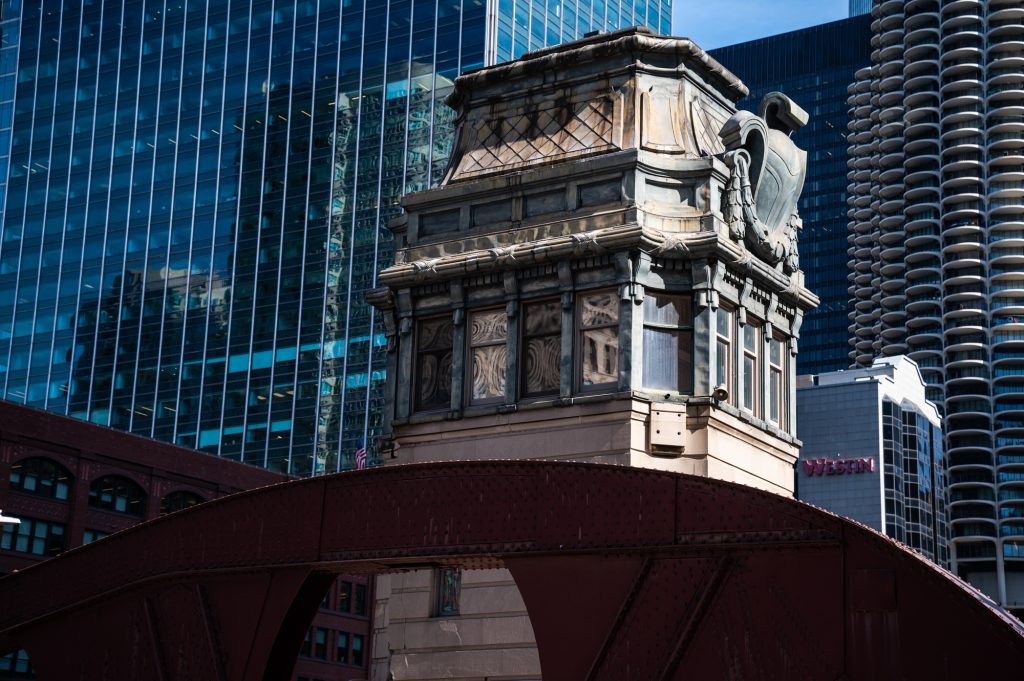 The LaSalle Street bridge in the Loop on March 2, 2026. Chicago bridges and bridge tender houses were included in the 2026 Chicago 7 most endangered list by Preservation Chicago. Credit: Colin Boyle/Block Club Chicago
Chicago River Bridges And Tender Houses
Chicago has the largest collection of movable bascule bridges in the world, according to Preservation Chicago.
During the late 19th and early 20th centuries, when the Loop and Chicago River were the epicenter of Chicago’s economic engine, bridge engineers needed to innovate to compete against car and boat traffic. This resulted in the city’s network of bridges, which are paired with tender houses used to raise and lower the bridges. The tender houses are “remarkably beautiful gateways,” according to Preservation Chicago.
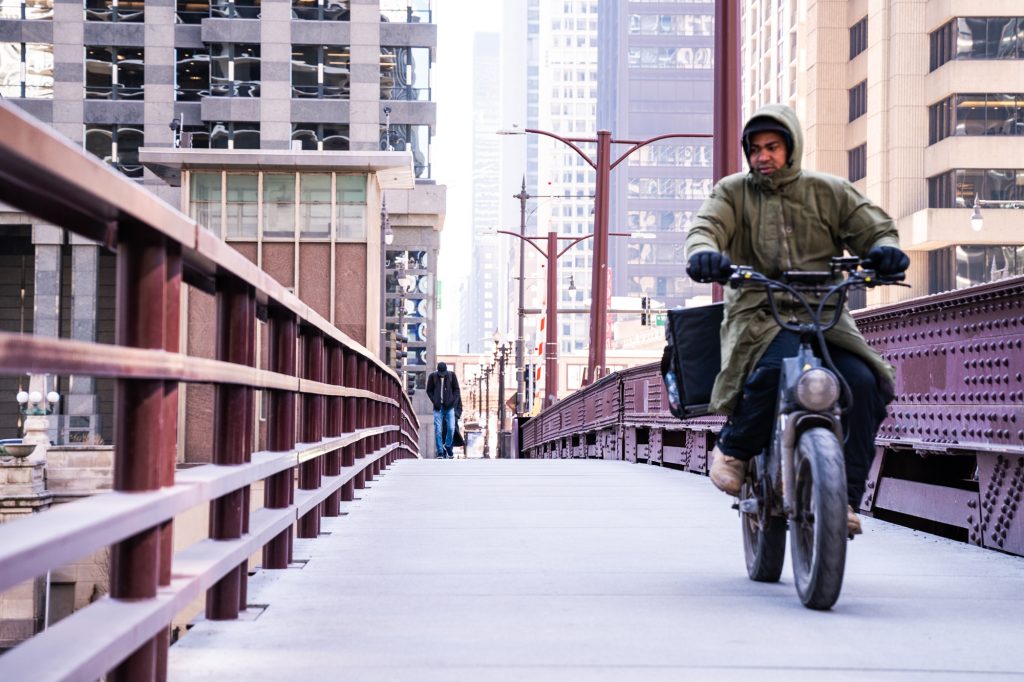 The Dearborn Street bridge in the Loop on March 2, 2026. Chicago bridges and bridge tender houses were included in the 2026 Chicago 7 most endangered list by Preservation Chicago. Credit: Colin Boyle/Block Club Chicago
Many of the city’s bridges and tender houses need significant repair, a result of age and wear and tear. Preservation Chicago is advocating for the investment to make sure these infrastructure retain their function, and it encourages the preservation of their historic appearance and design aesthetic.
In the past year, Preservation Chicago has submitted a formal “Suggestion for Landmark” document and presentation, requesting the city and elected officials consider a Chicago Landmark Designation for these structures.
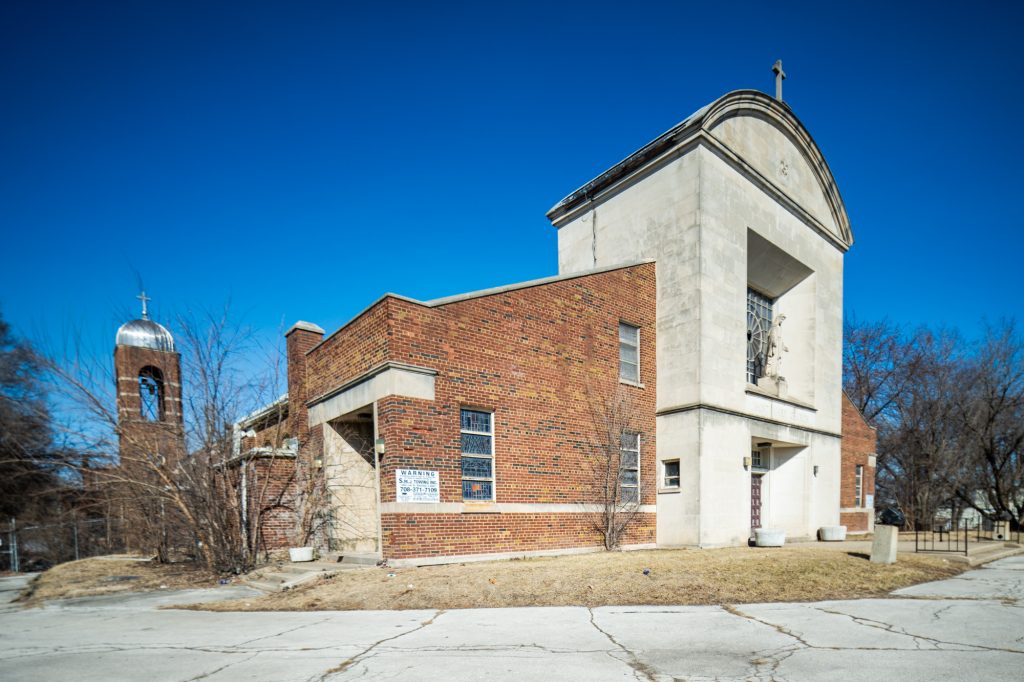 St. Mary of the Assumption, designed in 1957 by George S. Smith, at 310 E. 137th Street in Riverdale on March 2, 2026. The shuttered church was included in the 2026 Chicago 7 most endangered list by Preservation Chicago. Credit: Colin Boyle/Block Club Chicago
St. Mary Of The Assumption Roman Catholic Church
St. Mary’s Church, also known as the St. Mary of the Assumption Church and School, was organized in 1886 to serve 30 German, Catholic families in the Riverdale community.
Designed by Hermann Gaul, the initial one-story building was constructed in 1918. The mid-century church structure was completed in 1957 by Chicago architect George S. Smith. The property now has seven buildings and is owned by Joe Hall, founder of JBlendz Enterprises.
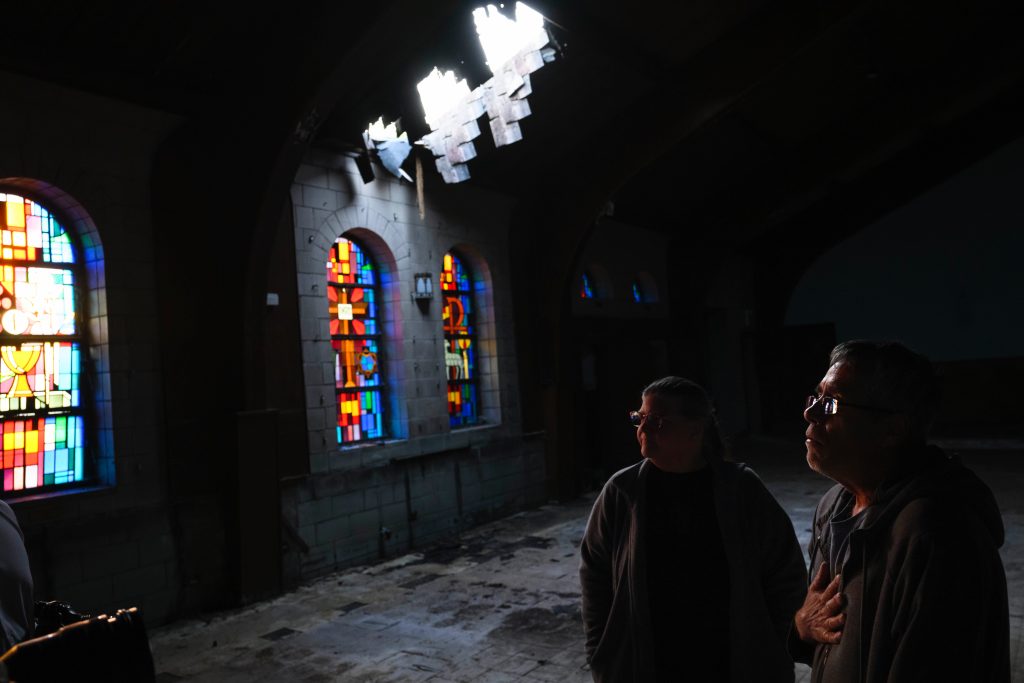 Sharon Latham and Doug Latham speak to documentary filmmakers at the closed St. Mary of the Assumption parish in Chicago, IL near the suburb Dolton on Thursday, May 8, 2025. Newly elected pope Leo XIV used to attend the church. Credit: Andrew Burke-Stevenson for Block Club Chicago
St. Mary’s Church and and School gained national and international relevance with the election of Pope Leo XIV, who grew up in the parish, though it’s been out of operation since 2011. It merged with nearby parishes due to declining membership, according to Preservation Chicago.
Due to a damaged roof and windows, the vacant church and school buildings have experienced significant deterioration. Preservation Chicago is advocating for the preservation of the property and formally requested the church’s designation as a Chicago Landmark in May.
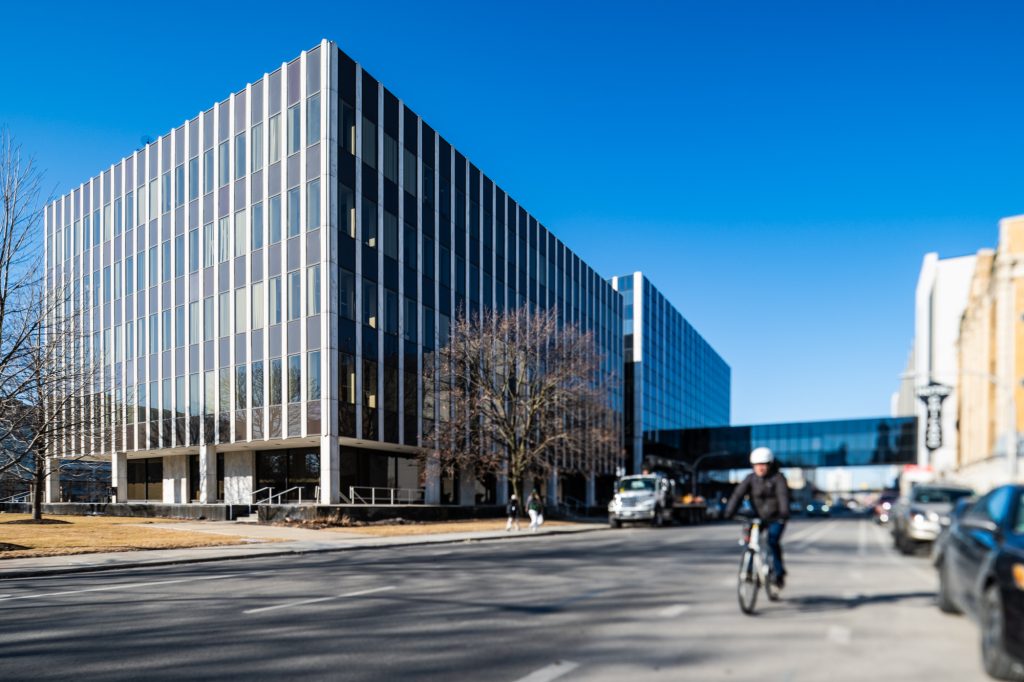 Teamster City, 300 S. Ashland Ave., in Near West Side on March 2, 2026. Union halls in Chicago were included in the 2026 Chicago 7 most endangered list by Preservation Chicago. Credit: Colin Boyle/Block Club Chicago
Chicago’s Labor Union Halls
Chicago has a rich union history stemming from the rapid industrialization of the late 19th century. The 1886 Haymarket Affair, the 1894 Pullman Strike and the 1937 Memorial Day Massacre were just a few events that inspired a growing number of labor organizations to establish themselves in Chicago.
Many of these groups also built their own union halls on the Near West Side, which was home to over 30 labor groups by the mid-20th century and became known as “Union Row,” according to Preservation Chicago.
There are also halls on the South and Far South sides because of their proximity to the Union Stock Yards, Pullman Works and steel mills.
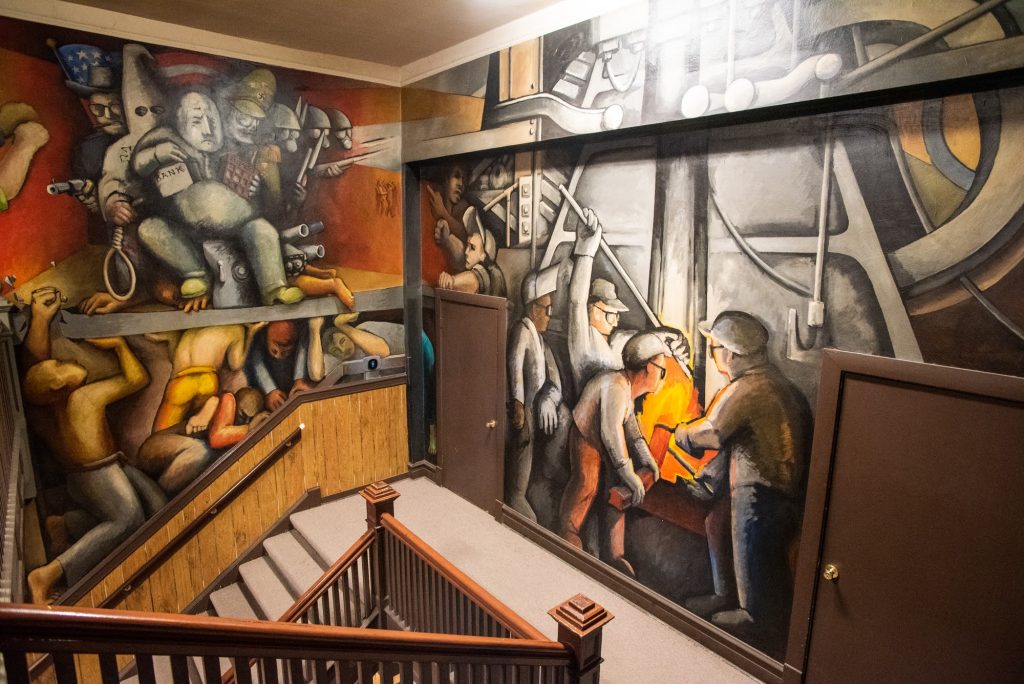 The “Solidarity” mural viewed from the second floor of the former UE hall building, 37 S. Ashland Ave, as seen during Open House Chicago on Oct. 16, 2022. Credit: Colin Boyle/Block Club Chicago
Some of these buildings have been repurposed, such as the Amalgamated Meat Cutters and Butcher Workmen of North America Building at 2800 N. Sheridan Road, which was rehabilitated as the Stone Medical Center of St. Joseph Hospital.
The United Electrical Workers Union, formerly at 37 S. Ashland Ave., is known for its massive mural, “Solidarity.” The building was recently sold and repurposed as a residential building, with city organizations coming together to save the artwork for reinstallation elsewhere.
Several halls are in need of repairs, have been listed for sale in recent years or are facing demolition threats, according to Preservation Chicago. Preservation Chicago encourages protections and perhaps a Chicago Landmark designation for many of these structures.
“As Chicago is recognized for its unions over time and perhaps America’s Labor City, we are very concerned about the future of these buildings,” according to the nonprofit.
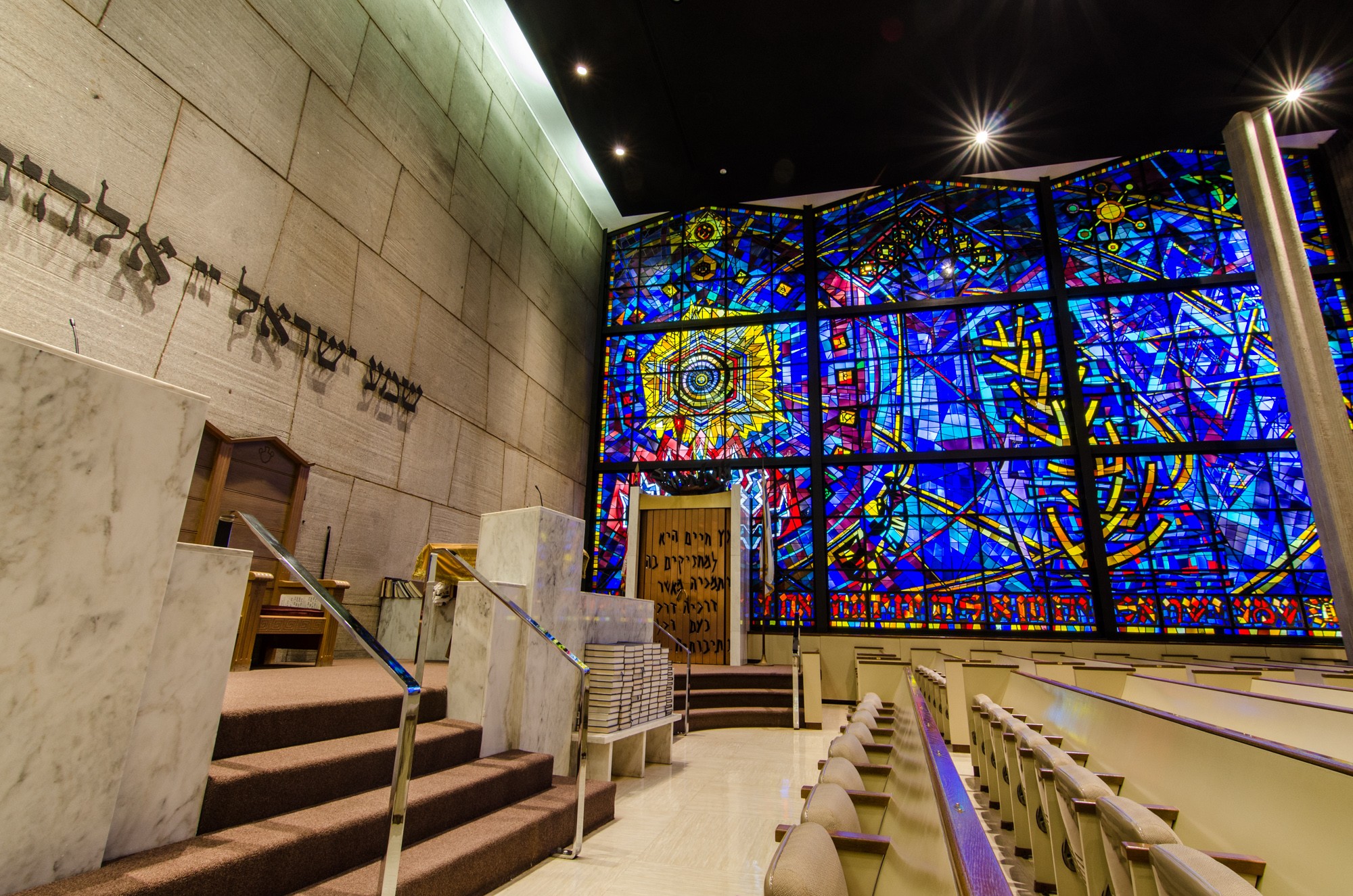 The Chicago Loop Synagogue is located at 16 S. Clark St. Credit: Eric Allix Rogers
Chicago Loop Synagogue
The Chicago Loop Synagogue was founded in 1929 to serve the religious needs of Jewish people working Downtown as well as visitors. Designed in 1957 by Chicago firm Loebl, Schlossman and Bennett, it contains a famous stained-glass window, “Let There Be Light,” on its eastern wall by Abraham Rattner. Above its entrance is a bronze sculpture, “Hands of Peace,” by Israeli artist Henri Azaz.
It was the first businessmen’s synagogue in the world and remains the only Loop venue to offer a place to pray and kosher food, according to Preservation Chicago.
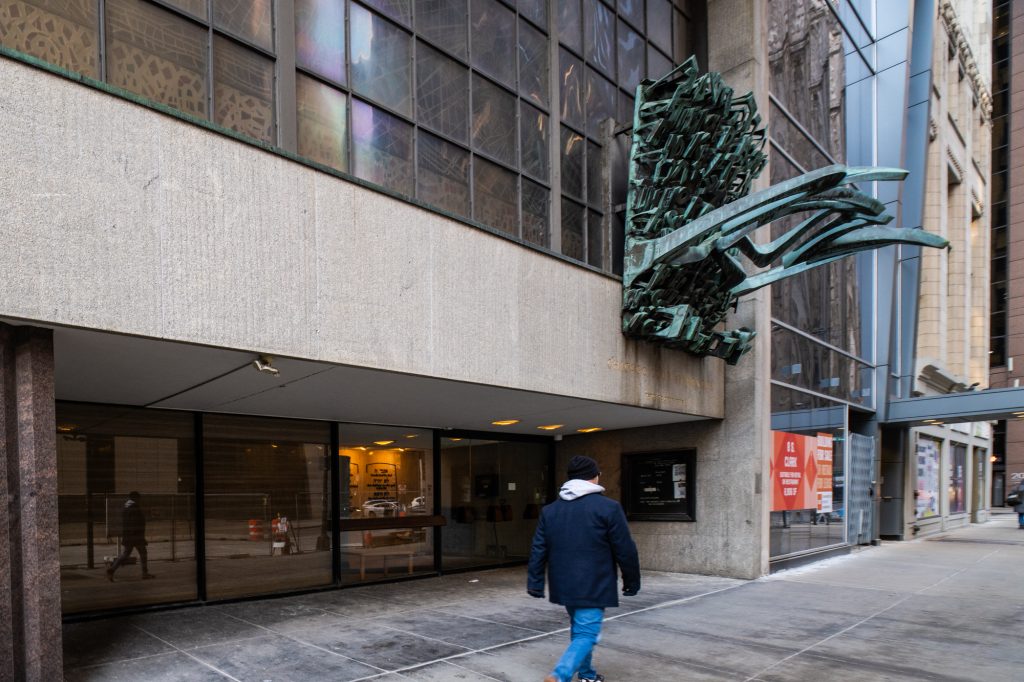 The Chicago Loop Synagogue, designed in 1957 by Loebl, Schlossman & Bennett, at 16. S. Clark St. in the Loop on March 2, 2026. The building and its artwork was included in the 2026 Chicago 7 most endangered list by Preservation Chicago. Credit: Colin Boyle/Block Club Chicago
The synagogue’s membership has fallen to under 400 in recent years, from roughly 1,500 back in the early ’90s, according to Preservation Chicago. This winter, severe cold caused boiler pipes to burst, placing additional strain on the synagogue.
Preservation Chicago believes “adaptive reuse and future development of the synagogue can be approached incrementally while respecting its historic character.”
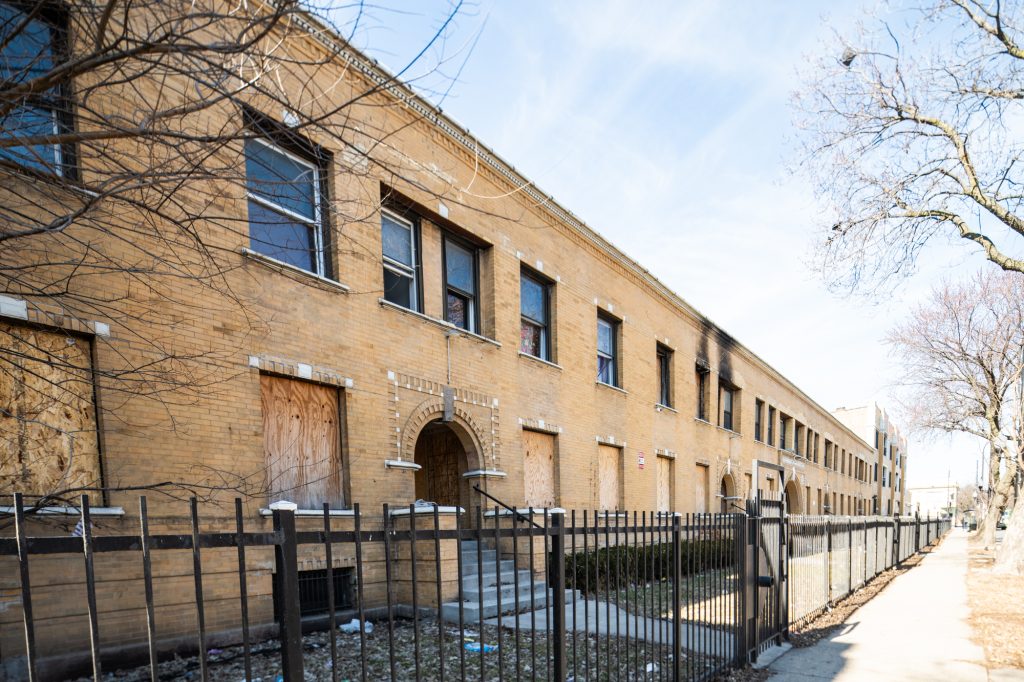 South Park Terrace, designed in 1905 by Harry Hale Waterman, at 6116 S. King Dr. in Washington Park on March 2, 2026. The shuttered apartment building was included in the 2026 Chicago 7 most endangered list by Preservation Chicago. Credit: Colin Boyle/Block Club Chicago
South Park Terrace Apartments
The South Park Terrace Apartments were constructed in 1905. The Prairie School-style building was commissioned by developer Thomas E. Wells and designed by architect Harry Hale Waterman, a Frank Lloyd Wright associate. The two-story building with 52 apartments provided affordable housing near Washington Park, targeting middle-class residents.
By the end of the 19th century, as Chicago became the second-largest city in the nation with 1 million people, architects focused on developing buildings for higher residential density — like low-rise brick courtyard buildings.
During the 1920s and ’30s, the building became unfit for residents. When the Great Migration brought a large number of Black residents to the South Side, it was reoccupied and improved. By the 1940s, under the management of ADE Realty, it was renovated as housing for working-class Black residents.
The South Park Terrace Apartments have once again deteriorated due to owner neglect, according to Preservation Chicago. It is owned by 6116 MLK LLC, which operates out of New York. Residents have been living in poor conditions with safety concerns. A portion of the building also caught fire in March 2025, leaving visible burn marks on the facade.
In June, the city ordered residents to vacate the building’s middle tier with two days’ notice.
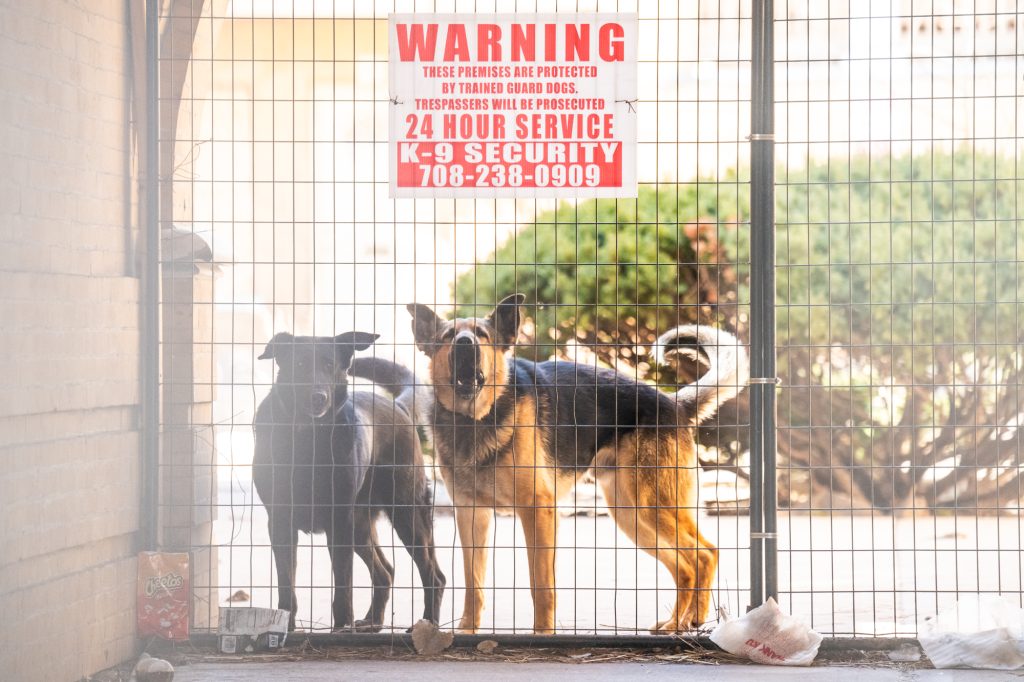 Guard dogs howl at South Park Terrace, designed in 1905 by Harry Hale Waterman, at 6116 S. King Dr. in Washington Park on March 2, 2026. The shuttered apartment building was included in the 2026 Chicago 7 most endangered list by Preservation Chicago. Credit: Colin Boyle/Block Club Chicago
Preservation Chicago requests the city of Chicago takes steps to preserve the building. The nonprofit suggests a sister agency like the Chicago Housing Authority acquire, repair and restore the property.
“Realizing the architectural integrity of the building’s design and the philanthropic efforts to construct the property in 1905, Preservation Chicago believes that the property should be valued and the structure repaired and given Chicago Landmark status,” according to the nonprofit. “Chicago is in need of more affordable housing. Even in recent history, investment in the South Park Terrace Apartments is a worthwhile endeavor.”
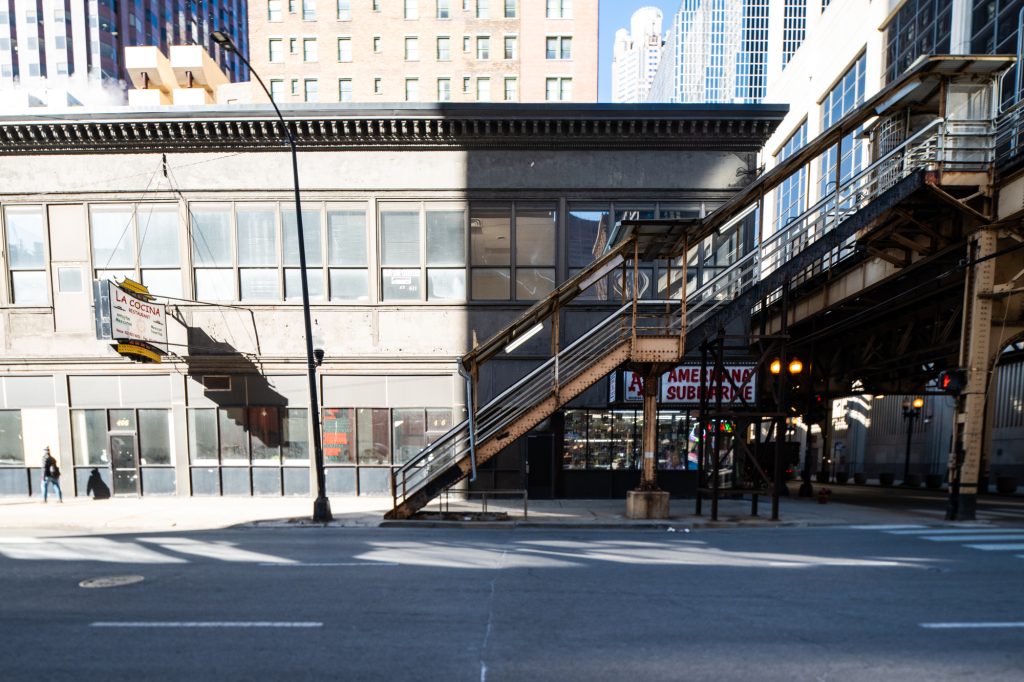 The Yukon Building, designed in 1898 by Holabird & Roche, at 400 S. Clark St. in the Loop on March 2, 2026. The building included in the 2026 Chicago 7 most endangered list by Preservation Chicago. Credit: Colin Boyle/Block Club Chicago
Yukon Building
The Yukon Building, later renamed the Bock Building, was financed and developed by the Brooks Brothers of Boston in 1898. Designed by Holabird and Roche, the two-story building is recognized for its modest yet innovative design and the integration of continuous glass storefronts and ribbon-windows.
The Yukon Building is a survivor of Chicago’s “Old Chinatown,” predating the movement of the Chinese community further south, according to Preservation Chicago. The area was also known as a small vice district with taverns and other businesses. It was called “Little Cheyenne” after a town in Wyoming, evoking “a somewhat unruly perception of a Wild West settlement.”
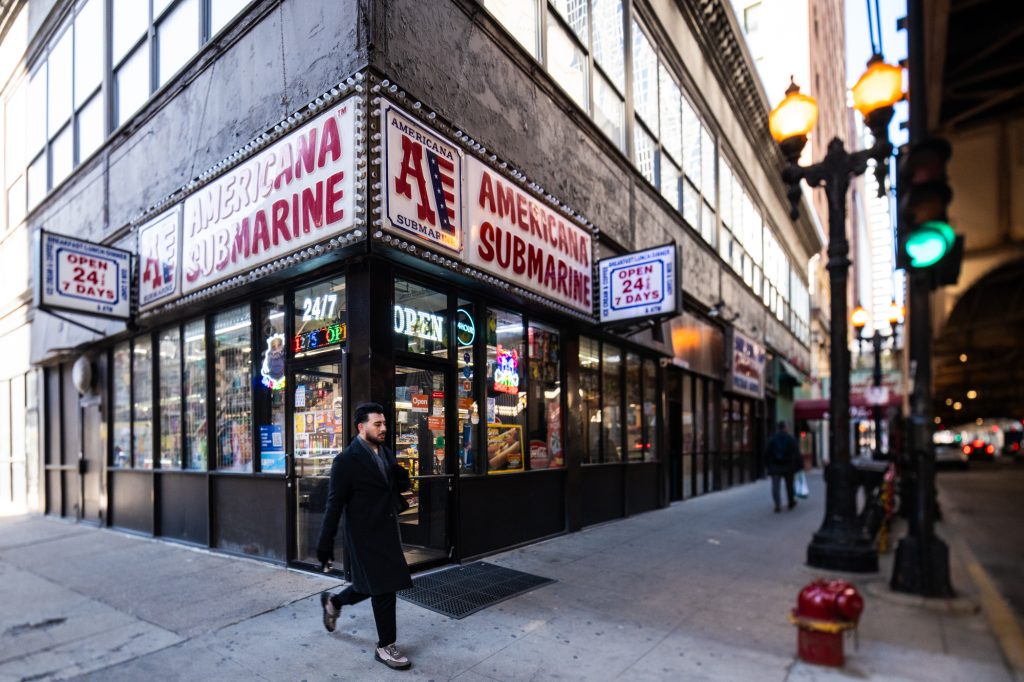 The Yukon Building, designed in 1898 by Holabird & Roche, at 400 S. Clark St. in the Loop on March 2, 2026. The building included in the 2026 Chicago 7 most endangered list by Preservation Chicago. Credit: Colin Boyle/Block Club Chicago
Positioned under the elevated Loop structure along Van Buren and South Clark streets, Preservation Chicago is concerned about the Yukon Building’s uncertain future due to recent large vacancies.
Preservation Chicago is advocating for its Chicago Landmark designation.
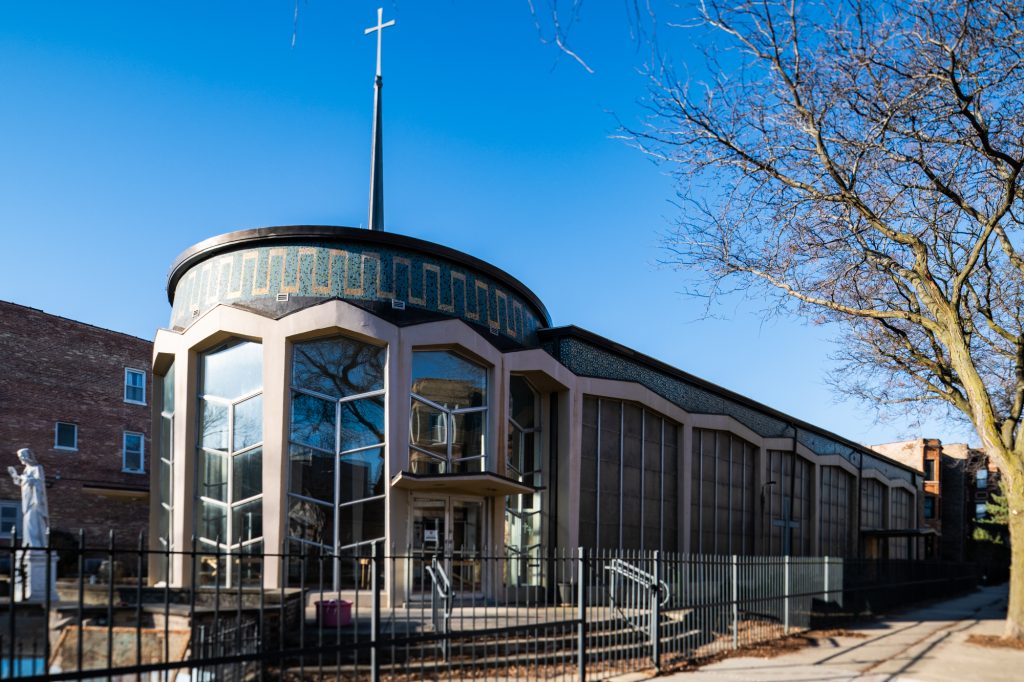 St. Marks Church Complex in Humboldt Park, 1048 N. Campbell Ave. on March 2, 2026. The complex was included in the 2026 Chicago 7 most endangered list by Preservation Chicago. Credit: Colin Boyle/Block Club Chicago
St. Mark Roman Catholic Church Campus
Since its founding in the 1890s, the St. Mark Roman Catholic Church Campus has been at the heart of Humboldt Park’s Catholic community, serving Irish, Polish, Puerto Rican and Mexican residents.
The greystone rectory was built in 1896, and the red-brick school building was built in 1906. The church was completed in 1963 by Chicago architects Barry and Kay. It features notable stained-glass windows created by French artist Gabriel Loire, whose work also adorns the royal chapel in Monaco.
The parish was consolidated by the Archdiocese of Chicago in 2021, and its campus closed in 2022. The church has since been listed for sale.
Preservation Chicago encourages the building be repurposed in a way that honors the neighborhood’s heritage, like as a community center or Chicago Public Library branch location.
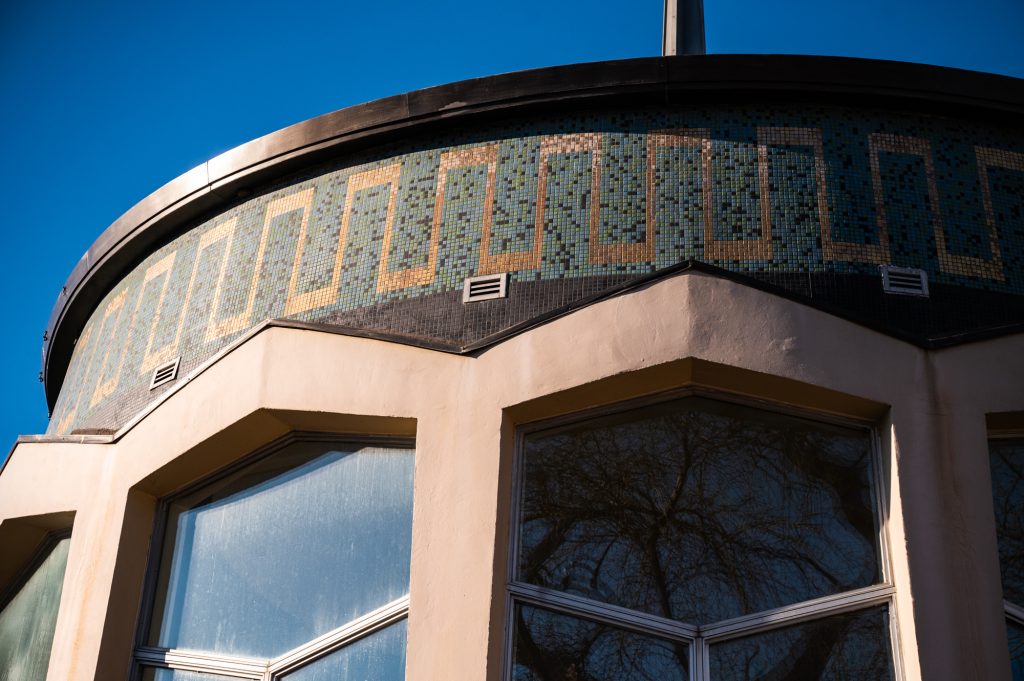 St. Marks Church Complex in Humboldt Park, 1048 N. Campbell Ave. on March 2, 2026. The complex was included in the 2026 Chicago 7 most endangered list by Preservation Chicago. Credit: Colin Boyle/Block Club Chicago
Listen to the Block Club Chicago podcast: