
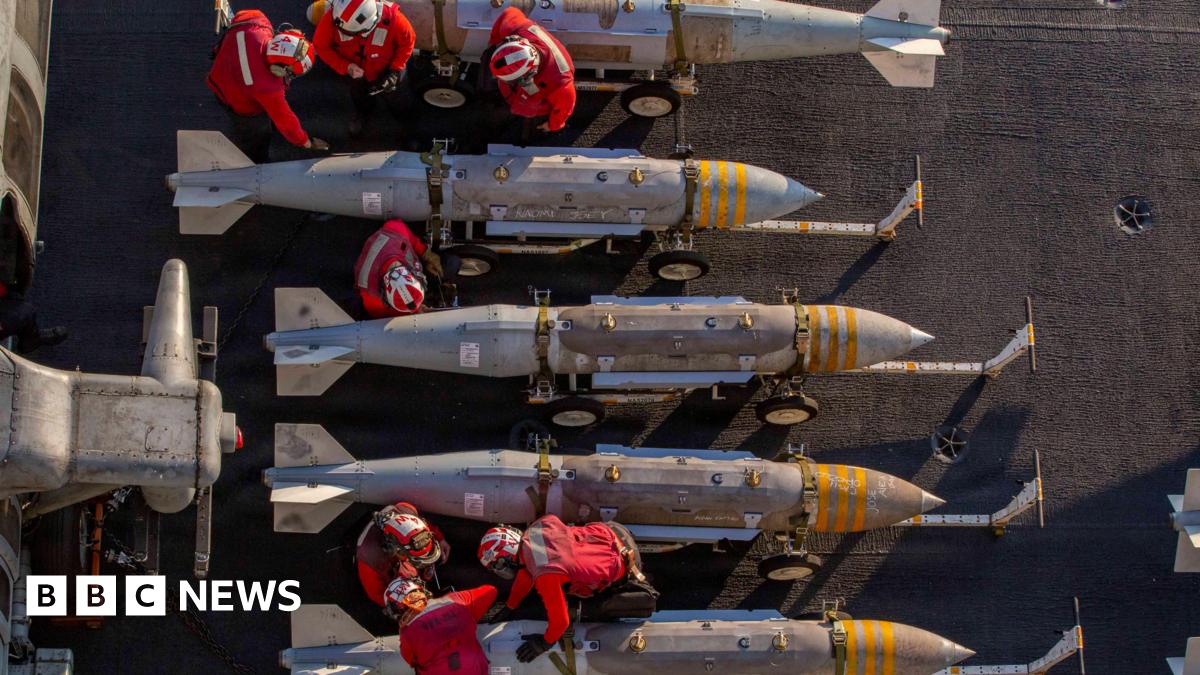
The US remains the world’s most powerful military. Its conventional stockpiles will be deeper than any other country.
But the US military still largely relies on expensive precision-guided weapons that are produced in limited quantities. Trump is reported to have called a meeting with defence contractors later this week to press them to speed up production. It’s an indication that even America’s resources might be stretched.
Some of the pressure may have eased now that the US has relative freedom to carry out strikes at close range.
Caine said the US had already moved from using “stand-off weapons” – more costly and sophisticated long-range weapons such as Tomahawk cruise missiles. The US Air Force is now using less expensive “stand-in” weapons – like JDAM bombs – which can be dropped above a target.
Mark Cancian, a former US Marine colonel with the Washington-based Center for Strategic and International Studies (CSIS), says that, after the initial attack from a distance, the US “can now use less expensive missiles and bombs”.
He says the US could keep that level of fighting going on “almost indefinitely”. The longer the war lasts, the list of targets also gets smaller – meaning a gradual slowing down in the tempo of operations.