
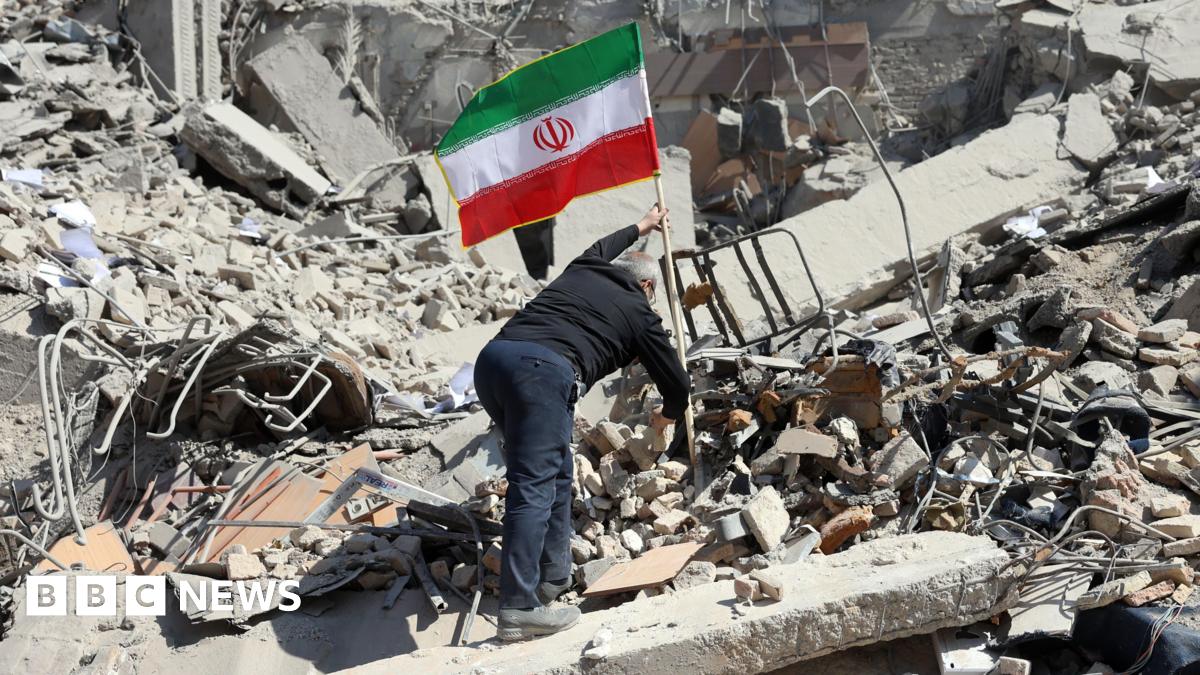
BBC Persian also spoke to Kaveh, whose name has also been changed, who lives in Zanjan, a city around 275km (170 miles) north-east of Tehran, which has also been targeted.
“In the first three days, our city was heavily bombed,” he says. “We live in an area where fighter jets constantly pass overhead.”
He adds that, following the outbreak of war, the sky had been constantly cloudy from the columns of smoke rising from the sites of air strikes – an image he describes as “simultaneously beautiful and horrifying”.
Salar says he sent his parents north, though he wasn’t sure which cities would be safe. There house is in the Shariati neighbourhood of Tehran, where there are many military facilities that have been targeted.
“My mother was in very bad shape – she was very frightened,” he says, adding that the current strikes are worse than any she experienced during the eight-year Iran-Iraq war in the 1980s.
More people continue to leave Tehran as each day passes, he adds, but it is not an option for everyone.
“My friend’s grandmother is ill and they can’t move her.”
The internet blackouts have also made it extremely difficult for Iranians to contact their loved ones.
Kaveh says that, alongside survival, his biggest concerns have been trying to maintain some contact with family and friends, and getting access to reliable news.
His internet connection cut off around midday on the first day of the attacks, he recalls, and he was not able to get back online for two days.
Both Kaveh and Salar are using Virtual Private Networks (VPNs), which allow them to access internet sites that are blocked by the Iranian government, but this is no easy feat.
When he does get online, Kaveh tries to help “friends outside Iran who have no news from their families – to get updates or pass along messages”.