
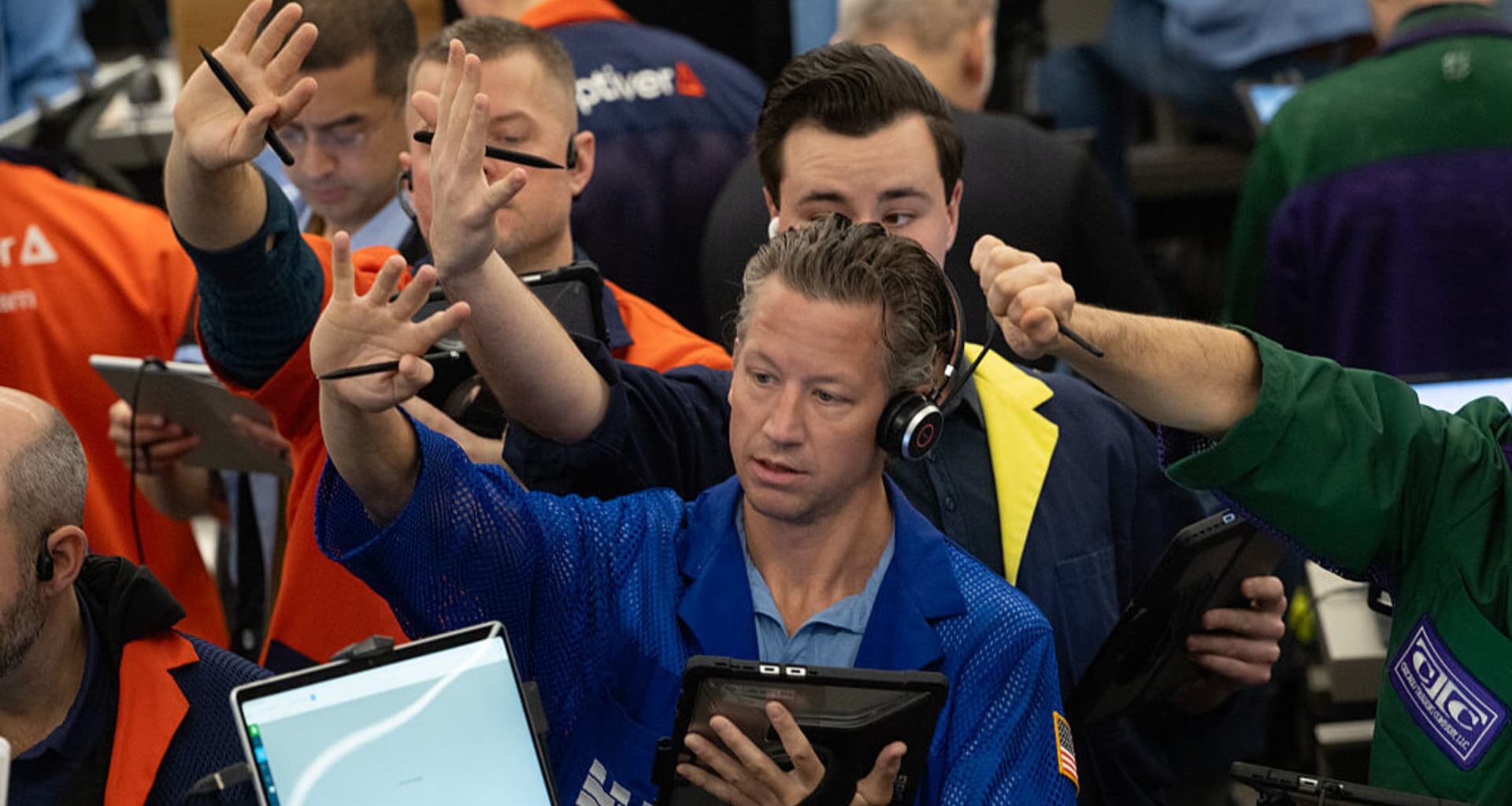
Traders work in the S&P options pit at open of trading at the Cboe Global Markets exchange on March 04, 2026 in Chicago, Illinois. I
Scott Olson | Getty Images
Stock futures were mixed Thursday as traders caught their breath after a strong performance in the previous session and kept an eye on oil rising prices.
Futures tied to the S&P 500 rose just 0.1% along with Nasdaq 100 futures. Dow Jones Industrial Average futures declined 43 points, or roughly 0.1%.
West Texas Intermediate futures popped 2.5% to $76.56 per barrel. Brent crude traded 2% higher at $83.03 per barrel.
Stocks rose in Wednesday’s session, buoyed by gains in technology and semiconductor giants. The Dow snapped a three-day losing run. The S&P 500 and Nasdaq Composite ended the day with solid gains.
“Things are changing around the edges. We have a geopolitical shock, obviously, and we’re still parsing that in terms of how it could impact the risk premium for equities,” said Bank of America Securities head of U.S. equity and quantitative strategy Savita Subramanian on CNBC’s “Closing Bell: Overtime.”
“But beyond that, I think what we’re seeing is the tide slowly going out for some of the beneficiaries of a very low interest rate environment,” she added.
Oil prices stabilized on Wednesday after this week’s surge, with U.S. West Texas Intermediate crude futures settling up 0.13% and international benchmark Brent crude oil futures ending the session at the flatline.
Fears of disruption to regional oil and gas supplies subsided after President Donald Trump said on Tuesday that the U.S. is preparing to provide risk insurance and escorts to ships in the Persian Gulf in an effort to ensure traffic can move through the Strait of Hormuz. To be sure, the White House would not provide a timeline for when the strait, which is responsible for roughly 20% of the world’s oil supply, will be safe for oil tankers.
Defense Secretary Pete Hegseth said in a briefing with reporters that the U.S. is “winning decisively” in its conflict with Iran and that more forces are arriving to the region. Separately, Treasury Secretary Scott Bessent said on that Trump’s recently announced 15% global tariff will likely go into effect this week.