
Squamish Nation says it is reviewing the Government of Canada’s new agreement recognizing Aboriginal rights and title for the Musqueam Indian Band, warning it will challenge any implication that the deal extends into any area that the Squamish consider to be their traditional territory.
In a statement issued Tuesday, Squamish Nation chairperson Wilson Williams said he is “deeply concerned.”
Wilson’s comments come as the Musqueam agreements, the Cowichan Tribes’ Aboriginal title court decision for an area in southeast Richmond, other First Nations land claims and court decisions, the controversy over the Declaration on the Rights of Indigenous Peoples Act, and emerging broader debates over Indigenous rights and reconciliation continue to draw political attention in British Columbia.
There are broad concerns about what this could mean for public property and fee-simple title private ownership. The Musqueam considers a substantial area of Metro Vancouver — including the city of Vancouver — and the surrounding lands to be its traditional territory.
“Nothing in this Agreement or the Musqueam Narrative shall be construed as prejudicing, limiting or restricting either Party’s position with respect to Rights and Title, including the nature, scope or content or geographic extent of Musqueam’s Rights and Title or the geographic extent of Musqueam Territory or the Secondary Use Area,” reads the agreement signed on Feb. 20, 2026, which sets a framework for the gradual implementation of Musqueam’s Aboriginal rights and title.
This week, following a public outcry, the federal government published the full text of the agreement on an accessible webpage.
On Monday, in response to the concerns, Musqueam issued a statement and emphasized that the agreements — at least at the moment — “do not relate to land ownership” and have “absolutely no impacts to fee simple lands/private property,” reiterating previous comments made by Musqueam chief Wayne Sparrow in December 2025.
However, the legally binding federal agreement does not appear to contain any guardrails that clearly state an absolute avoidance on impacting private property rights as Musqueam’s Aboriginal rights and title are implemented over time. In fact, the agreement appears to intentionally leave the framework flexible and open-ended, describing it as the “implementation of this living agreement.”
Opposition MLAs at the provincial legislature also questioned the BC NDP-led provincial government Monday about the deal and whether the province had been briefed on it, while Premier David Eby said the provincial government was not involved in negotiating the agreement and is seeking further details from the federal government.
The agreements between Musqueam and the federal government were announced last month and include provisions described as affirming Musqueam’s Aboriginal rights and title under Section 35 of the Constitution Act, as well as establishing a framework for shared decision-making over fisheries, marine stewardship, and land use in the area considered to be Musqueam’s traditional territory.
Squamish Nation noted it had not been consulted by the federal government before the agreements were announced and is now seeking clarity on their scope.
“Let us be clear: The Squamish Nation government will defend and uphold our inherent Aboriginal rights and title,” said Williams in the statement on Monday.
“Any implication that another Nation’s agreement could extend into Squamish Territory will be challenged.”
The area considered to be the traditional territory of the Squamish overlaps substantially with Musqueam’s traditional territory. Squamish considers its territory to include a big part of Metro Vancouver and the surrounding area; most of Vancouver, the three North Shore municipalities; northern areas of Burnaby, parts of Port Moody and Coquitlam; the lands on both sides of Howe Sound along the Sea to Sky corridor, including Squamish; Whistler; the mountainous, forested watersheds that feed Metro Vancouver’s drinking water reservoirs; and areas as far north as Mount Elaho.
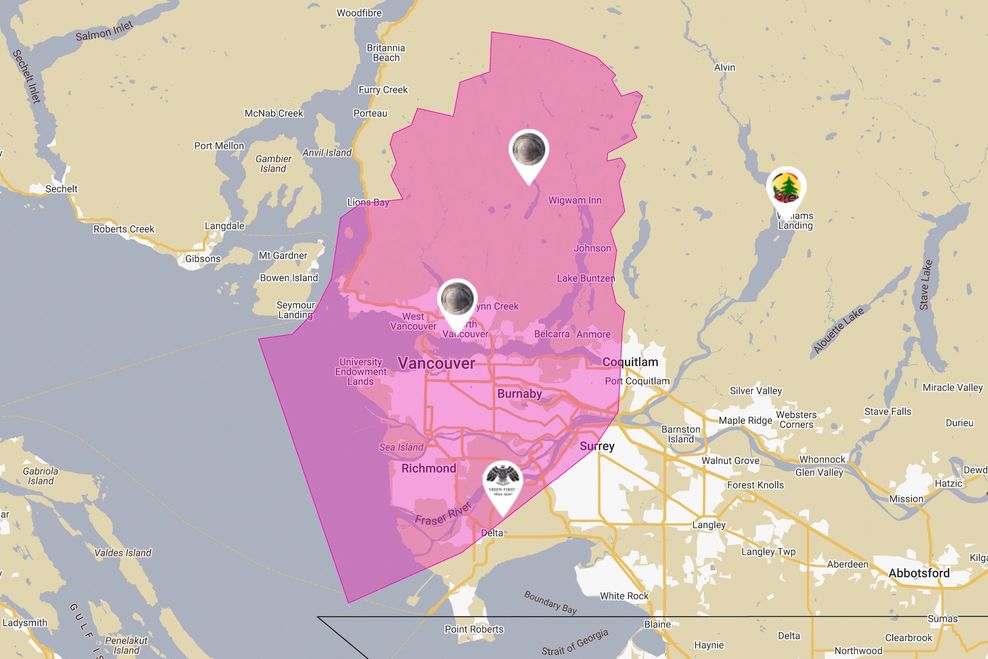
Areas asserted to be the traditional territory of Musqueam Indian Band. (BC Treaty Commission)
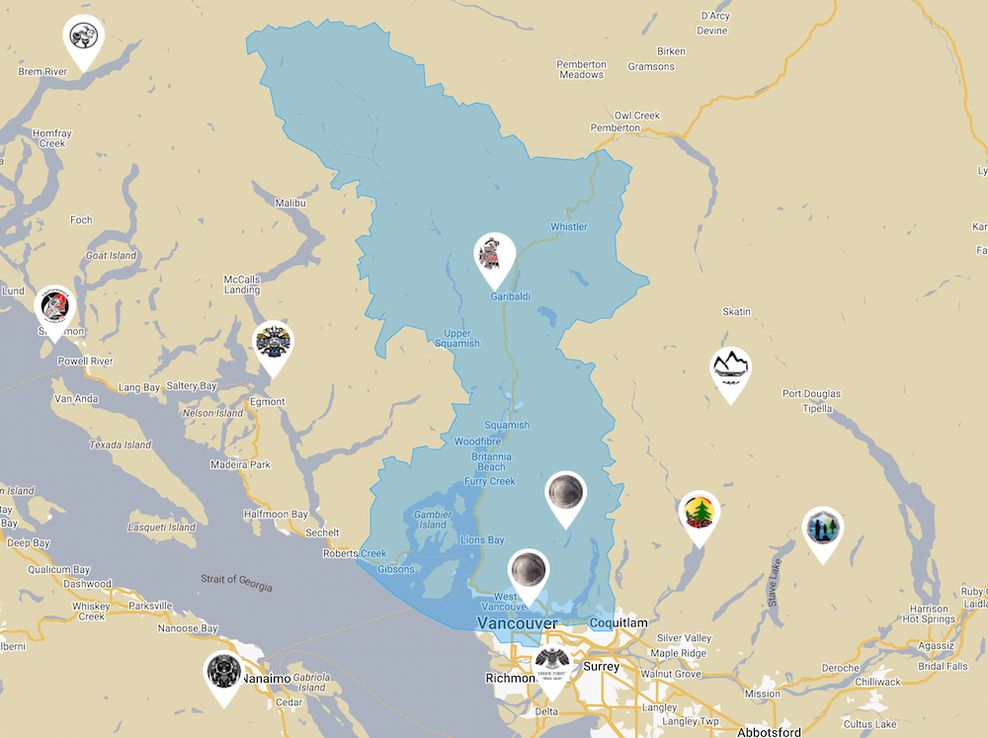
Areas asserted to be the traditional territory of Squamish Nation. (BC Treaty Commission)
In Summer 2025, the provincial government — through a technical forest stewardship and land-use agreement — added about 49,325 acres (200 sq. km.) of land under the direct influence of the Squamish Nation. These lands are primarily located on provincial Crown lands within the area the Squamish considers to be its traditional territory.
Williams said it has formally requested an urgent meeting with federal officials to obtain full transparency about the Musqueam agreements and any potential implications for Squamish lands and interests.
They have also launched a comprehensive legal review of the agreements. While the federal government has said the deal does not affect the rights of other First Nations, Squamish leaders said they are independently verifying that claim and will take steps if necessary to protect their jurisdiction and title.
Despite the concerns, Williams emphasized that Squamish hopes to maintain positive relations with Musqueam, describing them as their “relatives.”
Williams said Squamish will oppose any process that undermines its rights.
“It remains our hope that we will continue to maintain a positive relationship with our relatives at Musqueam,” he continued. “However, Squamish Nation will challenge any process or agreement that undermines or disregards our rights, title, or jurisdiction.”
Musqueam and Squamish, along with the Tsleil-Waututh First Nation, also have major financial stakes in their co-owned, for-profit real estate development company, MST Development, which is spearheading multi-billion-dollar, high-density, mixed-use residential development projects in Vancouver, entailing the Heather Lands — a revised rezoning application proposing additional residential density will be considered at a Vancouver City Council public hearing this week — and the Jericho Lands.
Over the years, these three First Nations have described themselves as having close relations, attributing this in part to the 2010 Winter Olympics, which brought them together for the first time in generations. They have remained close ever since. They will also reprise their role as the host First Nations for the 2026 FIFA World Cup in Vancouver, with the provincial government providing each First Nation with $6 million, for a total of $18 million, for their cultural contributions and to create legacies in their own communities.
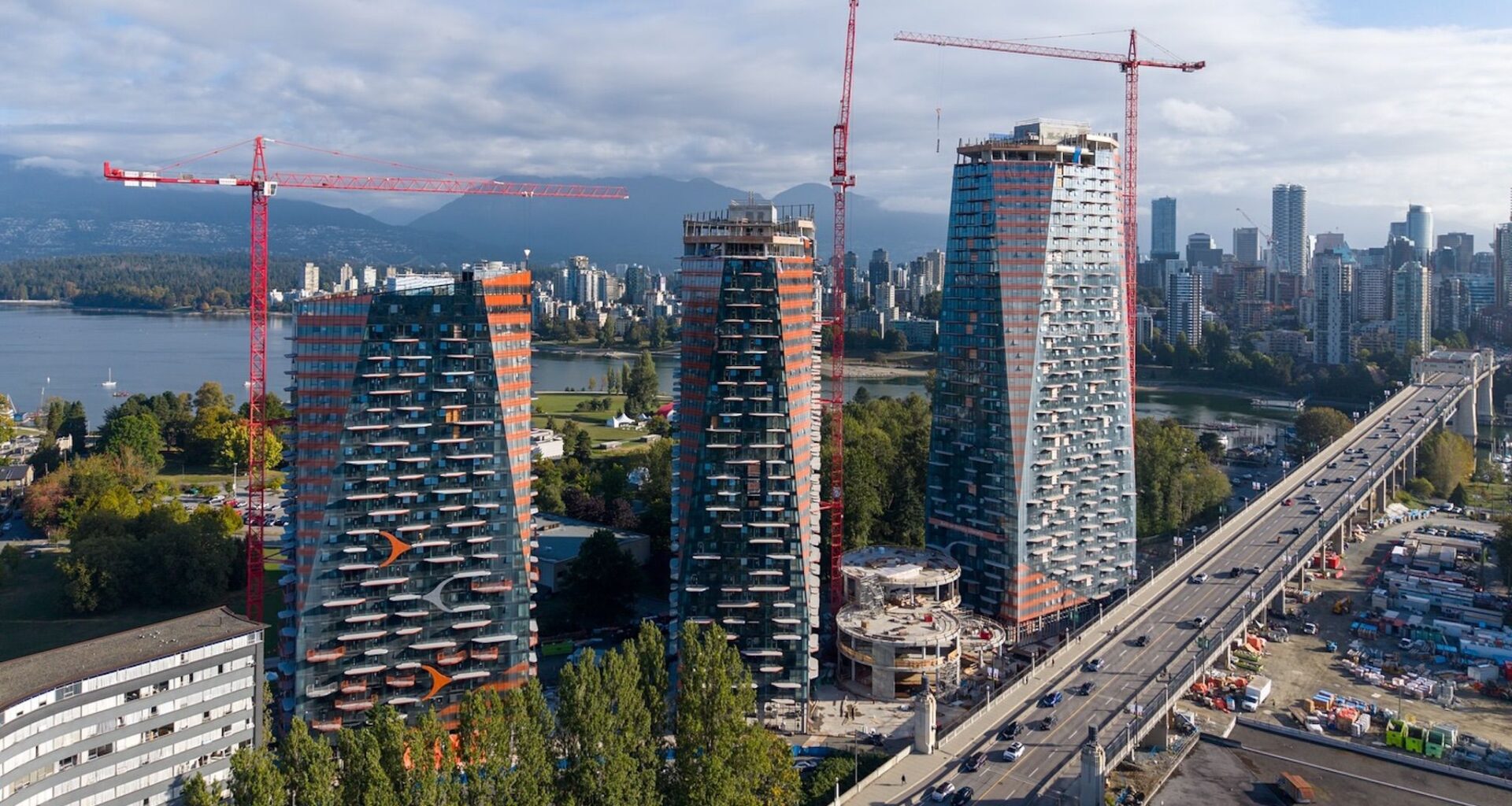
Squamish Nation is also behind the massive Senakw rental housing complex being built on its reserve lands at the south end of the Burrard Street Bridge. By the early 2030s, when all four phases are complete, Senakw is expected to include more than 6,000 rental homes for up to 9,000 residents, with the first phase’s roughly 1,400 units slated to be ready for tenancy in Summer 2026.
It has previously been estimated that over the decades-long lifespan of the Senakw buildings, rental income generated by the project could reach at least $20 billion. Squamish Nation retains a 50 per cent interest in the first and second phases and will hold 100 per cent ownership of the third and fourth phases. Revenue from Senakw alone will place Squamish Nation among the wealthier Indigenous communities in Canada, largely due to the value and development potential of its urban reserve land in False Creek — not including its other urban reserves at North Shore waterfront locations.
Musqueam is also among several parties — including the provincial and federal governments, City of Richmond, and others — appealing the Supreme Court of B.C.’s August 2025 decision granting the Vancouver Island-based Cowichan Tribes Aboriginal title over a large area of both public and private lands in southeast Richmond.
Musqueam argues that this Richmond area is a part of their traditional territory, and have joined the effort to have the decision overturned. During the years-long court trial, Musqueam questioned the legitimacy and existence of the Cowichan Tribes.