
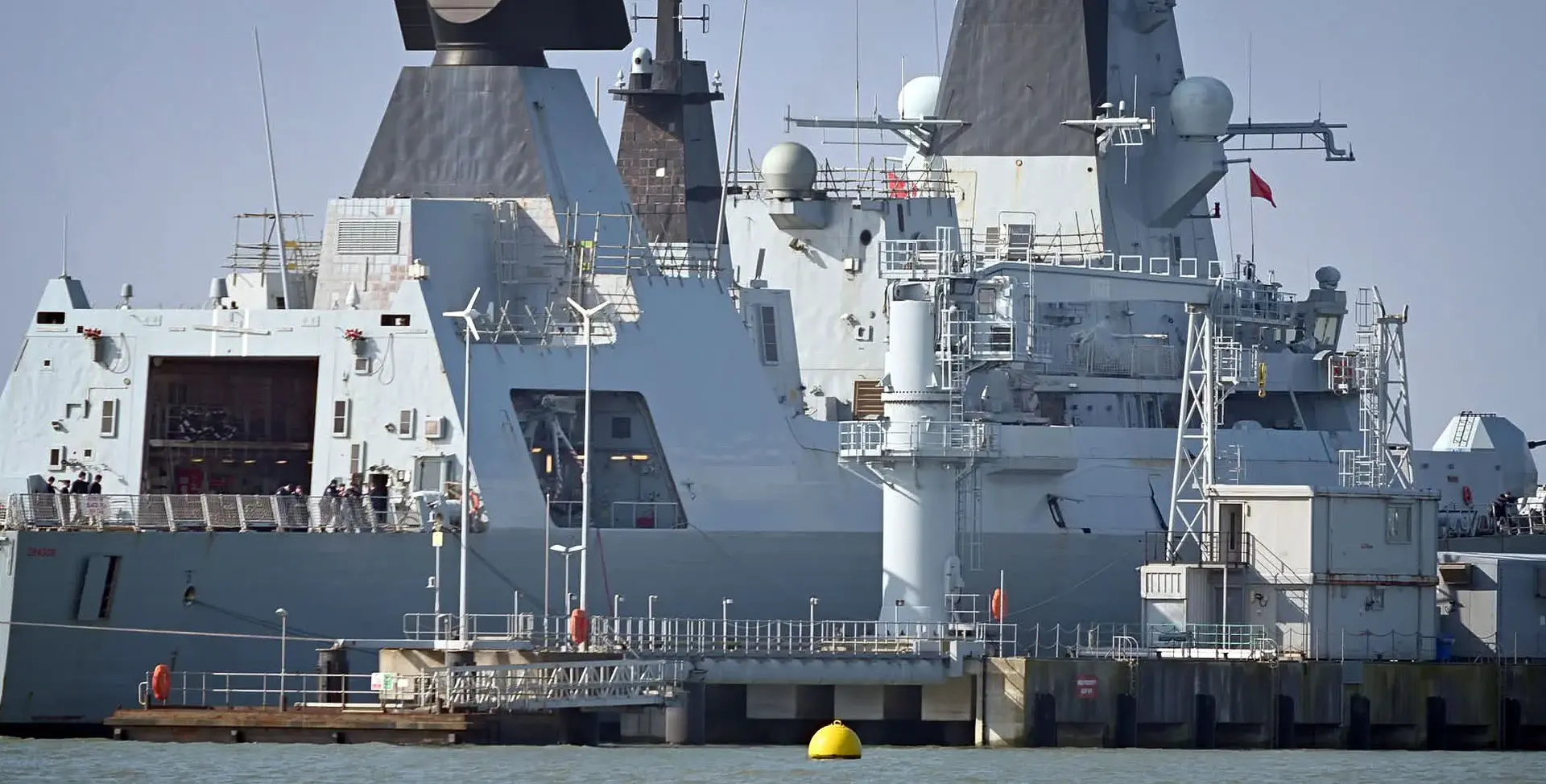
For years, warnings about the declining strength of the Royal Navy have been largely ignored. The crisis in the Middle East has placed the size and readiness of the RN in the spotlight, with various politicians and sections of the mainstream media describing Britain’s naval position as “weak”, “embarrassing” and “a disgrace”. Here we consider those claims, how it came to this, and a roadmap for change.
For years, the steady contraction of the RN has occurred largely out of public sight. Fleet numbers fell gradually, older vessels were retired and replacement programmes stretched across decades. While this erosion was obvious to those following naval policy closely, it remained on the fringes of the national conversation.
Events over the past few weeks have changed that. The confused reaction to rising tensions in the Middle East, combined with the difficulty of rapidly deploying a single destroyer, has forced a much broader debate about the true state of Britain’s maritime power. Even traditionally defence-sceptical media outlets have begun asking why a leading naval nation struggles to field ships at short notice.
Aspects of the criticism have been exaggerated or poorly informed. The RN continues to operate globally, supports NATO commitments, maintains the nuclear deterrent and contributes to coalition operations around the world, at least on a sporadic basis. Nevertheless, the uncomfortable reality is that the central criticism is largely justified: the Navy is simply too small and its readiness levels are not high enough.
The RN is caught in a perfect storm of underfunding and the impacts of poor decisions made in the past. The Navy is not just hollowed out, but is now actually incapable of performing many of the routine tasks it was managing until quite recently. This breakdown is not the result of losses in combat or even the pressure of high-tempo operations, but has been caused by long-term under-resourcing and mismanagement. This is a fleet expected to be ready for too many missions with too few ships.
Thirty years of hurt
The present situation did not emerge overnight. It is the cumulative result of three decades of shrinking force structure, repeated delays to shipbuilding programmes and a strategic assumption that a large-scale maritime clash was unlikely or the delusion that major conflict was always “10 years away”.
During the Cold War, the RN maintained far larger surface forces. 12 Type 42 destroyers were eventually replaced by just 6 Type 45 destroyers; the decision to build half of the planned 12 can be traced to the costs of the war in Iraq. The legacy of the Cold War ‘peace dividend’, followed by the prioritisation of counter-insurgency operations in Iraq and Afghanistan were disastrous for the Navy. Although there was a period of more optimism around 2015 with the arrival of the aircraft carriers and much-delayed orders for new frigates, the hollowing out continued.
The latest crisis has hit at a particularly low point for the RN. 13 frigates are in the shipbuilding pipeline, but the 30-year-old Type 23s are falling apart, well before replacements are ready. The ‘frigate gap’ will leave the escort fleet under severe pressure for the rest of the decade. The Type 45 destroyers, currently being placed most prominently in the public view, are in the middle of an upgrade programme, which should start to show some availability benefits in the next year or two.
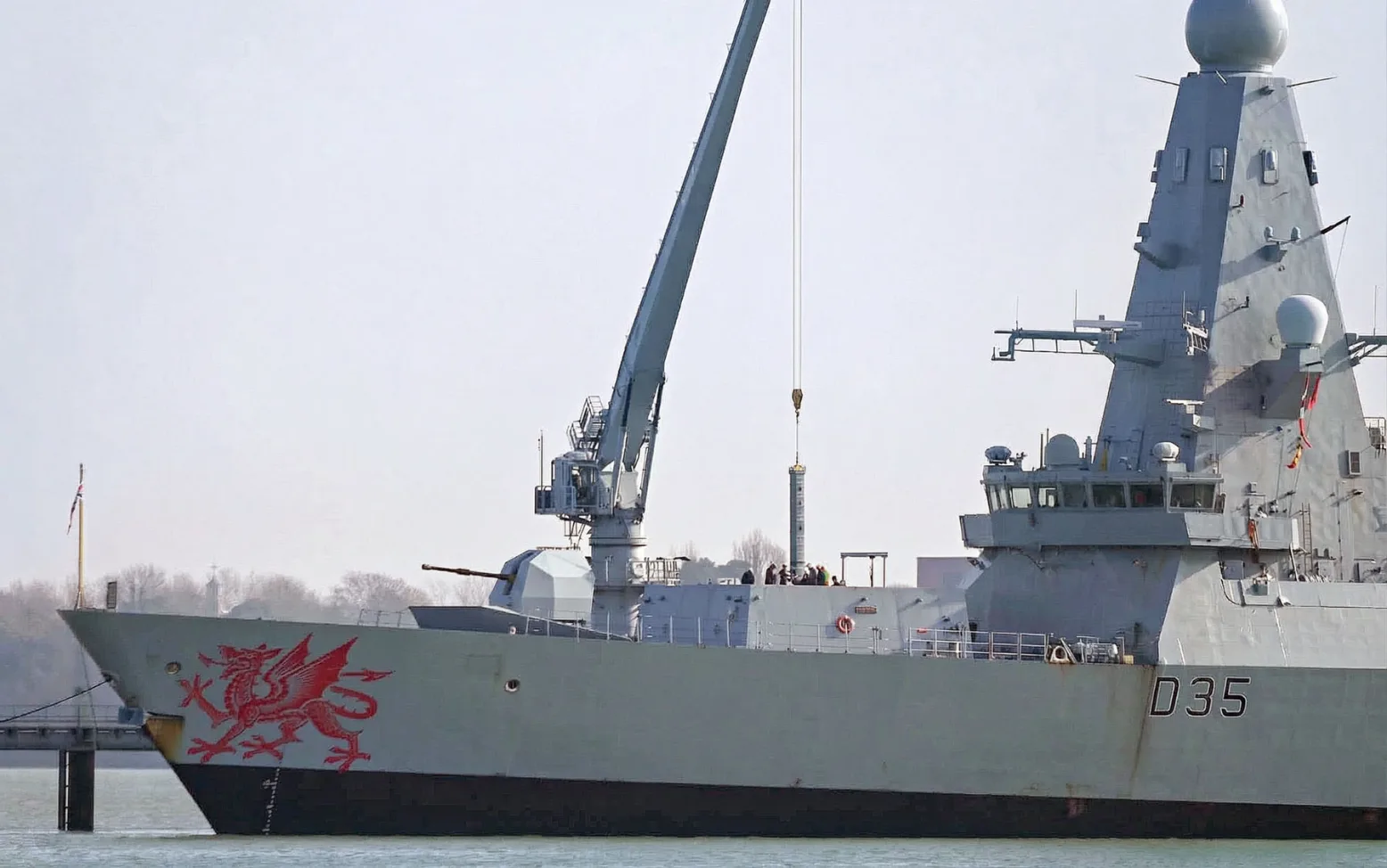 The most photographed ship in Britain right now… HMS Dragon loading Sea Viper missiles on 5th March ahead of her deployment to the Mediterranean (This and main image: S. Wenham).Strategy without resolve
Britain now has a political class whose instincts in an international crisis are to consult the lawyers before consulting military leaders or strategic thinkers. The world appears to be drifting back towards a system dominated by a handful of ‘strongman’ leaders pursuing their interests above all and seeking to revive an 18th-century style order built around competing spheres of influence. For Britain, this demands a radical shift in mindset. Policymakers must stop behaving as if the world conforms to how they would like it to be and instead confront the harsher realities of the emerging international order.
Whether you agree with their actions or not, the United States has long followed a simple principle to underpin its foreign policy. Aircraft carriers or other forces are deployed early and can apply pressure without firing a shot, providing options while political leaders decide what they want to do. Ships can arrive quietly, monitor events and reassure allies without necessarily committing to combat operations. Iran chose not to yield to this show of strength and open negotiations, so Trump selected to go all in with a visceral demonstration of hard power.
As naval assets have become fewer in number (and typically more expensive), British leaders have become more reluctant to take risks with their deployment. This caution can feed a cycle in which fewer ships lead to greater hesitation about using them. In the case of RAF Akrotiri, it has long been known that the site was highly vulnerable, but despite being the largest overseas airbase with great strategic value, little was done to harden defences. This parsimony, along with the rushed dispatch of a destroyer, encapsulates how hesitation and over-caution are likely to worsen outcomes in the long run. For military planners, political flip-flopping and indecision multiply their problems.
A final warning?
While the criticism directed at the RN is sometimes unfair, broad public debate may ultimately prove valuable. Britain is being forced to confront the consequences of long-term defence choices that were easy to ignore during more peaceful decades.
It is also worth recognising that the current Middle East crisis, serious as it is, does not represent an existential threat to the UK. It may be of little comfort to service personnel or British citizens currently exposed to danger in the Eastern Mediterranean or the Middle East, but this conflict offers a warning to address weaknesses before it’s too late. This is infinitely preferable to discovering how vulnerable we have become during a confrontation with Russia that could endanger the whole nation far more directly.
Media interest in the state of the Navy is likely to move on quickly, while it takes many years to build and sustain a fleet. This government could seize the opportunity to instruct the Treasury to stop stalling on the Defence Investment Plan and convert vague promises to increase funding in the future into an immediate uplift.
Defence procurement requires radical reform and a fundamental restructuring of its funding model. One approach would be to commit to long-term programmes financed in a manner similar to the nuclear enterprise, insulated as far as possible from disruption caused by changes of government. Spending could be organised in five or ten-year tranches, abandoning the damaging MoD in-year budget cycle and overseen by empowered but accountable programme leaders expected to remain in post for extended periods.
This regeneration must begin with a genuine “people first” approach, repairing recruitment and retention to ensure the Navy has the personnel on which operational success ultimately depends. That should be followed by a clear signal to industry that a steady and predictable drumbeat of procurement can be expected over the coming decades.
Beyond the vessels already on order, renewal must include 12 SSN-AUKUS submarines, 6 Multi-Role Support Ships (MRSS), the Future Air Dominance System (FADS) / Type 83 destroyers, development of hybrid aircraft carriers and the Type 32 frigates. These programmes must also be accompanied by deeper ammunition stockpiles and far greater investment in uncrewed systems to add mass and resilience to the fleet.
This may sound like playing ‘fantasy fleets’, but on paper at least, the government has already indicated its intention to pursue all of these programmes. The real question is whether they will be funded and delivered with the scale, urgency and consistency required.