
 Play Brightcove video
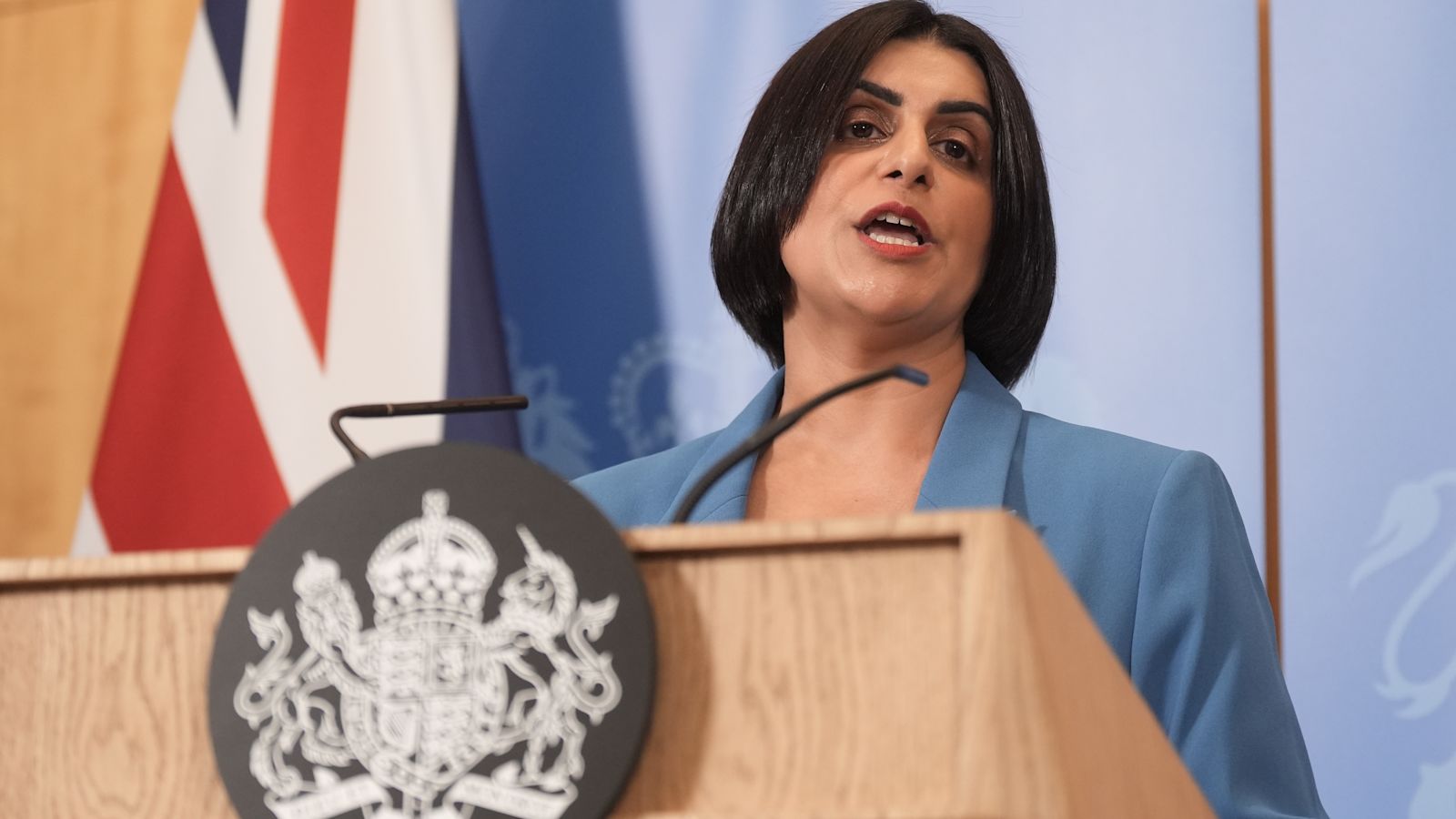
The home secretary laid out her new measures for asylum seekers as part of Labour’s major reforms to the immigration system as ITV News’ Harry Horton reports
Some failed asylum seekers will be offered an “increased incentive payment” of £10,000 per person and up to £40,000 per family to leave Britain under a pilot scheme, the home secretary has announced.
150 families will take part in the trial, which would see families given seven days to respond to the offer of payment, before they are forcibly removed.
The new measure was announced as part of a major shake-up of the UK’s immigration system, adding to the government’s raft of reforms announced in November.
In a speech on Thursday, Mahmood said the government must “be more Labour”, insisting her reforms are “fair but firm.”
Speaking less than a week after Labour’s bruising by-election loss to the Green Party in Gorton and Denton, Mahmood admitted that it was a “difficult time for my party.”
“We should be more Labour, of course, we should be more Labour,” she said in a speech on Thursday.
“The real question is, what does more Labour mean? Because in my view, more Labour doesn’t mean more Green, just like more Labour doesn’t mean more Reform.”
The Green win has sparked calls from some on the left of the Labour Party for the government to be less hardline on immigration, but Mahmood has made it clear she intends to double down, while insisting her reforms are led by “Labour values”.
She said on Thursday that her changes to the system are “fair but firm” with “compassion and control”, outlining the case for a position between Reform leader Nigel Farage’s “nightmare pulling up the drawbridge and shutting out the world” and Green Party leader Zack Polanski’s “fairytale of open borders”.
Mahmood announced that asylum seekers who break the law, work illegally, or can financially support themselves will lose the right to government-funded accommodation.
The rule change means only those with legitimate asylum claims who follow the rules will get taxpayer-funded support.
The statutory legal duty under EU law to provide asylum seekers with support and accommodation will be replaced with a conditional approach.
The government is determined to make the UK a less attractive destination for illegal migrants.
The English-language test for people seeking permanent settlement will also be made tougher, and foreign nationals with suspended sentences of a year or more will be refused entry to the country.
Subscribe for free to our weekly newsletter for exclusive and original coverage from ITV News. Direct to your inbox every Friday morning.
Mahmood, who is facing a potential rebellion from Labour backbenchers over the plans, said in her speech at the centre-left think tank IPPR in London: “If we cannot deal with so visible a failure, what can the state achieve at all?
“It is our creed, as the Labour Party, that the state can and must be a force for good.
“Without the trust of citizens in the state, therefore, there is no space for Labour values – in any part of government – to be realised.
“Restoring order and control at our border is not a betrayal of Labour values, it is an embodiment of them, and it is the necessary condition for a Labour government to achieve anything it hopes to.”
Last year, a total of £4 billion was spent on asylum support in the UK, and as of December, there were 107,003 people in receipt of asylum support, with 30,657 in around 200 asylum hotels, the Home Office said.
The issue of people being housed in hotels rose to prominence last year with protests outside some sites.
Labour has pledged to stop using asylum hotels by the end of this Parliament, which would be 2029, if not earlier.
In October, the government announced that barracks in Scotland and southern England would be used to temporarily house around 900 men, as part of efforts to stop using hotels to house asylum seekers.
In November last year, Mahmood announced changes that would make the UK’s immigration system one of the toughest in Europe, taking inspiration from the Danish government.
The changes are aimed at reducing the “pull factors” that make people want to come to the UK, by making it harder to get permanent refugee status, reducing barriers to deportation and reforming human rights laws.
The plans will see the time it takes migrants to be able to apply for permanent settled status doubled from five to ten years, while refugees could have to wait 20 years, and those who arrive by small boat could wait up to 30 years for residency.
From Westminster to Washington DC – our political experts are across all the latest key talking points. Listen to the latest episode below…