
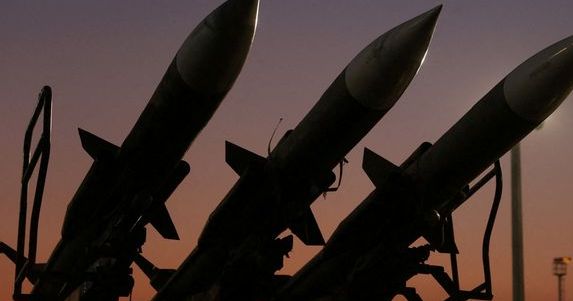
The ministry said the operation was carried out jointly with the Islamic Revolutionary Guard Corps and resulted in the destruction of bases and ammunition depots belonging to the groups.
“Separatist terrorist groups intended to enter the country through the western borders, with the support of the American and Zionist enemy, and carry out attacks in urban and border areas,” the ministry said. “A significant portion of their positions and facilities were destroyed and heavy losses were inflicted.”
The statement added that Iranian forces were coordinating with Kurdish residents in border areas to monitor movements and prevent attacks.
“Armed forces and intelligence units, with the cooperation of courageous Kurdish compatriots, will thwart the American-Zionist enemy’s plans for any aggression against the country’s territory,” the ministry said.
Border officials reject infiltration reports
Local authorities in the western border region denied reports that armed fighters had entered Iran.
“No report of infiltration or illegal movement of armed groups has been registered in this part of the border,” the governor of Qasr-e Shirin on the Iraqi border said, according to Iranian media.
The reports circulating on social media about armed groups crossing the western border had no factual basis, the governor added.
Meanwhile, Nechirvan Barzani, president of Iraq’s Kurdistan Region, said on Thursday that the autonomous region would not be part of any military confrontation or escalation.
A spokesperson for Iraq’s Kurdistan Regional Government also denied reports.
“Iraq’s Kurdistan Regional Government denies reports claiming it is involved in plans to arm Kurdish opposition groups and send them into Iran,” the spokesperson said. “The Kurdistan Regional Government is not part of any campaign to expand war or tensions in the region.”
After joint Israeli-US strikes on Iran, the Islamic Republic and allied Shiite militias launched ballistic missile and drone attacks on Iraq’s Kurdistan Region, which hosts several Iranian Kurdish opposition groups in exile.
The strikes mainly targeted the regional capital, Erbil, where explosions, air-raid sirens and missile interceptions were reported.
Regional responses and US position
Regional officials and Washington also commented on Kurdish groups. Turkey said it was closely monitoring the activities of the Kurdistan Free Life Party (PJAK), an Iranian Kurdish opposition group linked to the Kurdistan Workers Party (PKK).
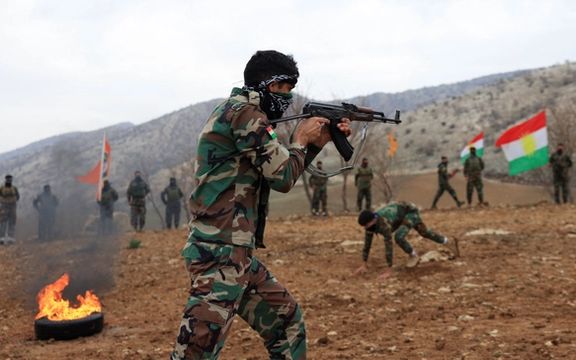 A fighter from the Kurdistan Freedom Party (PAK) takes part in a training exercise at a base near Erbil, Iraq February 12, 2026.
“The activities of groups that fuel ethnic separatism, such as the terrorist organization PJAK, negatively affect not only Iran’s security but also the overall peace and stability of the region,” Turkey’s defense ministry told a weekly briefing in Ankara.
US Defense Secretary Pete Hegseth rejected reports that Washington planned to arm Kurdish groups.
“All I would say is none of our objectives are premised on the support or the arming of any particular force,” Hegseth said during a briefing on Wednesday.
White House press secretary Karoline Leavitt also dismissed reports that the administration was considering supplying weapons to Kurdish fighters to spark an uprising inside Iran, saying the claims had “no factual basis.”
The reports come amid speculation that Iranian Kurdish groups could play a role in the wider conflict.
Earlier this week, Axios reported that several Kurdish factions based in Iraq had recently formed a coalition and were preparing for a possible ground offensive into northwestern Iran, citing US and Israeli officials and a source within one of the groups.
The report said some fighters had moved closer to the border in recent weeks, though Kurdish factions have publicly denied launching any attack.
Axios also reported that US President Donald Trump had spoken with Kurdish leaders in Iraq about the war with Iran, while Israeli officials were said to be exploring ways Kurdish forces could increase pressure on Tehran.
Kurds are an ethnic group concentrated mainly in parts of Iran, Iraq, Turkey and Syria, with communities also elsewhere; because Iran does not publish official ethnic census data, estimates of the Kurdish population in Iran vary widely, commonly ranging from about 7 million to 15 million people, or roughly 8% to 17% of the population, with most living in Iran’s western and northwestern provinces near the borders with Iraq and Turkey.
Several Iranian Kurdish opposition parties based largely in Iraq’s Kurdistan Region – including Komala and the Kurdistan Democratic Party of Iran (KDPI) – have generally framed their demands around political rights and Kurdish self-rule within Iran, often describing that goal as autonomy in a federal system, while PJAK, an Iran-based Kurdish armed group aligned with the broader PKK-linked network, has advocated more sweeping political change and Kurdish self-determination.