
B.C. is about to spring forward for the very last time as it sticks to permanent Daylight Saving Time (DST), apparently forever.
How will this impact folks crossing the border between Washington State and B.C.?
It has been days since the Government of B.C. announced that the province would stick to permanent DST time when our clocks switch this weekend, and the reaction has been intense, with many British Columbians criticizing the move, while other B.C. residents celebrate it.
Folks in Washington State have also been commenting on the change, and the reaction to the time change down south has been a little more chill than what we’ve been seeing in B.C.
B.C.’s decision will mean that folks in Washington State and other parts of the region will be an hour apart for around four months of the year, between November and March.
The Seattle Times covered the B.C. news, which elicited lots of reaction from its readers, with many criticizing government leaders in America.
One reader said, “How pathetic is the U.S. Congress? Washington State voted for this seven years ago, but needs Congressional approval to implement it. Seven years of waiting on the House for a simple approval or denial, which seems to be beyond their abilities. How incompetent is that?”
Some said they wished the U.S. would do the same. Others had concerns about border crossings.
Another Seattle Times reader asked, “So what happens at the border crossing time gates? Whose clock has control?”
Someone suggested it could have a negative impact on safety.
“B.C has gotten it wrong. They will find out in the winter when kids are standing at bus stops in the dark. And they are even farther north than us, it won’t be light until almost 9:30 a.m.!”
We’ve asked U.S. Customs and Border Patrol for information on that front, and will update this story when we hear back.
The situation may be a bit more confusing for folks who travel between the two regions regularly.
On the Bellingham subreddit, one user said, “I have been avoiding thinking about this problem as someone who lives [in] both places actively. I have no clue how the f**k this is going to work lol.”
“This will be interesting for cross-border employees,” someone else said, adding, “As someone who is constantly back and forth across the border, I also wonder about the Nexus lane hours. Will the truck crossing close at 9 p.m, Washington time or 9 p.m. B.C. time, for example (when we’re off by the hour).”
Another Redditor worried about the potential logistical impact, saying, “I can’t imagine all the impacts this is going to have. Scheduling and cross-border coordination, software (especially legacy systems), contracts that reference time zones, published schedules, etc. I like it though. We need to do the same.”
How we got here
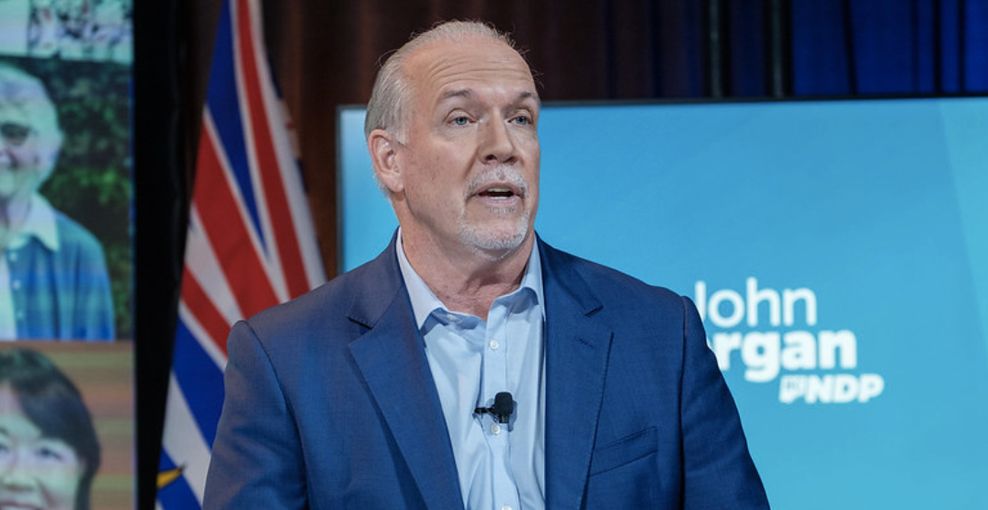
John Horgan (B.C. Government/Flickr)
When the news was announced, B.C. Premier David Eby said this would lessen chaos in people’s lives.
“Every parent knows that changing clocks twice a year causes a significant amount of chaos on already busy lives. British Columbians have been clear that seasonal time changes do not work for them,” Eby said.
“This decision isn’t just about clocks. It’s about making life easier for families, reducing disruptions for businesses and supporting a stable, thriving economy. I am hopeful that our American neighbours will soon join us in ending disruptive time changes,” Eby added.
The decision is seven years in the making and goes back to when John Horgan was the premier.
Back in 2019, the Province conducted a public engagement, which had a record response of 223,000 people. 93 per cent of respondents supported adopting year-round DST.
“The people of British Columbia have spoken, and their collective voice has come through loudly and clearly,” said Horgan at the time.
“This engagement has done exactly as we hoped it would in providing clarity about a preferred direction. The insights generated will be relied upon as we make a final decision about how to move forward,” Horgan added.
“Similarly, across all industry groups and nearly all occupational groups, support for year-round DST observance was higher than 90 per cent,” the Province said.
B.C. has suggested other benefits, like more light in winter evenings, which will allow for more leisure time and participation in outdoor activities, along with consumer activity.
Remember, March 8 is when the clocks move forward.