
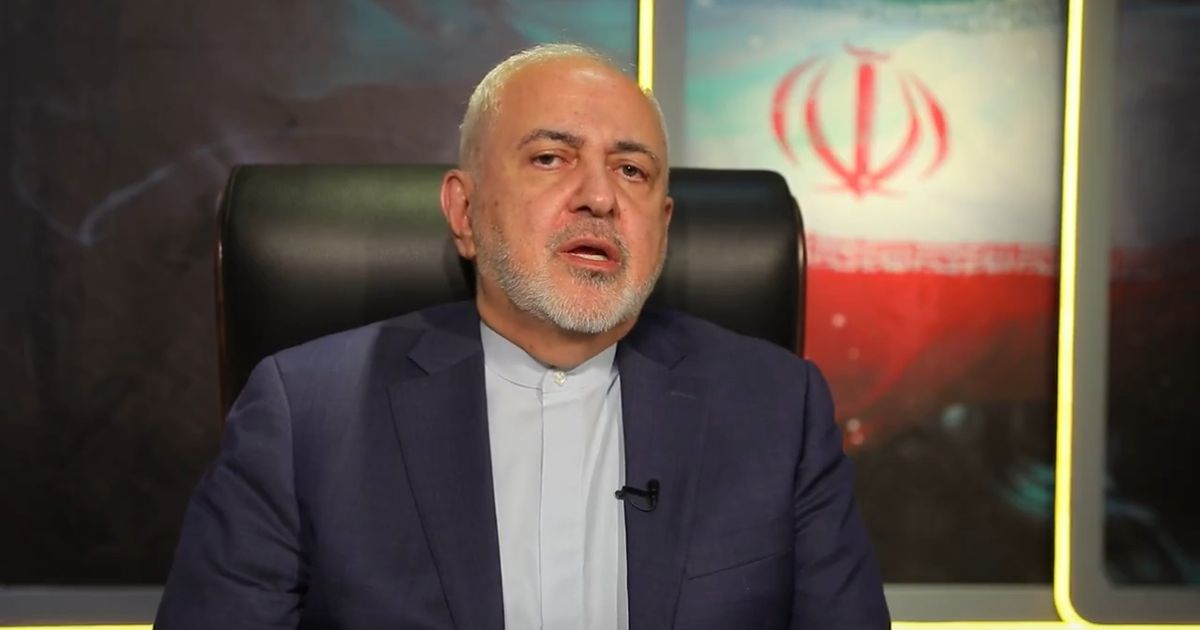
“It is not simply enough to degrade part of their arsenal,” Cruz told Eye for Iran podcast, adding that strikes have weakened Iran’s military capabilities and limited its ability to project force abroad.
Asked whether victory would mean regime change, he said: “Yeah, I believe this regime needs to be removed from power,” and argued that doing so would serve US national security interests and support Iranians seeking freedom.
Cruz said the United States and Israel had acted in coordination in recent days.
“We’ve seen the United States working hand in hand with Israel taking out, number one, the Ayatollah, number two, the senior military leaders of the regime, number three, a great percentage of the missile reserves of the drones,” he said.
“We have seen steadily the regime’s ability to project force, to terrorize the Iranian people, to murder their neighbors, to murder Americans, all of those have been reduced dramatically.”
His comments come as the Trump administration signals the campaign could intensify. US Defense Secretary Pete Hegseth said this week the United States has “only just begun to fight,” while Iran’s Revolutionary Guards warned attacks across the region would escalate.
Freedom “on the doorstep”
Cruz argued that removing Iran’s ruling regime would serve both US national security interests and the aspirations of Iranians living under the tyrinical government.
“Removing from power a government that is seeking to kill Americans is overwhelmingly in America’s interest,” he said, adding that it was also “overwhelmingly in the interest of the people of Iran of 92 million people who have suffered under tyranny and oppression for 47 years… and I believe freedom is on the doorstep and it is in sight before us.”
More than 36,500 Iranians were killed by security forces during the January 8-9 crackdown on nationwide protests, making it the deadliest two-day protest massacre in history.
The Republican Senator also suggested Iran’s military response across the region is backfiring and strengthening opposition to the regime.
“Well, Iran is doing a great job of building a coalition against this regime,” Cruz said. “You look at their military strategy, their military strategy appears to be try to murder as many people as possible and in as many countries as possible.”
Iran’s missile and drone attacks have spread across the region in recent days, with projectiles reported over or targeting Israel, the United Arab Emirates, Qatar, Bahrain, Kuwait, Jordan, Iraq, Saudi Arabia, Syria and Cyprus.
Some strikes and falling debris have also hit residential areas, highlighting how the conflict is spilling beyond military targets and affecting civilians across the region.
Limited ground engagement possible
Cruz also addressed speculation about whether the United States could deploy ground troops, saying he does not foresee an Iraq-style invasion but did not rule out limited ground action.
“Look, what we’re not going to see is an extended presence of American troops on the ground. We’re not going see a replay of what happened in the war in Iraq. That is not on the table,” he said.
“The president has been clear he has not ruled out some limited ground engagement… I could envision it is possible the president will order some sort of limited ground engagements, but I would expect the overwhelming majority of the American engagement on this to be in the air through bombs and missiles and other means.”
Iran’s leadership question
The question of Iran’s leadership has taken on new urgency following the death of Supreme Leader Ali Khamenei.
Iran’s clerical body, the Assembly of Experts, has elected Mojtaba Khamenei — the son of the late supreme leader Ali Khamenei — as the Islamic Republic’s new Supreme Leader, according to informed sources who spoke to Iran International.
The decision would keep power firmly within the ruling system of the Islamic Republic and extend the authority of the clerical establishment that has governed Iran since 1979.
President Donald Trump signaled strong opposition to Mojtaba Khamenei assuming power.
“Khamenei’s son is a lightweight. I have to be involved in the appointment, like with Delcy Rodriguez in Venezuela,” Trump said.
“We want someone that will bring harmony and peace to Iran.”
Asked during his interview about who should lead Iran next, Cruz said he would not speculate about specific figures but noted there were multiple possible contenders.
“Look, I don’t know, and I think that’s a decision for the people of Iran to make. And so there are various contenders,” Cruz said.
Cruz said he believes Iran’s current ruling system should ultimately be replaced by leadership chosen by the Iranian people.
“Yeah, I believe this regime needs to be removed from power,” he said.
“What I would like to see is a free and fair election, let the people of Iran choose their leaders.”
Message to the Iranian people
Cruz also spoke about his personal connection to people who have lived under authoritarian rule.
“My father was born and grew up in Cuba. My father fought in the Cuban revolution. My father was imprisoned and tortured in Cuba,” he said. “My family knows suffering the people of Iran have experienced.”
He ended with a message to Iranians protesting the government.
“My message to the Iranian people is your courage is inspiring… You have a moment to reclaim your country, to reclaim your future and to move into an era of prosperity.”