
“We didn’t sleep last night. We couldn’t sleep because of fear. We were just watching the news to check on our home,” she added.
Volunteers working at shelters in Beirut have told the BBC they have already run out of space, and those supplying food to the displaced say they also worry about running out of supplies and donations dwindling.
Staff at the Barzakh bookshop cafe prepared carrot soup on Friday to serve at schools sheltering the displaced for Iftar – the evening meal that breaks the Ramadan fast.
“I’m 100% sure we’re not going to be able to keep up,” said operations manager Khodor Al-Akhdar.
The cafe provided free meals during the last war with Israel, relying on public donations, and had hoped they would not need to do it again.
“When the last war finished we thought it was going to be the end of this. But this week people started reaching out saying ‘when are you going to start again?'” he said.
“We don’t have the energy. Mentally we’re not good, physically we’re not good from the last war.”
Lebanese Prime Minister Nawaf Salam warned on Friday that “a humanitarian disaster is looming” because of the mass displacement.
“The humanitarian and political consequences… could be unprecedented,” he told foreign ambassadors.
French President Emmanuel Macron has also raised concerns about the escalating hostilities, describing it as a moment of “great danger”.
“Everything must be done to prevent this country, so close to France, from once again being drawn into war,” he said in a statement shared on X.
“Hezbollah must immediately cease its fire toward Israel. Israel must refrain from any ground intervention or large-scale operation on Lebanese territory,” he said.
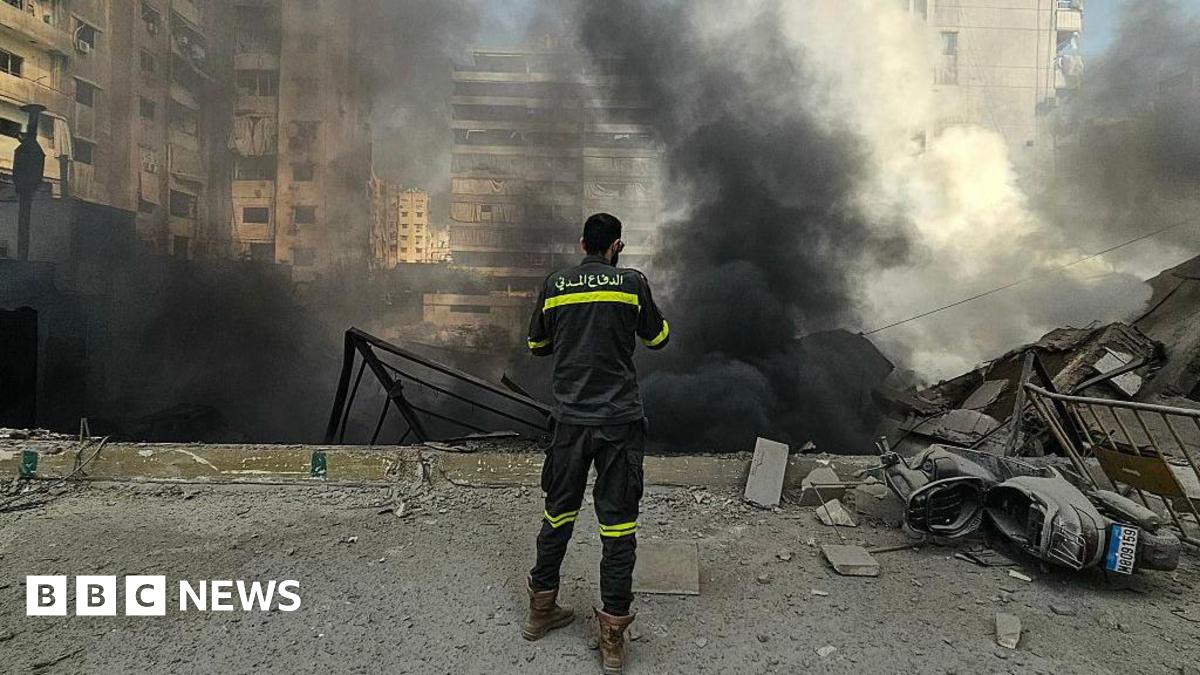
On the streets of Beirut, the displaced continued to wait on Friday to see if the bombing would increase.
“It’s way too early for Lebanon to have another war,” said 14-year-old Dunia.
Additional reporting by Angie Mrad and Wyre Davies