
Hundreds of thousands of Lebanese civilians have been fleeing Israeli air strikes in Lebanon over the past few days, less than 18 months after a ceasefire ended the last conflict with Israel in November 2024.
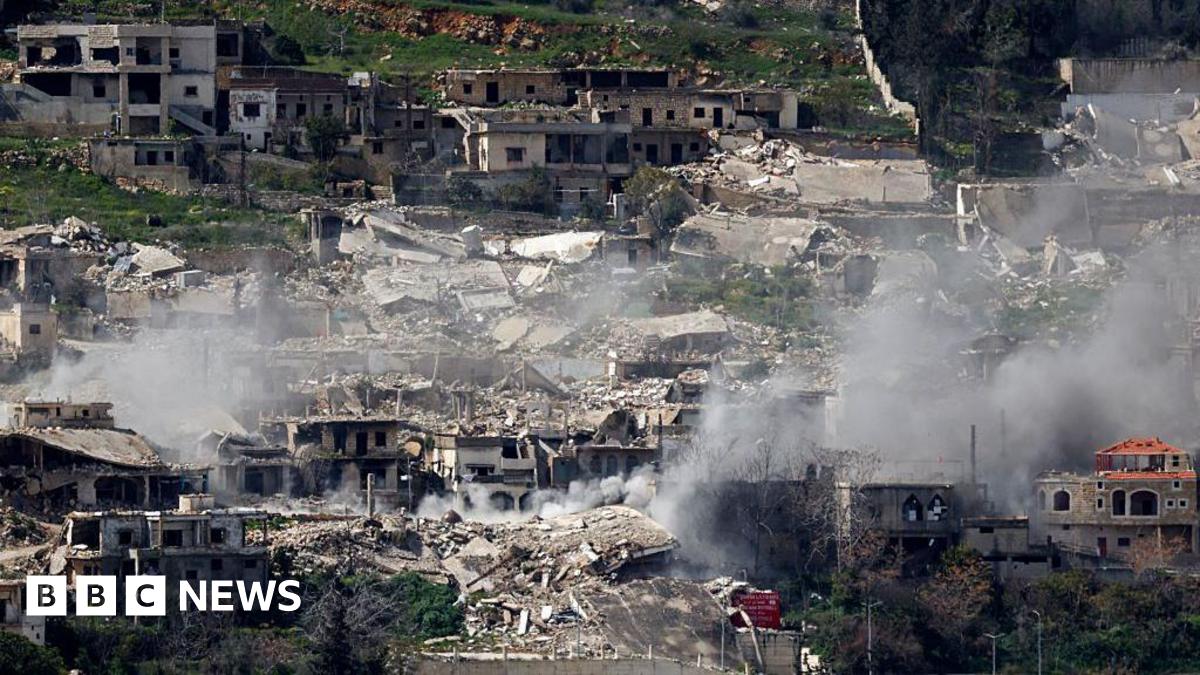
During that war, Israel fought its way house to house through many Lebanese border villages.
Their crushed remains still litter the landscape.
But some Hezbollah fighters have reportedly returned to these areas, and Israel is now fighting its way through the area again.
Without those assaults on Hezbollah in 2024, which left a key Iranian proxy severely weakened, Israel would have found it much harder to launch its current war on Iran – or the previous one in June last year – without a much higher cost at home.
Old tank tracks on the Israeli side of the border still mark the places of that last invasion.
But just days into this latest conflict, the mood in Israel – basking in the military partnership with Donald Trump – is already breathlessly looking to a new future, and a new Middle East, prompting one Israeli commentator, Avi Issacharof, to urge his country to “come down to earth for a moment”.
Toppling the ayatollah [Iran’s Supreme Leader Ali Khamenei] might sound “sexy”, he wrote in the daily Yedioth Ahronoth, “but there are no crowds in the streets of Tehran, no widespread public protests, and as yet no minority militias seizing territory”. He added that the end of Khamenei did not mean the end of the Iranian regime.
Hard military might is Israel’s edge – but it has already fought many wars with Iran’s proxy forces, Hezbollah and Hamas, and returned to fight them again.
Israel’s strategy and risk threshold might have changed since the 7 October 2023 Hamas attacks, but without a clear political post-war plan, few here are clear where a new Middle East might be heading.