
The child’s tiny body was wrapped in a green shroud, and as it was carried through the funeral procession, the cries of sorrow mingled with shouts of anger. “Death to America! Death to America!” rang out as hundreds of mourners filed through Lebanon’s eastern city of Baalbek.
The funeral was held for six members of the Abd al-Sattar family, including three children — Maram, Miral and Rabih — killed by an Israeli airstrike as they slept in the early hours of Wednesday morning.
A member of Lebanon’s national police force and his nephew were also buried alongside the family. Earlier that day, an Israeli drone strike hit their car and incinerated them both in the blast. The smoldering wreckage was still on the side of the road as I drove to Baalbek to attend a funeral that was not meant to be theirs.
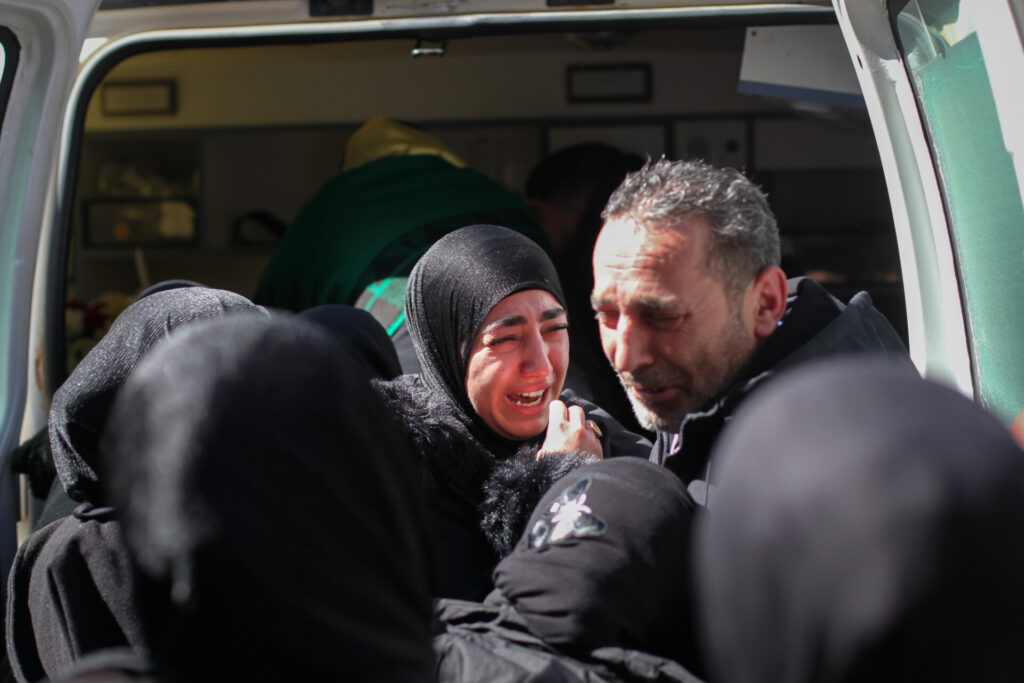 The funeral for the Abd al-Sattar family, Baalbek, Lebanon. (Alex Astley)
“It is a savage enemy that kills innocent children,” said one of the mourners, who did not give her name. “This is Israel. It’s all to make people scared and make us leave our land. But we will win this time, because our will is stronger than theirs.”
These victims are among the first civilians, and the first children, to be killed in this renewed war in Lebanon. And the human cost is mounting.
After the U.S.-Israeli attack on Iran last Saturday, the entire country held its breath. Its people hoped to avoid a war that was quickly engulfing the region and has since rippled far beyond Iran. On social media, people joked nervously that Lebanon, for once, was the safest country in the Middle East. But hopes were soon shattered. Shortly after midnight on Monday, Hezbollah launched a barrage of rockets and drones toward Israel to avenge the killing of Iran’s supreme leader, Ali Khamenei.
For weeks, as U.S. President Donald Trump’s armada gathered near Iran, Lebanon’s government frantically sought to prevent the country from falling into any potential regional war. And it was quick to condemn Hezbollah’s decision to bomb Israel, with President Joseph Aoun later saying that the responsibility for any consequences would fall on “the parties that ignored repeated calls to maintain security.”
Most Lebanese were left stunned. Why would Hezbollah, already battered and isolated from its last war in 2024, launch an ineffective attack against a country it could never beat, to start a war where everyone stands to lose? For many Lebanese, Hezbollah’s decision to drag the country back into a confrontation with Israel has exposed the group’s true allegiance — not to Lebanon or to its stated mission of “resistance,” but to its Iranian patron.
But among Hezbollah’s supporters, there is still a staunch loyalty. For them, Hezbollah’s attack was necessary and justified, after 15 months of near-weekly Israeli attacks, in violation of the 2024 ceasefire that ended the last war.
Israel’s retaliation was swift and brutal. Within hours, Israeli airstrikes were pummeling Beirut’s suburbs, south Lebanon, and the eastern Bekaa Valley — areas where Hezbollah enjoys widespread support. And it was not long before the Israeli military’s evacuation orders, issued via X, began displacing residents from dozens of villages in south Lebanon to clear the way for ground troops to invade.
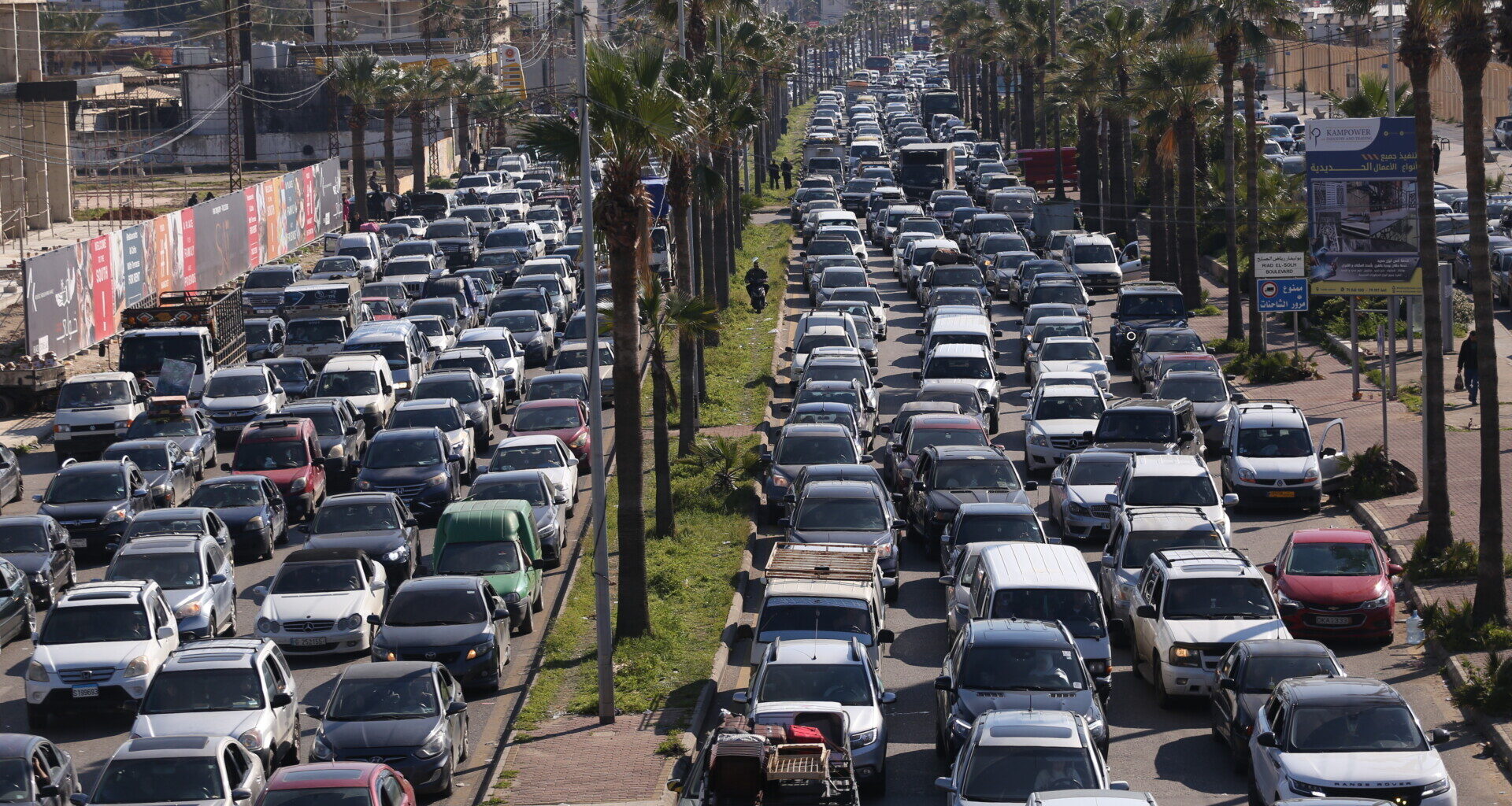
On Thursday, with a single tweet, Israel ordered the evacuation of about half a million people living in Beirut’s southern suburbs. Bezalel Smotrich, Israel’s finance minister, threatened that the suburbs would “soon look like Khan Younis,” the city in southern Gaza decimated by Israel’s military during the genocide in the Palestinian territory. There was mass panic, and every major roadway out of the capital became choked with bumper-to-bumper traffic.
That night, the pounding of bombs falling on Beirut’s suburbs seemed to mark the hours. Today, a pall of acrid smoke hangs over the city; the incessant thrum of an Israeli drone fills every street.
There is an awful sense of deja vu, a weariness in a country that had barely started to recover from its last war just over one year ago. The images playing out are painfully familiar. Entire families sleeping on the pavement. The same village names cropping up in the news. And a list of casualties that grows daily, with women and children among the dead. It is a rinse-and-repeat war.
Hezbollah, meanwhile, is showing no signs of faltering, sending waves of rockets and drones toward Israel daily. “We are facing aggression … our choice is to confront it until the ultimate sacrifice,” Secretary-General Naim Qassem pronounced in his first speech since the latest round of fighting erupted.
But Hezbollah faces increasing isolation at home. In a legal decision that would have been unthinkable before, Lebanon’s government banned the group’s “military activities.” How this ban will be enforced, however, remains unclear. Lebanon’s security forces have historically sought to avoid any confrontation with Hezbollah. To do so would risk sectarian strife and raise the specter of Lebanon’s civil war, which tore the country apart from 1975 to 1990.
In 2024, Hezbollah’s last war with Israel — which began after the group launched rockets across the border a day after the Oct. 7 attacks — killed over 4,000 Lebanese civilians, left around 1.2 million displaced and destroyed swaths of south Lebanon. Human rights experts warn that this latest escalation will see a similar trend of abuses against the civilian population.
“There is a carelessness with following the laws of war,” said Ramzi Kaiss, a researcher at Human Rights Watch in Beirut. “The conflict is happening in a climate where there is complete impunity, and that is when civilians pay the price.” He suggested that the Lebanese government should hand jurisdiction to the International Criminal Court to investigate potential war crimes and conduct its own investigations in Lebanon to prevent any future violations.
But there are early indications that this war, which has so far killed 123 people and displaced about 700,000, will inflict a heavier toll on civilians, and on the displaced in particular. The government is broke and will not be able to provide the same level of assistance as before. And the border with Syria, where thousands fled last time, is closed as the new government there takes measures to prevent Hezbollah infiltration. Meanwhile, there are fewer places providing shelter in Lebanon. An atmosphere of fear and mistrust toward the displaced Shiite population has grown since the last war, mostly because Israeli strikes targeted Sunni and Christian areas where Shiite families were sheltering.
At the Dar Al Amal Hospital near Baalbek, Zahraa Abd al-Sattar lay covered in bandages, her face swollen and peppered with shrapnel wounds. The 7-year-old girl miraculously survived the airstrike that brought the four-story apartment building down on top of her. Her mother, whose arm was severed in the blast, was the only other survivor.
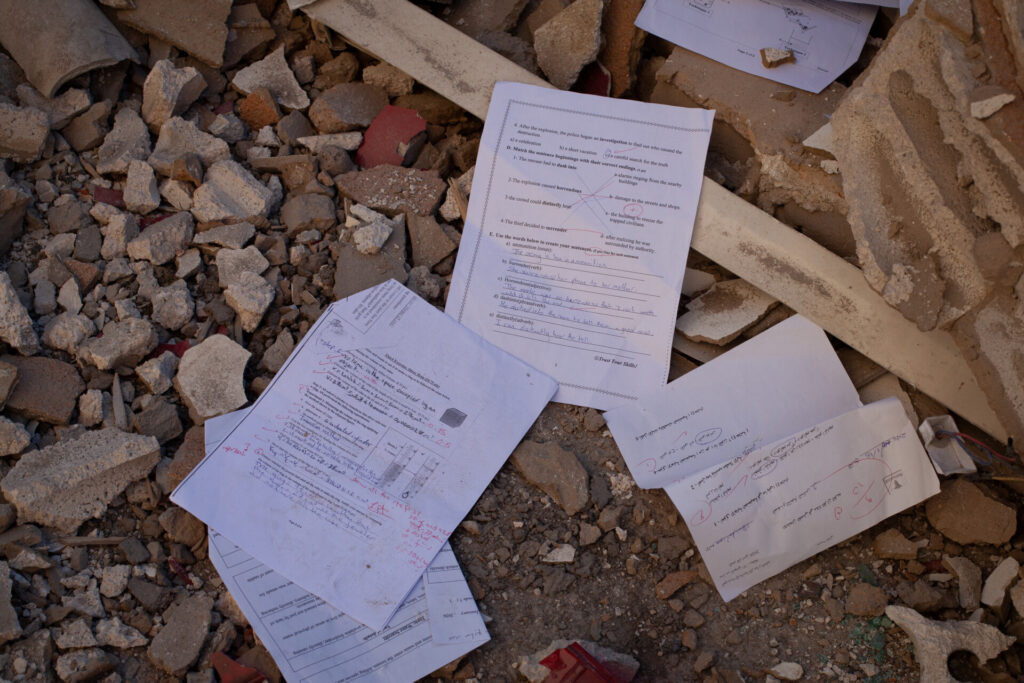 The ruins of the Abd al-Sattar family home, Baalbek, Lebanon. (Alex Astley)
“It’s very hard for us,” said Zahraa’s cousin, who asked not to be named. “These are kids. What do you want from kids? They are angels. For us, we can die, but why must this kid live without her brother and sisters and father?”
At the mountain of rubble that used to be the Abd al-Sattar family home, neighbors were busy clearing away the destruction. They said that there were only civilians living in that building. Israel’s military, which issued no justification for the strike, has not responded to requests for comment.
As I looked over the debris, I found school homework belonging to one of the Abd al-Sattar children. On one page there were some English language exercises, and a sentence that read, ominously: “The rescuer had to dash into the building to rescue the trapped civilians.”
“Spotlight” is a newsletter about underreported cultural trends and news from around the world, emailed to subscribers twice a week. Sign up here.