
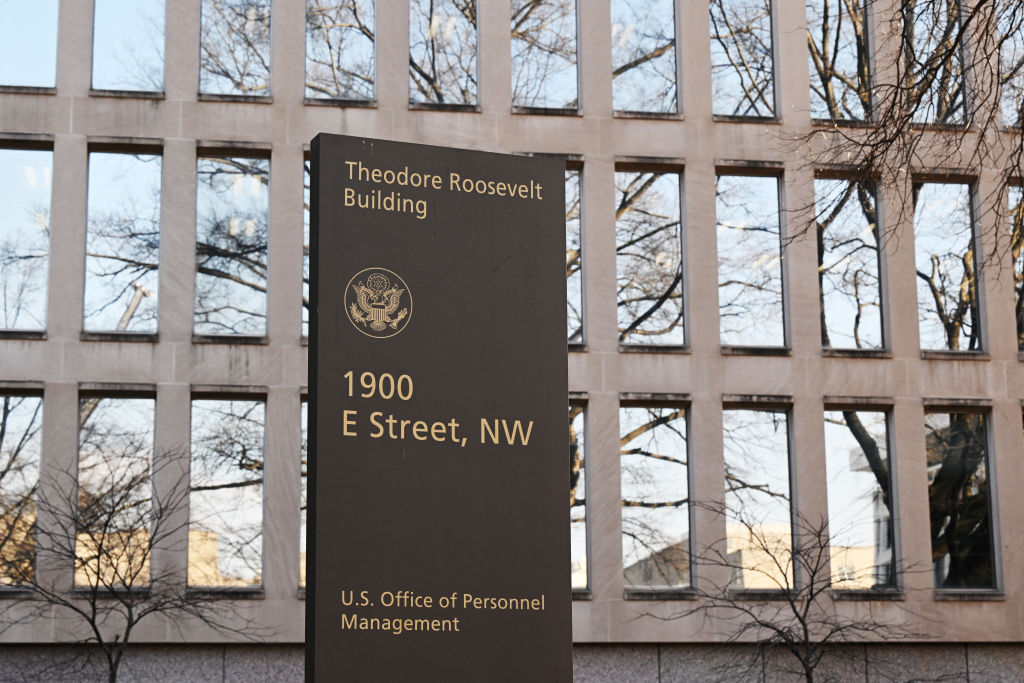
The Trump administration may take the last step toward finalizing Schedule Policy/Career as soon as Monday, putting some career federal employees on the verge of seeing their civil service protections officially removed.
Agencies were recently expected to put together lists of all positions they intended to convert into the new employment classification. But according to the Office of Personnel Management’s Feb. 6 final rule, those conversions can only be formalized once President Donald Trump orders it.
OPM’s regulations last month set off a one-month countdown before the president would be able to sign an executive order, officially converting federal positions to the new schedule. The 30-day deadline is set for March 9, making that date the earliest employee conversions could begin occurring.
It’s not yet clear how many federal positions will be affected. OPM estimated about 50,000 employees would be placed into Schedule Policy/Career. But plaintiffs in a recent lawsuit warned that the number could ultimately be much higher.
]]>
“The lack of any limiting principle as to which positions the president can move (both now and in the future) effectively means the entire career civil service is at risk,” the plaintiffs wrote.
The lawsuit, updated earlier this week, comes from a coalition of public service organizations and federal unions. The group is suing to stop the Trump administration from finalizing its plans to strip civil service protections from a broad swath of the career federal workforce. Plaintiffs allege that the administration’s creation of Schedule Policy/Career violates due process rights, exceeds presidential authority and contradicts federal statute.
The Trump administration, for its part, has said the new schedule will help root out poor performers across government, while also holding career federal employees in “policy-influencing” roles more accountable.
“People are free to agree or disagree with any of the priorities that the president has. The only impact is if their disagreement leads them to then try to actively thwart or undermine the execution of those priorities. That behavior is not acceptable,” OPM Director Scott Kupor told reporters during a press conference last month. “You can’t run an organization if people are refusing to actually carry out the lawful objectives and orders of the administration.”
In practice, federal employees who get converted into Schedule Policy/Career will see an erosion of their workplace protections. They would face limited appeal rights, including the inability to petition their reclassification or any terminations.
Additionally, converted employees who want to file a complaint of a prohibited personnel practice would no longer have access to the whistleblower process at the Office of Special Counsel. Instead, their complaints would be submitted directly to their agency for an internal investigation.
Affected employees would also lose access to recruitment, retention and relocation incentives, as well as student loan repayment options and eligibility for the Presidential Rank Awards — effectively aligning with the parameters already set for political appointees in Schedules C and G.
]]>
The Schedule Policy/Career regulations, on their own, do not automatically preclude impacted employees from bargaining unit eligibility, according to OPM guidance.
“However, the agency would then likely, very quickly petition the [Federal Labor Relations Authority] to take you out of that bargaining unit,” Rushab Sanghvi, general counsel with the American Federation of Government Employees, said during a webinar hosted last month by the Partnership for Public Service.
Max Stier, the Partnership’s president and CEO, warned that the Trump administration’s anticipated changes would amount to at least tens of thousands of federal employees being made into the equivalent of political appointees.
“This is bad for our government, this is bad for the public, and ultimately, it will lead to worse, incompetent and even more corrupt government,” Stier said in a social media video posted Friday.
Although converted employees would not automatically be removed from their jobs, critics of Schedule Policy/Career warned of a “chilling effect” on career federal employees. Rob Shriver, managing director of the Civil Service Strong and Good Government initiatives at Democracy Forward, said conversions into Schedule Policy/Career would negatively affect the way employees do their jobs.
“I can certainly imagine, if I were somebody in this position, I might be concerned about the way that I carry out my job now, knowing that these protections that once ensured that I would be evaluated and judged based on merit, have fallen by the wayside,” Shriver, a former OPM acting director during the Biden administration, said during the Partnership’s webinar last month.
AFGE’s Sanghvi said Schedule Policy/Career will most likely cover employees in higher pay grades who align with the definition of “confidential, policy-determining, policy-making or policy-advocating,” but added that the scope of the conversions may not end there.
“Until we know who agencies have designated and who the president will move to that schedule, we don’t actually know who it will cover,” Sanghvi said. “But we know with this administration, they may try and stretch it as far as possible.”
]]>
If you would like to contact this reporter about recent changes in the federal government, please email drew.friedman@federalnewsnetwork.com or reach out on Signal at drewfriedman.11
Copyright
© 2026 Federal News Network. All rights reserved. This website is not intended for users located within the European Economic Area.