
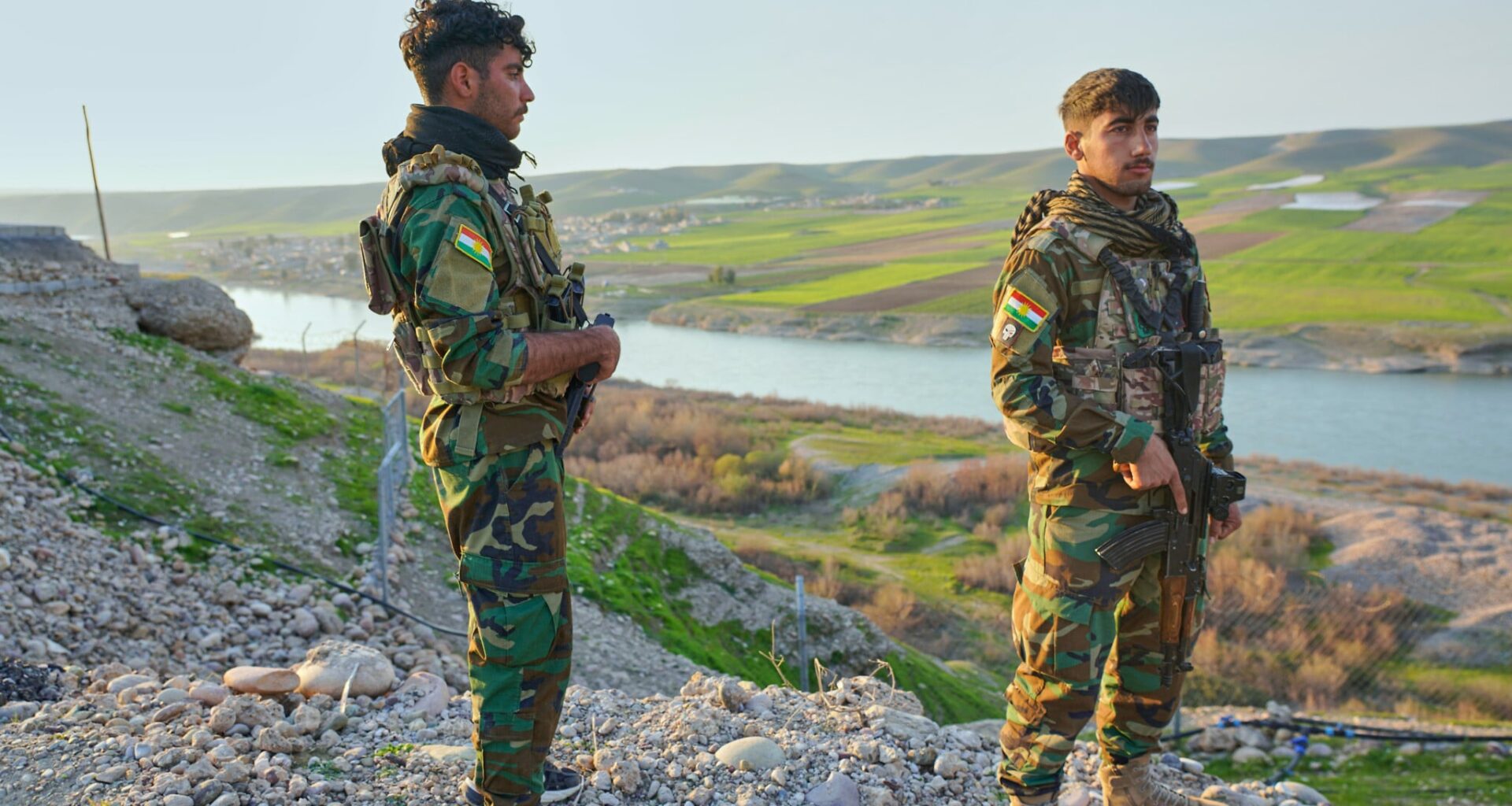
Israel has been bombing parts of western Iran to support Iranian Kurdish militias who hope to exploit the US-Israeli war against the Islamic Republic to seize towns near the frontier, three sources familiar with Israel’s talks with the factions told Reuters Friday.
The notion of an offensive by Iranian Kurdish forces based in Iraq gained attention in recent days amid reports that Washington was encouraging such action.
US President Donald Trump told Reuters on Friday it would be “wonderful” if they crossed the border. Trump’s comments came after some reports had suggested that Iraqi Kurdish groups had already crossed the border into Iran, though the Iraqi government and the autonomous Kurdistan region denied the claims and said that “Iraqi territory must not be used as a launching point for attacks against neighboring countries.”
A Kurdish insurgency could have serious consequences for Iran as it defends itself against the Israeli-American air campaign. The militias have consulted with the US about how and whether to attack Iran’s security forces, Reuters has reported.
Israel has been holding its own talks with Iranian Kurdish insurgent groups based in the semi-autonomous region of Iraqi Kurdistan for around a year, two Iranian Kurdish sources said, while an Israeli source said talks had been “long-term.”
Get The Times of Israel’s Daily Edition
by email and never miss our top stories
By signing up, you agree to the terms
The two Iranian Kurdish sources have direct knowledge of the armed dissident groups and the source from Israel has direct knowledge of its engagement with them. All spoke on condition of anonymity.
Israel’s government and military did not immediately respond to requests for comment, and Israel has not commented publicly on such engagement during the current war.
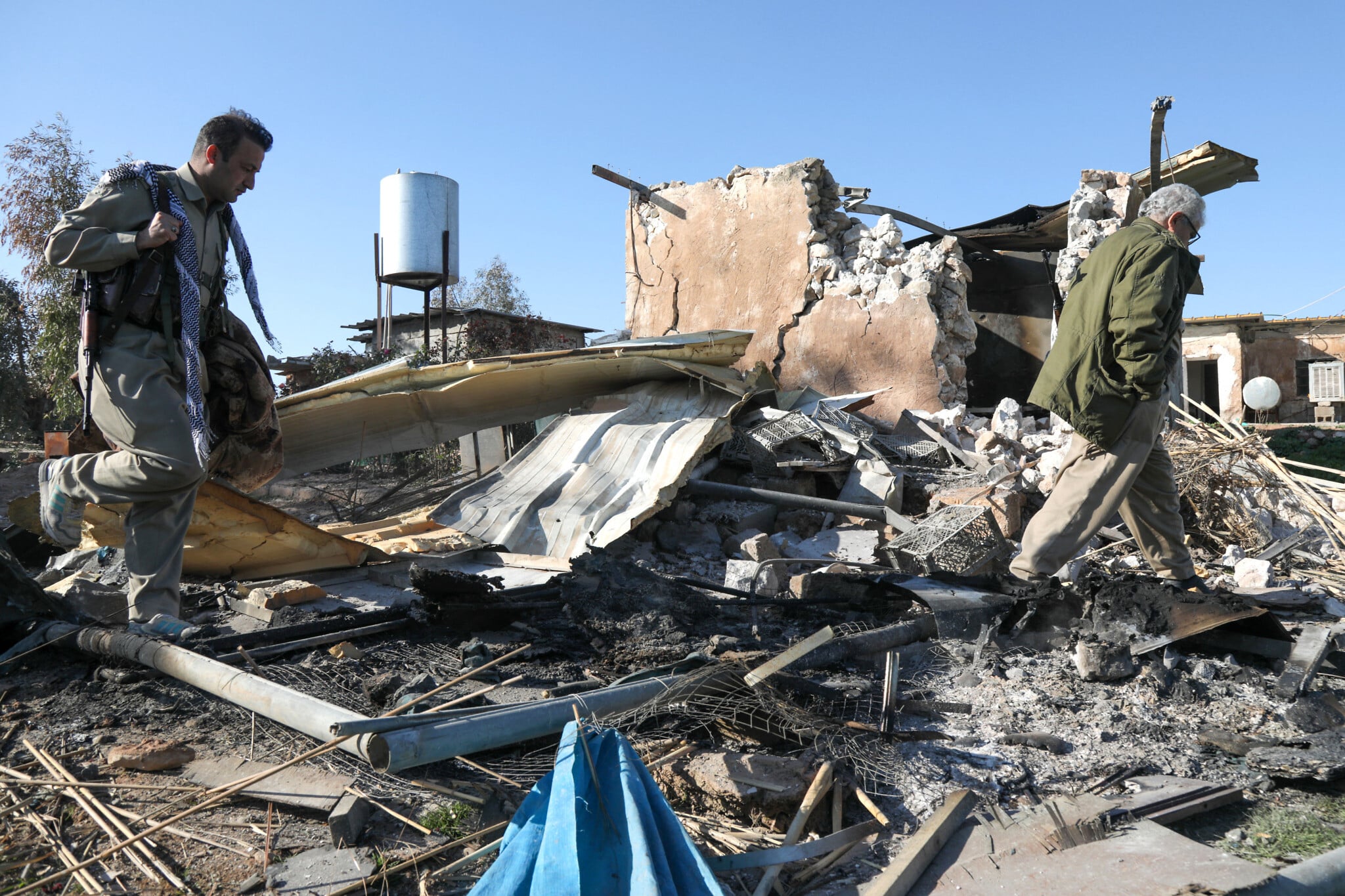
An Iranian Kurdish Peshmerga member of the Kurdistan Democratic Party of Iran (KDPI) inspects damage sustained at the Azadi Camp of the Kurdistan Democratic Party of Iran (KDPI) following an Iranian cross-border attack in the town of Koye (Koysinjaq), in the east of Erbil district in the autonomous Kurdish region of northern Iraq on March 3, 2026. (Safin HAMID / AFP)
An initial goal of the Kurdish factions would be seizing Iranian territory along the border, the three sources said. One of the Kurdish sources said their aim was to seize the towns of Oshnavieh and Piranshahr, among others.
These sources said thousands of fighters were gathering on the Iraqi side of the border and preparing to launch an offensive within a week, something Reuters was not able to confirm.
Independent estimates put the militias’ combined strength at 5,000-8,000.
They possess only light arms, according to the Kurdish sources. But while they might not have the firepower to mount a significant bid for self-rule, with US and Israeli help, they could cause trouble on the border.
The Israeli source said Israel did not expect them to be able to overthrow the Iranian government, but that backing them could erode Iran’s control over its hinterlands and distract its Islamic Revolutionary Guard Corps.
Five long-standing Iranian dissident groups announced an alliance just at the end of last month.
It includes the Kurdistan Free Life Party (PJAK), the Democratic Party of Iranian Kurdistan (PDKI), and the Kurdistan Freedom Party (PAK), which have all participated in insurgencies and maintain fighters in Iraq.
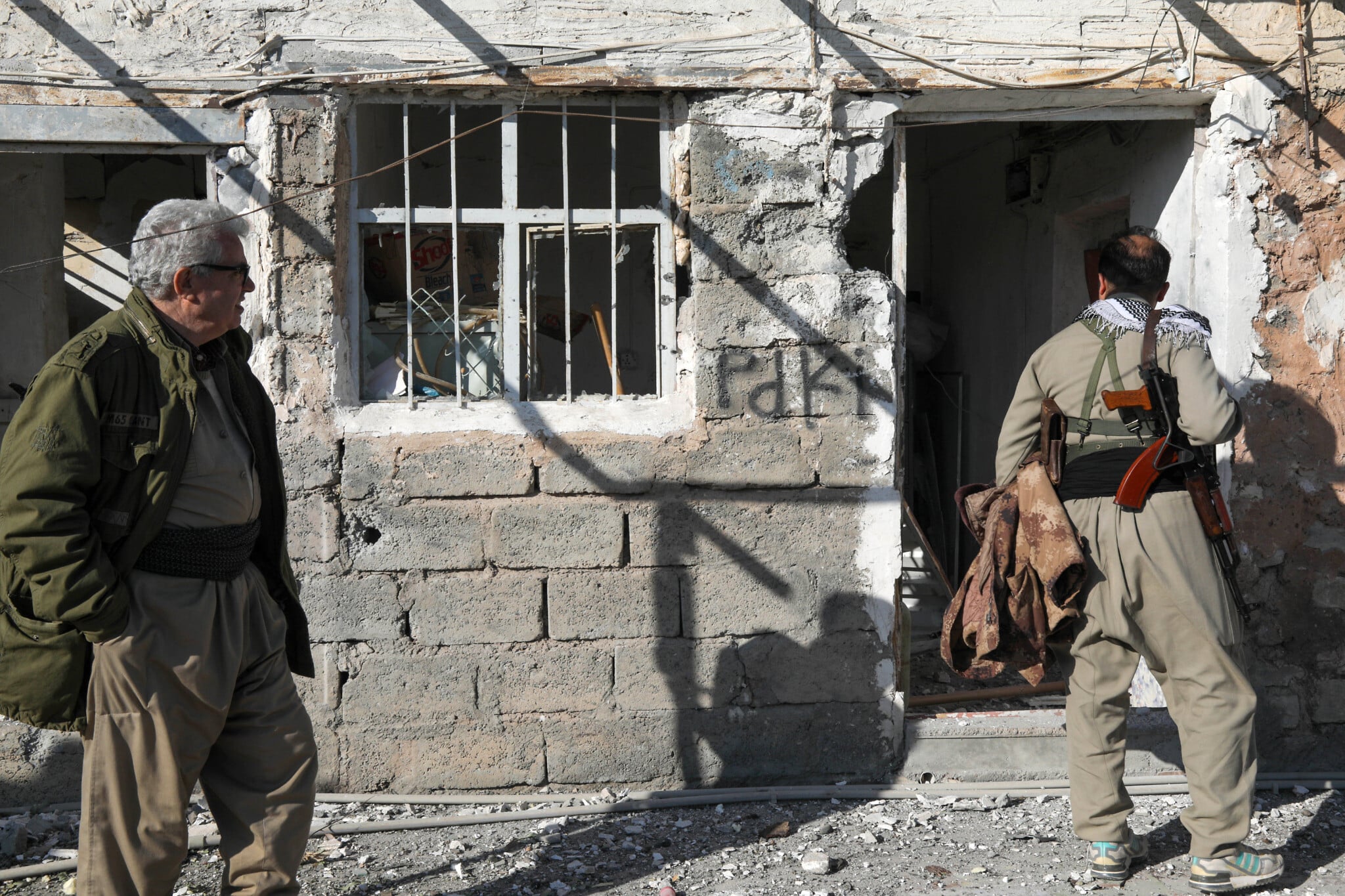
An Iranian Kurdish Peshmerga member of the Kurdistan Democratic Party of Iran (KDPI) inspects damage sustained at the Azadi Camp of the Kurdistan Democratic Party of Iran (KDPI) following an Iranian cross-border attack in the town of Koye (Koysinjaq), in the east of Erbil district in the autonomous Kurdish region of northern Iraq on March 3, 2026. (Safin HAMID / AFP)
It is not clear that they will get any support from their ethnic brethren in Iraq, however. Iraqi Kurdistan’s political leadership has publicly denied any plan to send fighters or get involved in Iran, despite reports of outside pressure to do so.
The Israeli source cautioned that there was pushback from the Iraqi Kurds, and without their practical support, it would be hard for the Iranian Kurds to mobilize. Trump’s lack of clarity on how long the war could last had also led to hesitancy.
Iran has been attacking Kurdish armed groups inside Iraq, along with US bases in the area, and on Friday warned Iraqi Kurdistan that it would retaliate against any deployment of hostile forces on the frontier.
Kurdish militant says group ready to join fight
In an interview with Channel 12 published Friday, senior PDKI official Mohammad Saleh Qadri said that his group was ready and waiting to enter Iran from Iraq and begin seizing territory from the Iranian government.
In the first interview of its kind with Israeli media, the Iranian Kurdish official, who is currently based in Iraq, said: “This is a historic moment for the destruction of the regime. History has given us the responsibility to act immediately in defense of our people, for the redemption of Iranian Kurdistan — we will begin to act as soon as possible.”
“Our request to Israel, Europe and the United States is to give us guarantees for the national and ethnic rights of our people. We do not want to replace this regime with another dictatorial regime,” he said.
בלעדי ל @N12News בכיר במפלגה הדמוקרטית של כורדיסטן האיראנית (PDKI) מתראיין לראשונה לתקשורת הישראלית – וחושף את ההיערכות למלחמה באיראן
מוחמד סאלח קאדרי, בכיר במפלגה, אומר לי שכוח כורדי גדול כבר נמצא עמוק בשטח איראן, ומספר ואומר שהמערכה הצבאית עם איראן תתחיל ב”הקדם האפשרי”.… pic.twitter.com/JQdgePPiT2
— Tomer Almagor (@almagor_tomer) March 6, 2026
“We must remember that for the past 47 years, the Kurds have been victims of the ideology that has taken over Iran. Fifty thousand Kurds have been killed in the years of our struggle,” Qadri told the Israeli outlet. “Our struggle is for the self-determination of the Kurdish people in Iranian Kurdistan.”
“Our struggle is to destroy the ideology of the Iranian regime, and to create an Iran that will not have conflict with any country in the region or any of its neighbors,” he said.
When asked if his organization is ready to join the fight against Iran, he said: “Yes. The Kurdish forces in Iran are currently preparing, and are waiting for the coalition’s decision to immediately begin operations against Iran.”
“Our largest force is already in Iran,” he claimed.
Kurds providing target intel to US and Israel
The three sources speaking to Reuters said Kurds within Iran had been providing targeting intelligence on the border areas to the US and Israel.
Israeli analyst Jonathan Spyer said Israel was seeking to “destroy the regime by any means available,” but Danny Citrinowicz, an Iran expert and former Israeli intelligence officer, said an insurgency in Iran did not have broad support among Iraqi and Iranian Kurds.
“I think they’re all waiting to see if the regime will hold on or not,” he said.
Turkish and Iraqi officials, neither keen to support separatism among an ethnic group spread across parts of Iraq, Turkey, Syria and Iran, have also expressed reservations about any insurgency in Iran.
Citrinowicz said supporting an uprising might backfire on the US and Israel by fanning nationalism.
Israel has maintained discreet military, intelligence and business ties with various Kurdish groups since the 1960s, viewing them as a buffer against shared adversaries.
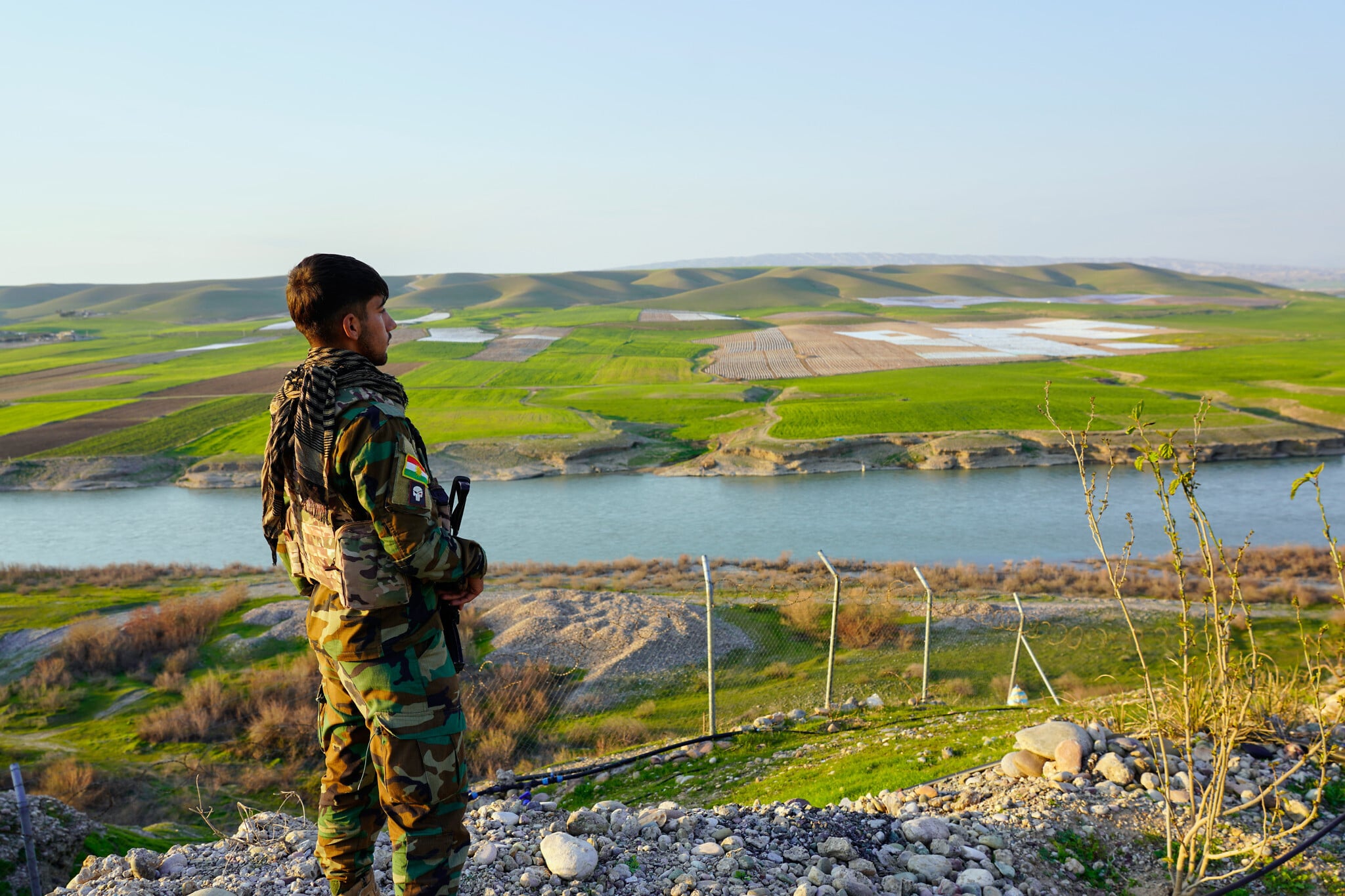
A member of the Kurdistan Freedom Party PAK, stand guard in Irbil, Iraq, March 5, 2026. (AP Photo/Rashid Yahya)
The two Kurdish sources said the factions were in closer coordination with the US than with Israel, but that any cross-border offensive would require air support from both.
One of those sources said they had not yet received weapons, but would request air defense systems, drones, small arms, and artillery support.
Kurdish groups have a long history of working with the US, but recent incidents have strained ties.
One of the Iranian Kurdish sources said Kurdish leaders had concerns about being “betrayed” like the Kurdish groups in northern Syria, who had been forced to cede territory after long serving as the primary US partner in the area.
The source said Iranian Kurdish leaders had requested guarantees from the US, without saying what they were.
Both Iranian Kurdish sources said the factions’ goal would be to establish a semi-autonomous region in a federal Iran, similar to the model in Iraq.