
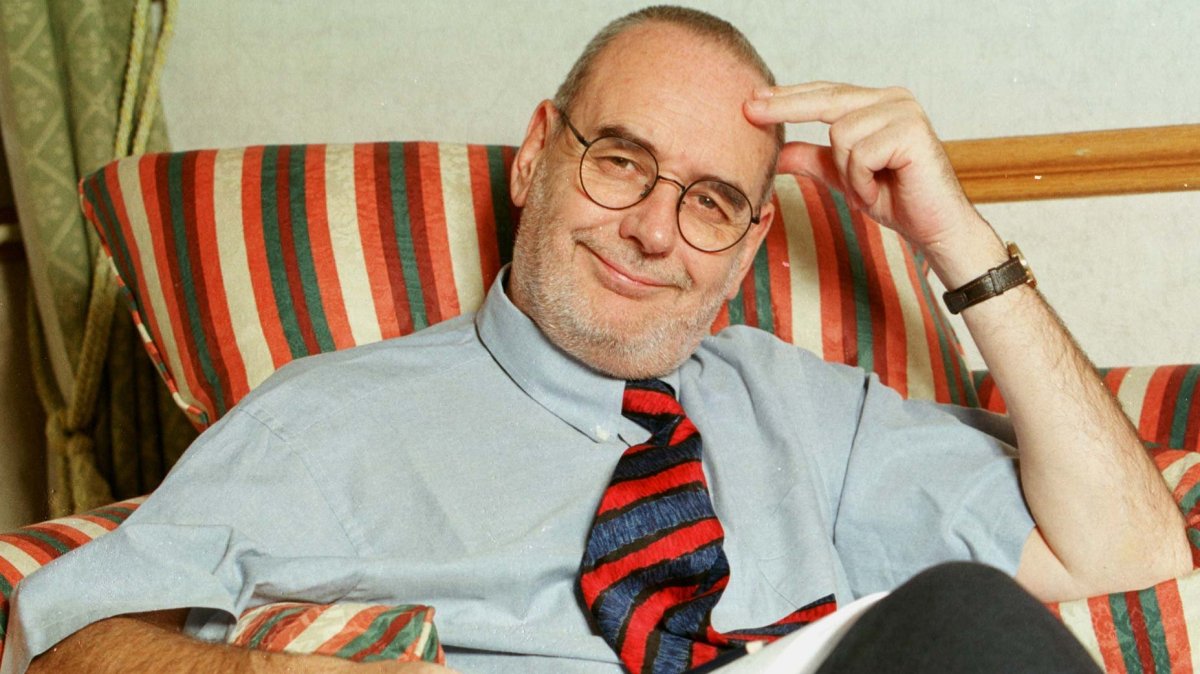
As the general secretary of Labour in the mid-1990s Tom Sawyer had a mantra: “Tony gets what Tony wants.” Tony Blair wanted victory and in 1994 appointed Sawyer to build “the best political fighting machine in the country”. In his memoir A Journey (2010), Blair describes Sawyer as “the ideal choice: a trade union man, but smart, loyal, modernising and with the reach and authority to get things through”.
Sawyer had already proved himself a pivotal figure in modernising the party under two previous leaders. He led a policy review for Neil Kinnock, helping to win struggles against the Trotskyite Militant Tendency and “the London loony councils” while also swinging union votes in broad support of Europe and scrapping the party’s policy of unilateral nuclear disarmament. He then played a critical role in persuading union leaders to accept John Smith’s moves to abolish the trade-union block vote in party elections. For Blair he organised the operation to amend Clause IV, the longstanding commitment to public ownership of industry.
Often unseen, uncredited and unshaven, Sawyer knew how the unions operated, having been a senior figure in them himself. He had been at the centre of the 1978-79 “winter of discontent”, worked on Tony Benn’s deputy leadership campaign in 1981 and opposed the expulsion of Militant members in 1983. According to Patrick Seyd, from the University of Sheffield, from that point onwards Sawyer’s “career closely mirrors the transformation of the Labour Party” into New Labour. Greg Rosen, editor of The Dictionary of Labour Biography, added: “Next to the triumvirate of Kinnock, Blair and Brown, Tom Sawyer played probably the greatest individual part in the birth of New Labour.”
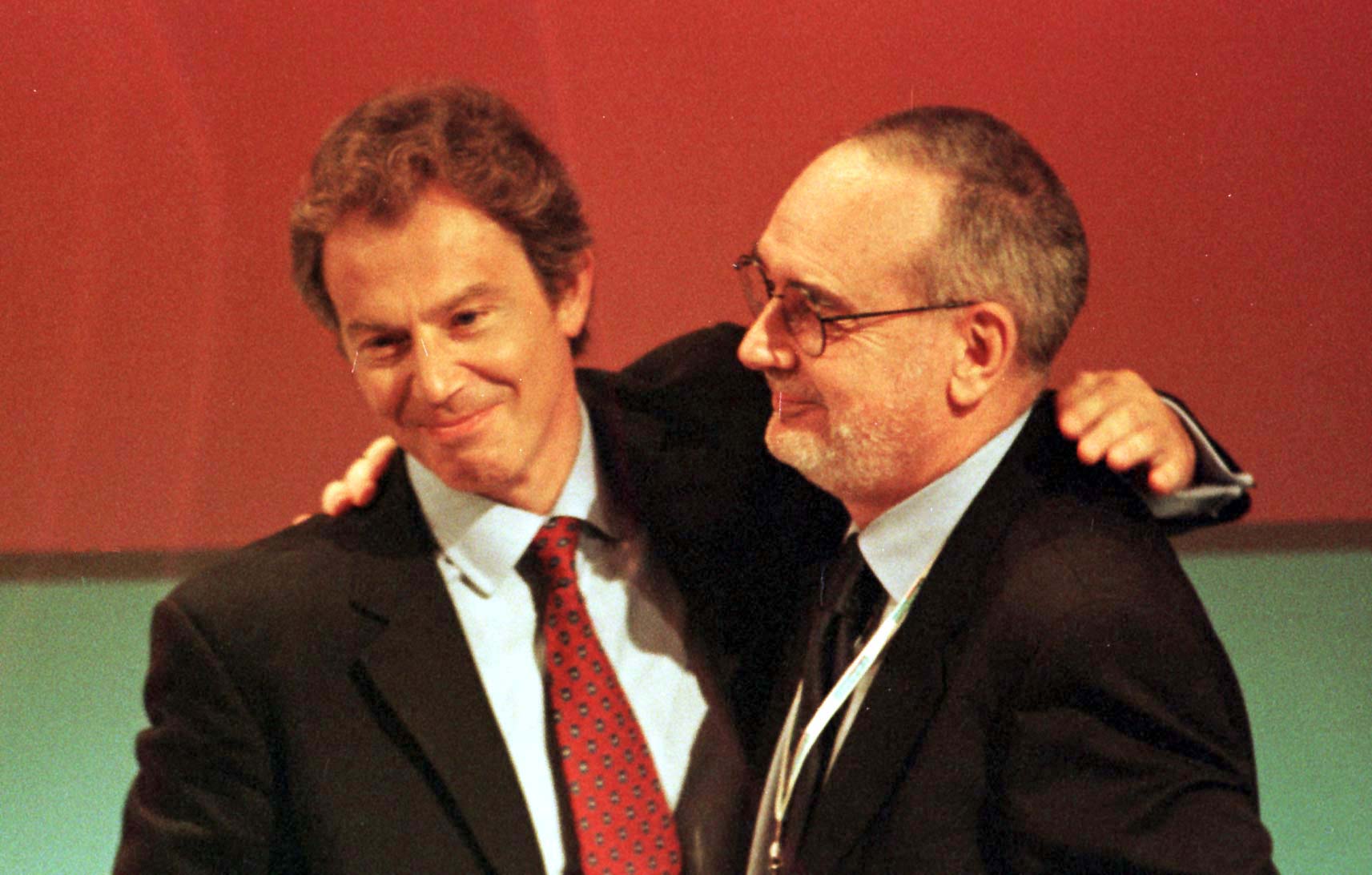
Sawyer with Tony Blair at the party conference in Blackpool in 1998, when New Labour was at its peak of popularity
BEN CURTIS/PA
In The Modernisation of the Labour Party, 1979-97 (2020), Christopher Massey describes how Sawyer and other members of the “soft left” were dismayed by the left’s conduct during the Militant inquiry and the miners’ strike of 1984-85 and disheartened by the party’s continuing struggles in the polls. Massey argues that “Sawyer did not formulate policy, but crucially provided the scaffolding for the party’s organisational reform from which Labour leaders established far-reaching changes in Labour’s direction”.
Sawyer’s position as deputy general secretary of the National Union of Public Employees (Nupe) brought him a seat on Labour’s national executive and he was chairman of the party from 1990-91, though he had no interest in public office, describing being on the stump as “a deeply unsatisfactory experience”. Instead, he exerted a moderating influence behind the scenes. He remained deputy general secretary when Nupe merged with two other unions to form Unison in 1993 and two years later was the author of Partnership in Power (1995), a transformation of the policy-making process that changed the role of the Labour Party conference and its executive bodies.
However, once the party was in power, Sawyer’s work was largely done. Within a year he was involved in a bitter public row with Liz Davies, a member of the Grassroots Alliance movement, that threatened to overshadow the New Labour project. As he had once said, “Tony gets what Tony wants” and in 1998 Blair wanted his key lieutenant’s retirement, to be replaced by his protégée, Margaret McDonagh (obituary, June 26, 2023). Sawyer was rewarded with a peerage.
Lawrence Sawyer was born and raised in a terraced house under the shadow of the Cleveland Bridge engineering works in Darlington in 1943. He was the son of a railway labourer and his wife, who had previously been in domestic service for a local doctor. “She talked about sweeping huge flights of stairs by hand. Then the doctor’s wife would come and take out a stair rod at random just to check that she’d swept behind every one,” he said. To his mind it was “no better than slavery”.
He never knew his father. “I’m not sure my mother knew him particularly well either,” he told Jeremy Paxman in The Political Animal (2002), adding without a pause: “The party’s been my father. It’s always been there, to give me that pat on the back when I needed it.” From a young age he went by the nickname Tom, a reference to Mark Twain’s 1876 novel about the adventures of a mischievous young orphan growing up along the Mississippi River.
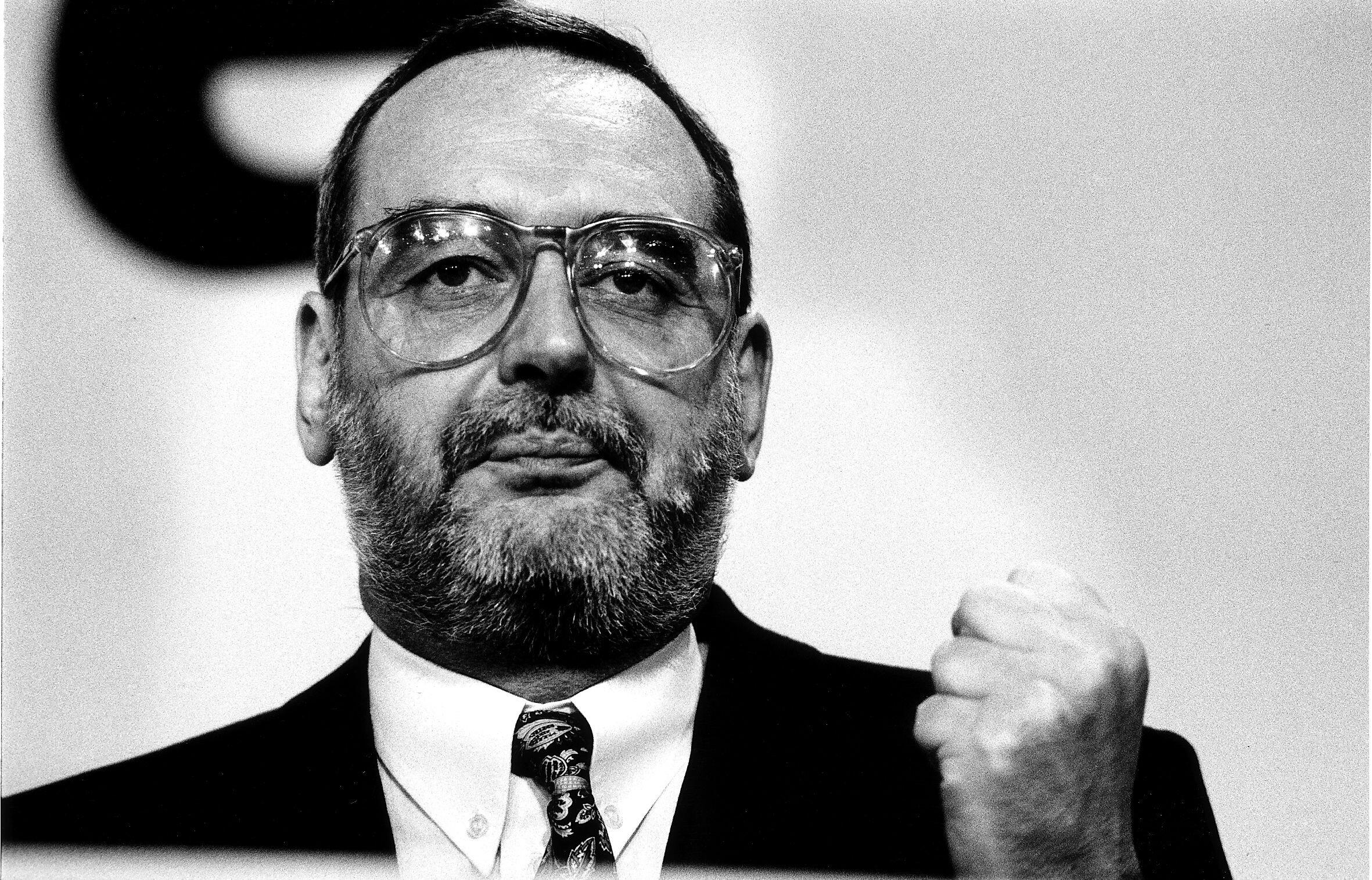
Sawyer wanted the trade union movement to widen its scope beyond workers’ pay and conditions
ALAMY
He was educated at Dodmire School, “little more than a tin hut”, and Eastbourne Comprehensive School in Darlington, where he was placed in the C stream, “the painters’ and decorators’ class”, as he put it. “The only people who gained qualifications in those days were people at grammar school. The rest of us left school without any,” he told an interviewer in 2004, when he was appointed chancellor of Teesside University.
An aunt with “a few bob” gave him a dropped-handle racing bike and he enjoyed riding with his friend Brian Mackenzie, who became a senior police officer and joined him in the Lords. “We were literally raggy-arsed urchins, always exploring, always looking for adventures,” he said, recalling their raids on allotments for apples and beans.
He continued his studies at Darlington Technical School, “where everybody learnt to be metal bashers”, and at 15 became an apprentice fitter at Robert Stephenson and Hawthorns, locomotive engineers, known as Stivvies. His trade union and political careers lay in the future. “At 18 all I cared about was drink and sex,” he said.
In 1962 he married Sylvia Park; they had a son, Mark, who survives him. The marriage was dissolved and he later married Liz, a nursing sister from Sunderland; in true union style they had met when she was carrying a banner on a protest march. She also survives him with their two sons, Jack and Tom. According to Ken Livingstone’s memoir, You Can’t Say That (2011), Blair and his wife Cherie were “shocked to discover that Tom sent his kids to the local comprehensive”.
Stivvies was bought by English Electric, which closed the works after a slump in orders. At age 21 Sawyer was made redundant. “It had an enormous impact on me. I’d served a five-year apprenticeship and now there were no jobs,” he said. Moving south he joined Lockheed Brakes in Leamington, near Coventry, where a shop steward called Geoff Thatcher, “with a beard like Karl Marx”, recommended books and lent him pamphlets which “we stuck down our trousers to read in the toilet”.
Pining for the northeast he soon returned to Darlington, found work at the Chrysler Cummins engine company and, with his new-found love of reading, took evening classes organised by the Workers’ Educational Association. There he encountered William Morris’s utopian novel News from Nowhere (1890); many years later he was president of the William Morris Society. By then he had latched on to Newcastle United, supporting the team throughout his life.
Sawyer became a shop steward at 22 and, after answering an advert in Tribune, was appointed regional organiser for Nupe. “As soon as he got the job, he started to wear the official Nupe uniform, black leather jacket and beard,” one union veteran told a Guardian profile in 1997. Even in those days he was calling for modernisation, telling the Darlington Trades Council in 1969 that the town’s industries were “still carrying the cloth cap image”.
He was involved in organising the “dirty jobs” strike of 1969, the 1973 ambulance workers’ strike in Co Durham and the public service workers’ strikes in 1974. Then came the winter of discontent in protest at the Labour government’s limit on public-sector pay rises. “I would rather have children’s education affected than have old people’s homes closing down,” he said. “It’s a difficult choice, but it has to be made. We have to hit somewhere, or we might as well not bother.”
By the end of 1981 Sawyer had been elected deputy general secretary of Nupe under Rodney Bickerstaffe (obituary, October 4, 2017), which brought him to London. While declaring his determination to fight against unemployment and public spending cuts, he also wanted the trade union movement to widen its scope. “We’re concerned not just about members’ pay and conditions, but about the kind of society we live in,” he said at the time.
Sawyer, who had rounded cheeks, a high forehead and a spray of wispy beard that varied between a goatee and designer stubble, remained an enthusiastic reader, with 5,000 books lining the walls of his house. He had an affection for Victorian gothic revival architecture, read Wordsworth and spent Christmases walking in the Lake District with his wife and sons. In the Lords he suffered from a degree of boredom and perhaps bitterness, criticising Blair in 2000 for losing touch with the electorate. He went on to chair Reed Health, the Notting Hill Housing Group and the Royal Mail partnership board, delivering a damning report in 2001 into the organisation’s “dire” industrial relations. He was also a visiting professor at Cranfield School of Management.
For many in Labour, Sawyer remains the man who made their party electable. Sir Keir Starmer, the prime minister, said that he had been “integral to delivering the victory in 1997 that transformed the nation”, while Blair described him as “loyal, tough and deeply committed to ensuring the Labour Party could govern for a time long enough to change the country”, adding: “He was also one of the nicest people you could meet and stayed true to himself and humble all the way through a remarkable career.”
Lord Sawyer, general secretary of the Labour Party, 1994-98, was born on May 12, 1943. He died from undisclosed causes on August 3, 2025, aged 82