
Watching the Iranian regime’s brutal repression and suppression of protesters has revived memories and fears for Anat Mastor, the head of perfusion for the charity Save A Child’s Heart, bringing back her childhood under the Islamic regime.
Demonstrations broke out across Iran in late December in response to the country’s dire economic condition. The Islamic regime responded with a brutal crackdown, killing and imprisoning thousands for their alleged roles in what Tehran described as “foreign-backed riots.”
“It’s very hard for me to see everything that’s going on there, the violence,” she told The Jerusalem Post, explaining that it looked like the same violence she witnessed as a child during the 1979 revolution. “I feel the same… It’s coming back to me again, and it’s very hard to see. They are killing the people there, and almost all of them (the victims) are very young and children; It’s making me very sad.”
“I hope the war is successful, and the Iranians get their freedom back; they need it. And I hope the country can return to the same beautiful country I remember,” she continued. “I’m very glad Israel and the US are helping them, but it’s not enough. I think they have to take a step and bring the change…One day, I hope the people of Iran will live with dignity and freedom, and that I will be able to visit again.”
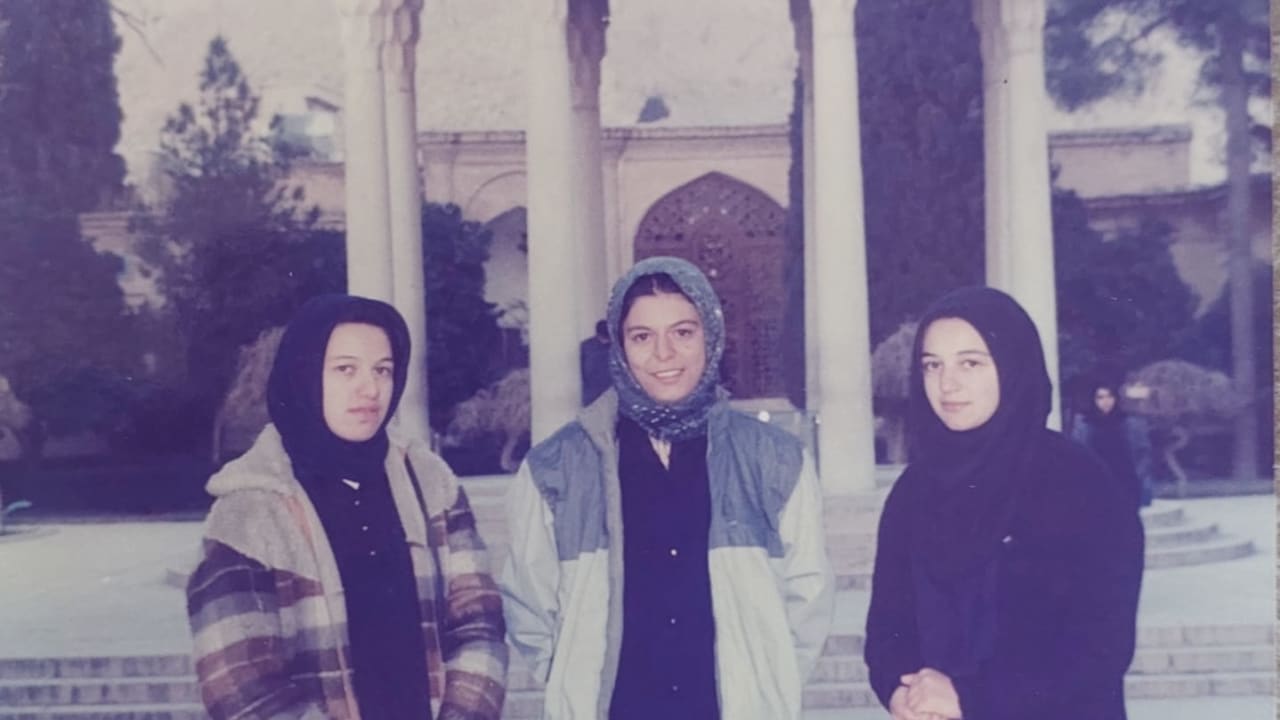
Mastor was only 11 when the Islamic Revolution saw the secular, pluralist country she had grown up in switch to one of Islamist extremism. She left Iran in 1987, leaving behind her parents and the life she had known, for a chance to pursue higher education in Israel after the lack of opportunities for her made her realize there was no place for her there as a Jew or as a woman.

“As a Jewish girl, I was required to wear a long black dress and a hijab, a head covering worn by Muslim women,” Mastor recounted. “English classes were canceled, and although I was Jewish, Quran and Islamic religious studies were imposed on us.”
The discrimination and persecution of religious minorities left her fearful, with the anxiety becoming so severe that rumors of incoming violent pogroms led her to go to bed fully dressed and “prepared to run.”
Journey to escape Iran
As a Jew, Mastor was barred from attending college, which was what eventually led her to make the decision to escape only months after finishing high school. Her brother made the same journey five years before her, but still, her parents were reluctant to see her go.
“My parents didn’t want me to do it, but I was very stubborn,” she said, explaining the dangerous journey she took from Tehran to Karachi, Pakistan. She was forced to rely on smugglers, travelling with other families for 8-10 hours through the mountainous border.
“It was very dangerous, but I was very desperate,” she continued. “I didn’t have any hope there…It was very hard for me to be in the country [Iran] without hope.”
Once in Karachi, she spent months waiting for a visa while the Jewish Agency processed her documents.
In 1987, she finally arrived in Israel and was reunited with her brother, who helped her begin a new life on Kibbutz Be’erot Yitzhak. Within a year of her arrival, she enrolled in a medical biotechnology course at the Academic College of Engineering in Tel Aviv, specializing in perfusion, and soon after that, began her internship at Beilinson Hospital and began working as a perfusionist at Wolfson Medical Center.
Working to save children’s hearts
Only a few years after her graduation, Mastor joined the newly founded Save A Child’s Heart, where she has helped the organization treat more than 8,000 children from 75 countries, operating the heart-lung machine to keep patients alive while doctors perform surgeries on the critical organs.
“I truly love being a perfusionist… Operating the heart-lung machine is a highly technical responsibility, and it feels like part of my DNA. Muslim, Christian, Jewish – it doesn’t matter to us. We have treated them all, even children from Iraq and Afghanistan – maybe one day from Iran,” she shared. “There is no greater satisfaction than seeing a child leave the operating room healthy.”
Mastor has also made waves in the global medical community by mentoring Sophia Mlanzi Josephat Lukonge, the first female perfusionist in the history of Tanzania, and Tigist Tesfaye Hailemariam, the first female perfusionist in Ethiopia, and by training Felix Kamuchungu, the first perfusionist in Zambia.
While Mastor has now found fulfillment in her career and found joy as a mother of three, the realities of what she escaped and what she lost have stayed with her. Mastor was never able to see her father again, as he died a year after she left, and her mother lived only two years in Israel before passing away after she fled in 1999.
“My mother finally escaped Iran by posing as a tourist traveling to Turkey and using the opportunity to flee to Israel,” Mastor shared. “She passed away two years later. Although her time in Israel was short, I am grateful that we were able to spend that time together.”