
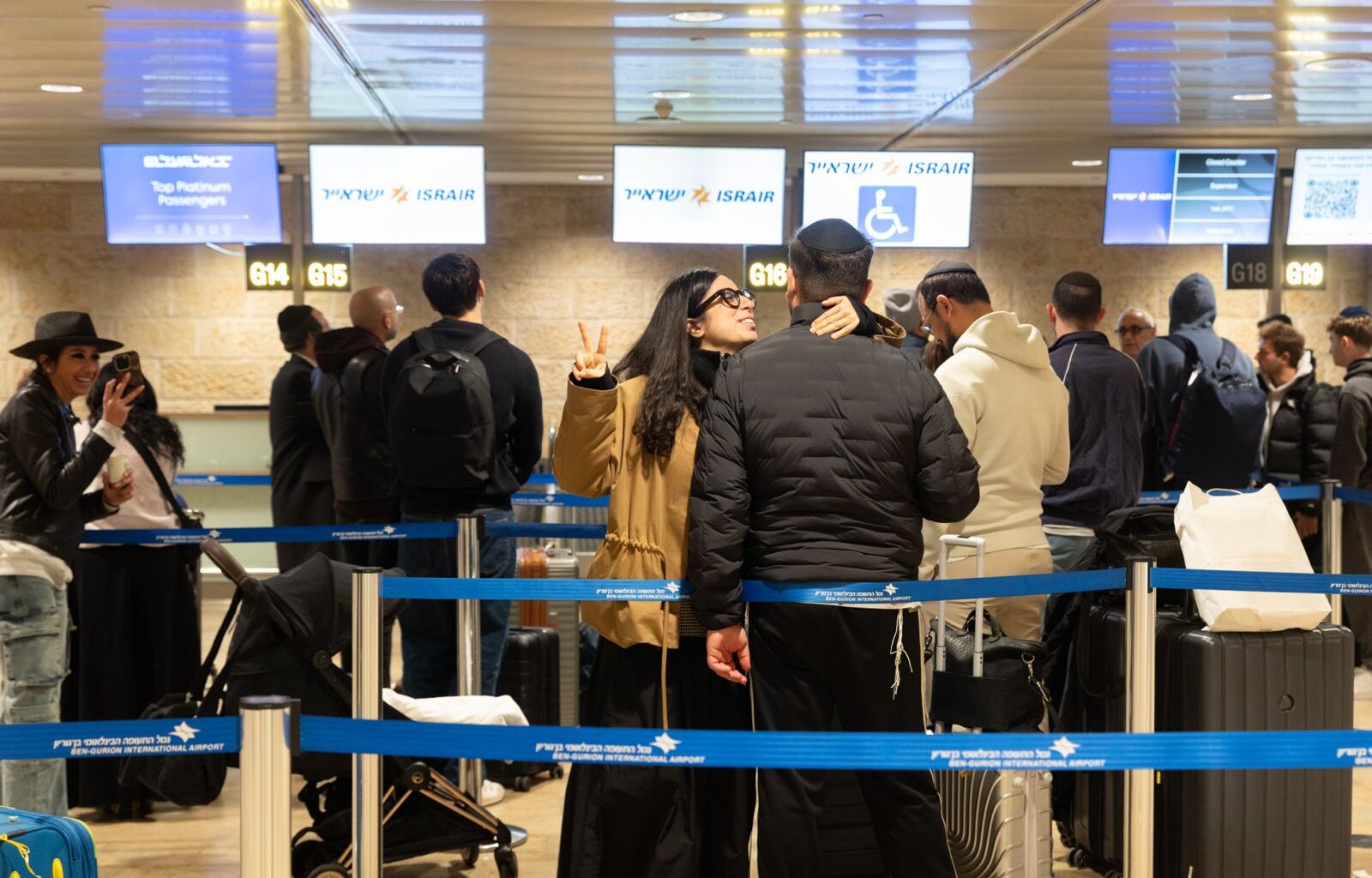
A first few hundred passengers were able to leave Israel on Sunday after Tel Aviv’s Ben Gurion Airport was partially reopened for outbound flights for the first time since the opening Israeli and US strikes on Iran on February 28.
Flights are currently operated by Israeli airlines El Al, Israir, and Arkia, alongside a series of restrictions, to more than 30 destinations in Europe, the US, and Asia.
A maximum of two narrow-body aircraft were permitted to depart per hour from Ben Gurion, with no more than 70 to 100 passengers per flight, depending on the airline and size of plane. Passengers were also permitted to check in luggage.
The number of outbound flights is tied to the number of repatriation flights currently approved by the Transportation Ministry and security authorities to fly Israelis back from major cities around the world. On Sunday, a total of 43 repatriation flights were expected to land at the country’s main international airport.
Israeli citizens departing on the repatriation flights need to sign a form stating that they will not return to the country for at least 30 days from the date of departure.
Get The Times of Israel’s Daily Edition
by email and never miss our top stories
By signing up, you agree to the terms
All passengers leaving on those flights are also required to use the early check-in program from home and arrive at the airport about two hours before departure. The guidelines aim to avoid overcrowding and limit the time passengers stay on the ground at the airport, as missile and rocket attacks from Iran and Lebanon continue.
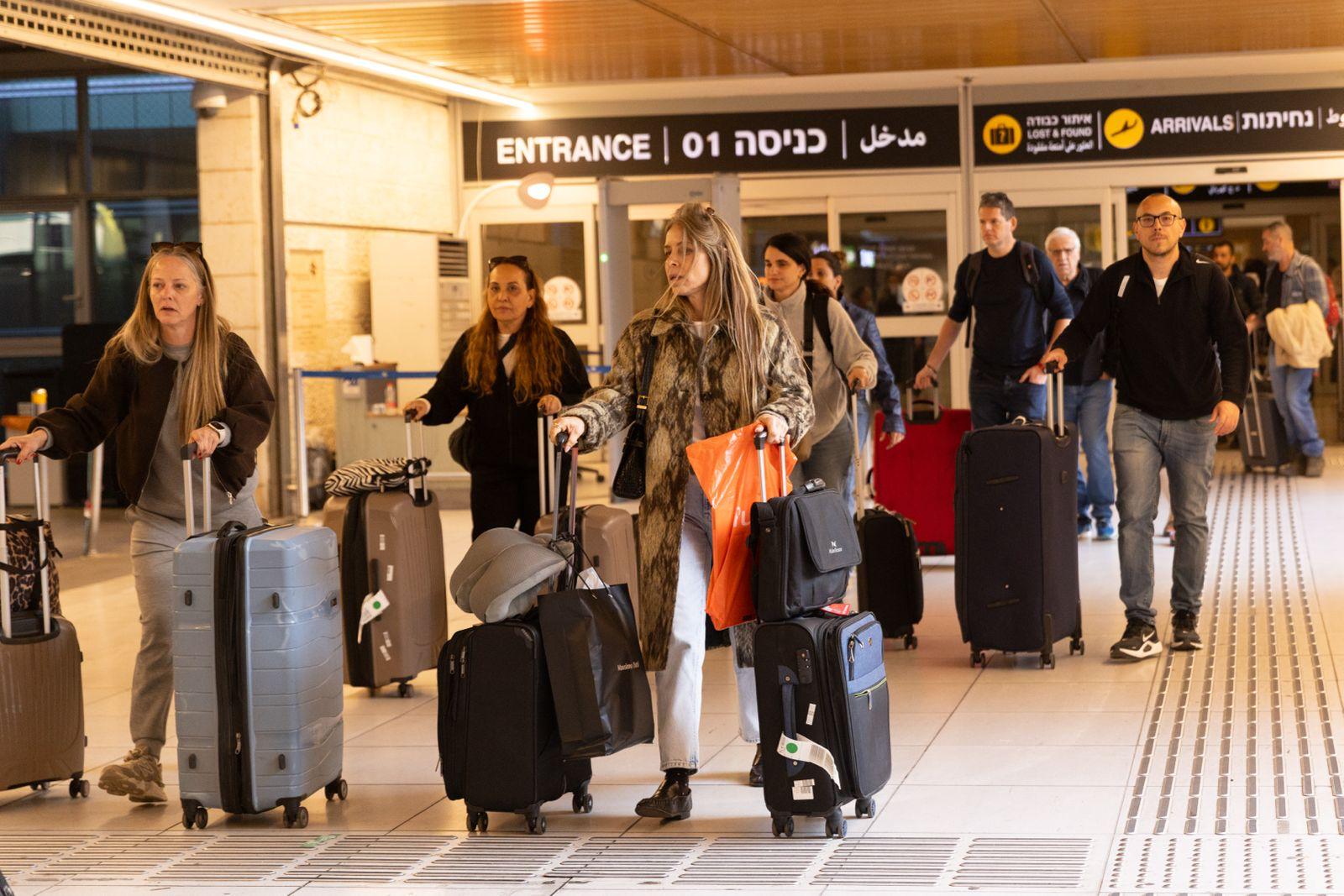
Israelis arrive at Tel Aviv’s Ben Gurion Airport on the first repatriation flights on March 5, 2026. (Courtesy of the Israel Airports Authority)
Ben Gurion Airport was gradually reopened Wednesday night for inbound flights, to help repatriate around 120,000 Israelis stranded abroad after the country’s airspace was shut on February 28. Since the partial reopening of Ben Gurion, about 15,000 Israelis returned home on 90 repatriation flights, the Israel Airports Authority said.
Overall, since Ben Gurion Airport was closed, more than 37,000 people returned to the country via land border crossings, maritime and air routes, as of Sunday morning, according to the Israel Population and Immigration Authority. A total of 20,182 people traveled back to Israel via land border crossings, mostly from the Taba crossing with Egypt, and a total of 284 via the sea.
As of Sunday afternoon, flag carrier El Al resumed one-way ticket sales for repatriation flights to the general public after rebooking tickets to its 38,000 customers whose flights were canceled following the closure of Israeli airspace.
The airline has been operating repatriation flights from 22 destinations since Wednesday night and will be adding Tokyo in the coming days.
One-way tickets from Larnaca to Tel Aviv are being sold at a flat price of $99, from Athens for $149, from Rome for $199, from Paris for $299, from Bangkok for $599, and from New York for $699, among other destinations.
Meanwhile, a few thousand Israelis are still stuck in the United Arab Emirates after efforts to repatriate them were paused over the weekend following the closure of airports in the country due to Iranian missile and drone attacks.
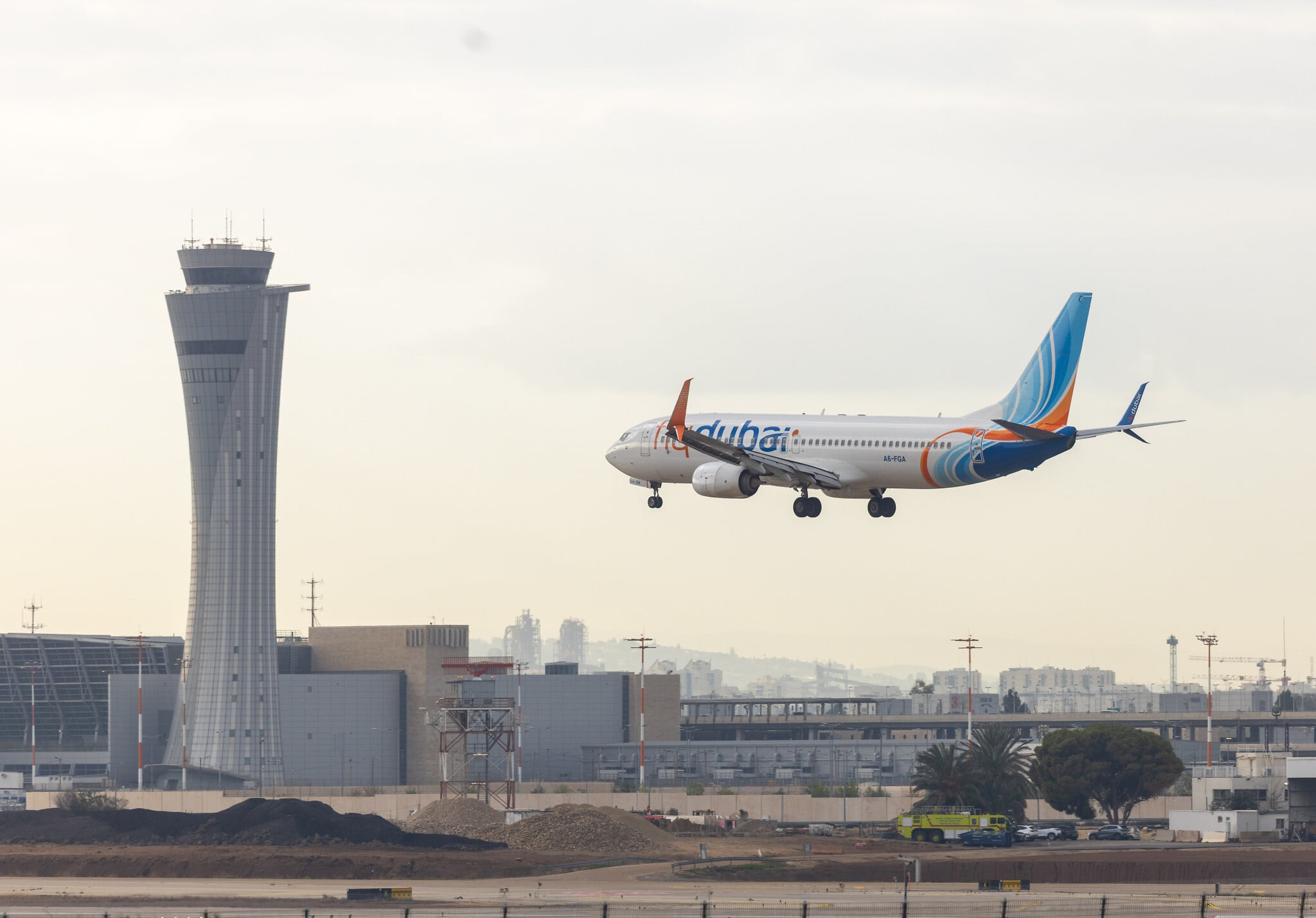
A flydubai flight at Ben Gurion International Airport, February 25, 2026. (Yossi Aloni/FLASH90)
Transportation Minister Miri Regev announced overnight that Israel was resuming a plan to fly Israelis back from the UAE to the country. At the request of Regev, Prime Minister Benjamin Netanyahu agreed with UAE President Mohammed bin Zayed to implement a plan to operate repatriation flights for Israelis stranded mainly in Dubai and Abu Dhabi.
Special repatriation flights will be operated in cooperation with Emirati airlines to Israel and other countries, the ministry said. Passengers who want to be placed on these flights need to register via this link.
Over the weekend, Israeli carrier Israir said it repatriated 310 Israeli customers who were stranded in Dubai. In an operation that “took much effort,” the local carrier said it operated two special flights that took off from Sharjah International Airport, located about 50 minutes from the city, and landed at the Aqaba airport in Jordan.
Upon landing in Aqaba, Israir provided passengers with food and drink, as well as transportation to the land border crossing in Jordan, including all necessary visa requirements. After crossing the border on the Israeli side, shuttle buses provided by the Israel Airports Authority and the Transportation Ministry transported the passengers to several central points throughout the country.
Israir also said it was preparing to operate a flight to repatriate its customers who have been in Zanzibar since the start of the Iran war. The flight is scheduled to take off in the next two days, subject to approvals.
You appreciate our wartime journalism

You clearly find our careful reporting of the Iran war valuable, at a time when facts are often distorted and news coverage often lacks context.
Your support is essential to continue our work. We want to continue delivering the professional journalism you value, even as the demands on our newsroom have grown dramatically during this ongoing conflict.
So today, please consider joining our reader support group, The Times of Israel Community. For as little as $6 a month you’ll become our partners while enjoying The Times of Israel AD-FREE, as well as accessing exclusive content available only to Times of Israel Community members.
Thank you,
David Horovitz, Founding Editor of The Times of Israel