
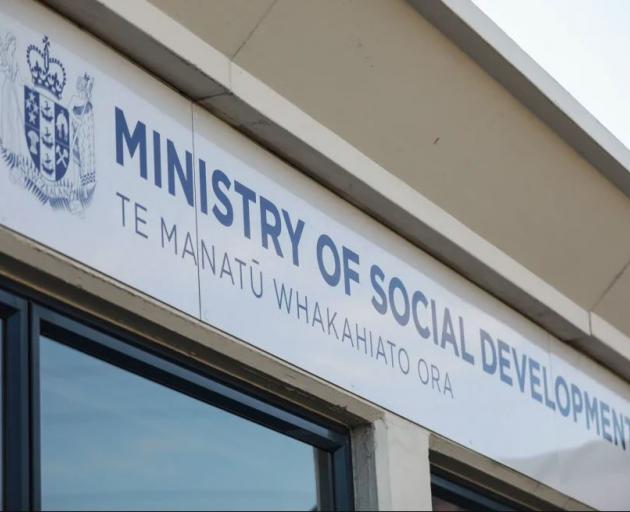
A blind woman on the Supported Living Payment says the Ministry of Social Development should be embarrassed at how inaccessible it is for people with disabilities.
The comments come after RNZ reported on a neurodiverse man relinquishing his benefit because he found the ministry’s demands so overwhelming.
Holly, who is legally blind, told RNZ’s Morning Report programme today the move to the online MyMSD portal put her at a serious disadvantage.
“You can’t really talk to a human anymore.”
She said the standard wait time to speak to someone on the phone was two to three hours, with a message repeating every 20 seconds urging her to use the portal.
“That puts me at a real disadvantage to get even the simplest thing done, as everything I have to wait three hours to do with a data entry assistant, you could do in the portal, but I can’t.”
Going into an office was very difficult unless MSD “summoned” you, she said.
When she has gone to an MSD office to drop off documents she had been “stopped at the door by rather large security men who despite [me] wearing my blind badge demand I take my sunglasses off and produce a driver’s licence for ID – which if you take two seconds to think about it, I’m unlikely to have.”
Holly said she has had payments cancelled because she did not respond to digital messages she could not see.
“When I got to the bottom of it, it was over a rounding error of literally one cent – they had decided to round my payments down to the nearest cent when they had been rounding them up to the nearest cent, and that set off a cascade of cancelling every different part of my accommodation supplement, my disability support, my base assisted living payment one by one, because in their words, ‘something had changed’.
“They did put it back, but not without the default fees at the bank, the rent not being paid, and so forth.
“The process of negotiating all that is a disadvantage – I feel like they should be a little bit embarrassed having absorbed Whaikaha Ministry of Disabled People into their oversight that this is continuing to happen.
“Their own policy documents sound very nice when they’re ferrying them back and forth at a middle management level, but really nothing at all on the ground has made even the simplest nod to improving accessibility,” she said.
Ministry of Social Development spokesperson Graham Allpress said the ministry recognised there was more work to do to continue to make services as accessible and available as possible.
It had 130 sites across the country so people could talk to staff in person, and could receive support through an agent or advocate acting on their behalf, he said.
There was also a Deaf Services team to assist people who had an impairment.