
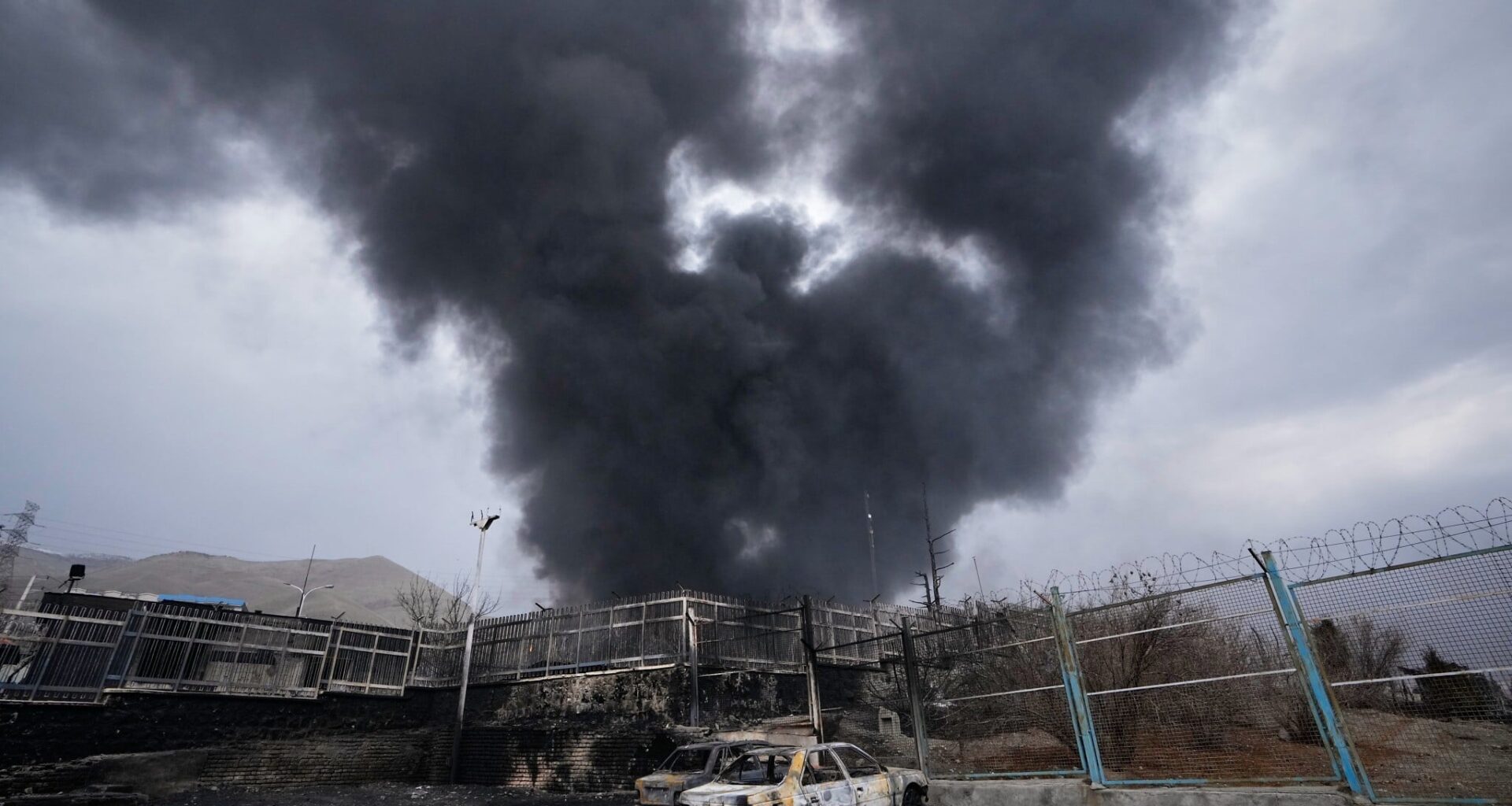
Oil prices spiked near $120 per barrel before falling back slightly on Monday as the Iran war intensified, threatening production and shipping in the Middle East and pummeling financial markets.
The price for a barrel of Brent crude, the international standard, surged to $119.50 per barrel but later was trading at $112.98.
West Texas Intermediate, the light, sweet crude oil produced in the United States, spiked at $119.48 per barrel but fell back to $110.17.
The war’s toll on civilian targets grew as Bahrain accused Iran of striking a desalination plant vital to drinking water supplies, and oil depots in Tehran smoldered following Israeli strikes. Iran also fired three salvos of missiles at Israel overnight, sending millions of civilians running for shelter.
Oil prices have surged as the war, now in its second week, ensnares countries and places that are critical to the production and movement of oil and gas from the Persian Gulf.
Get The Times of Israel’s Daily Edition
by email and never miss our top stories
By signing up, you agree to the terms
Roughly 15 million barrels of crude oil — about 20% of the world’s oil — typically are shipped every day through the Strait of Hormuz, according to independent research firm Rystad Energy. The threat of Iranian missile and drone attacks has all but stopped tankers from traveling through the strait, which is bordered in the north by Iran, carrying oil and gas from Saudi Arabia, Kuwait, Iraq, Qatar, Bahrain, the United Arab Emirates and Iran.

A person fills up their car at a gas station in Montreal on March 5, 2026. (Christopher Katsarov /The Canadian Press via AP)
Iraq, Kuwait and the UAE have cut their oil production as storage tanks fill due to the reduced ability to export crude.
Iran, Israel and the United States also have attacked oil and gas facilities since the war started, exacerbating supply concerns.
The surge in costs for oil and natural gas is pushing fuel prices higher, cascading through other industries and jolting Asian economies that are especially vulnerable due to the region’s heavy reliance on imports from the Middle East.
The last time Brent and US crude futures traded near the current level was in 2022, after Russia invaded Ukraine.
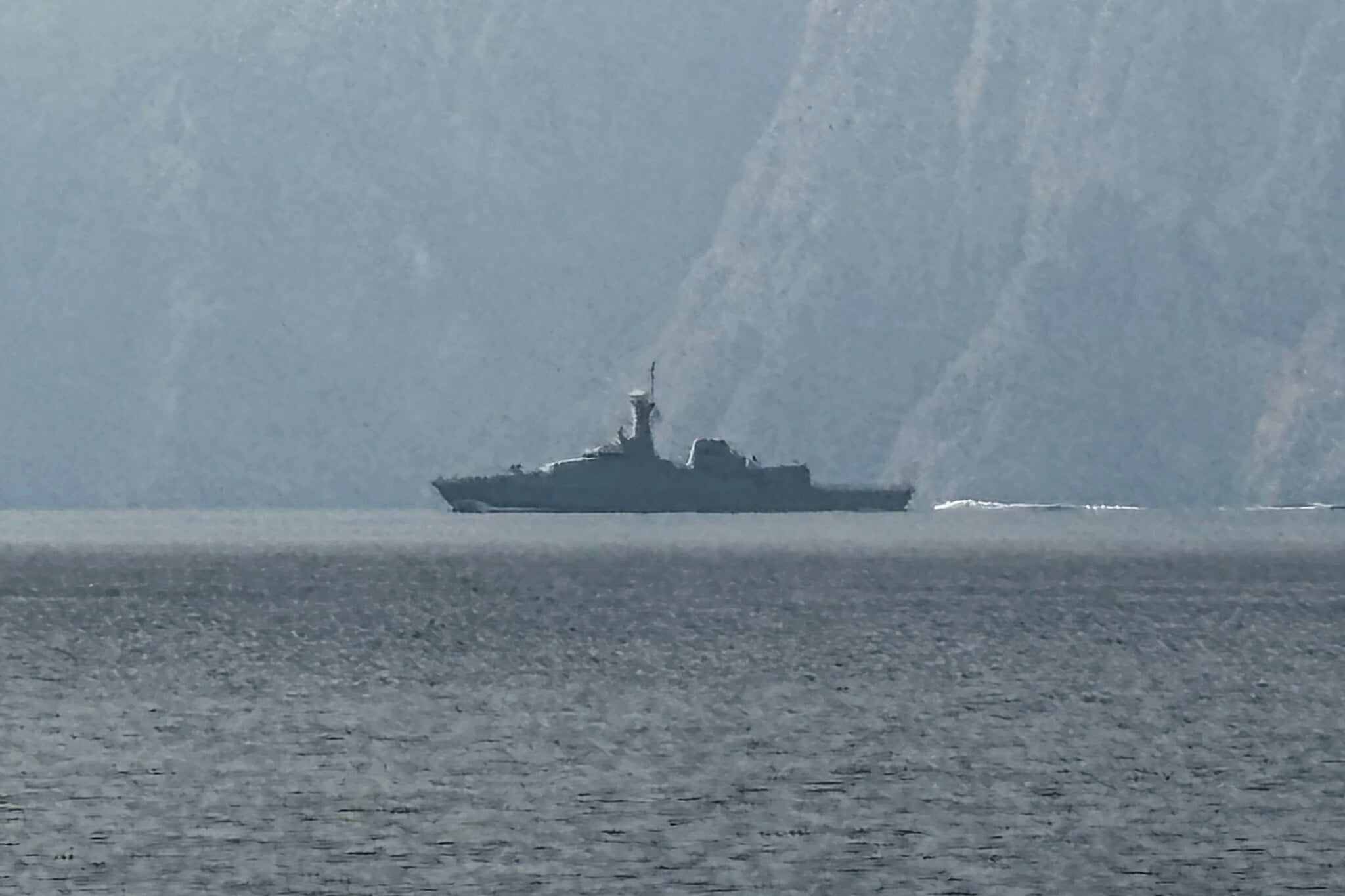
A navy vessel is seen sailing in the Strait of Hormuz, a vital waterway through which much of the world’s oil and gas passes, on March 1, 2026 (Sahar AL ATTAR / AFP)
Higher energy costs push inflation higher, straining household budgets and denting the consumer spending that is a main driver of many big economies.
Tokyo’s benchmark Nikkei 225 index plunged more than 7% early Monday, while other markets also foundered.
In the US, a gallon of regular gasoline rose to $3.45 on Sunday, about 47 cents more than a week earlier, according to AAA motor club. Diesel was selling for about $4.60 a gallon, a weekly increase of about 83 cents.
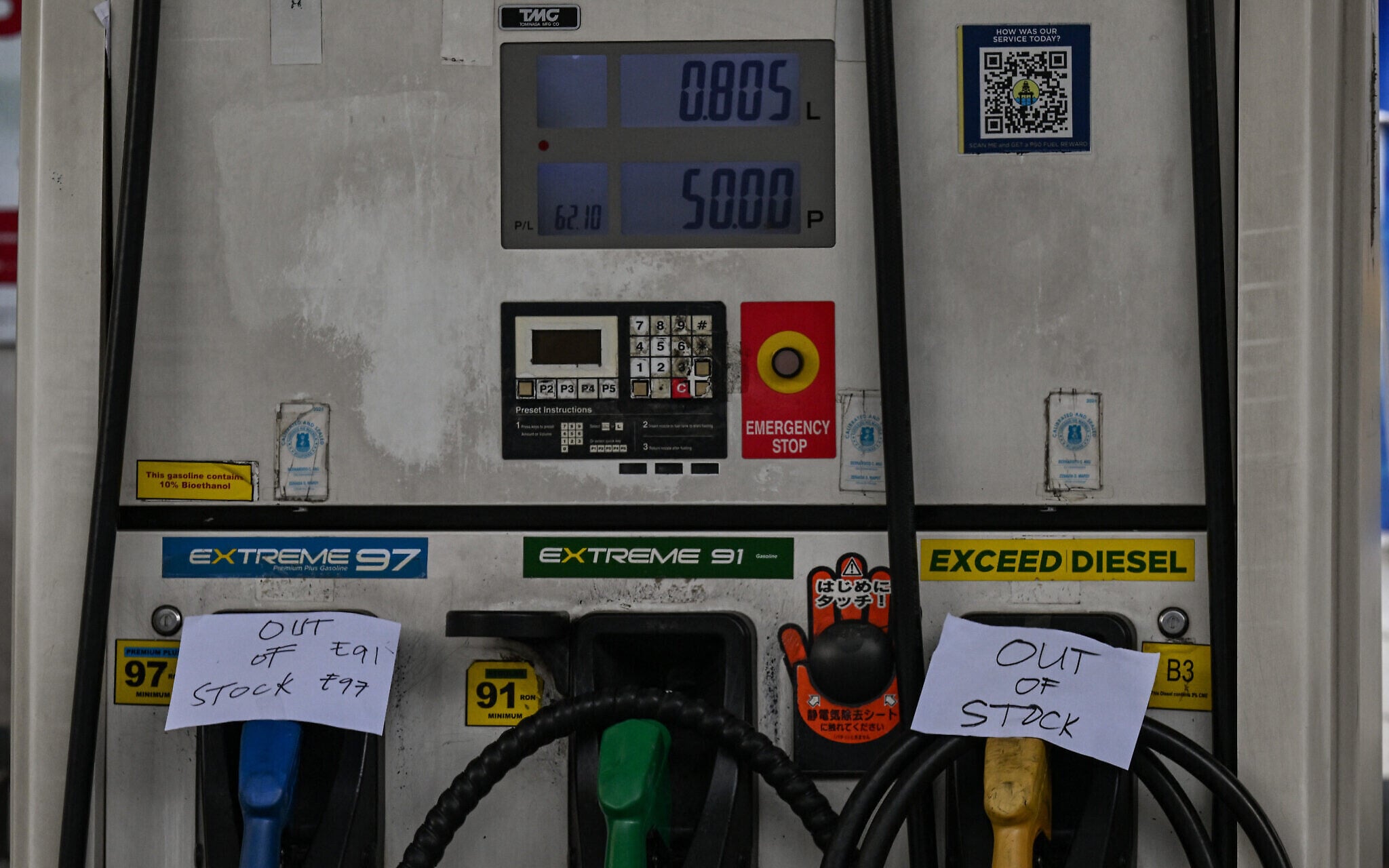
Signs reading ‘out of stock’ are displayed at a gas station amid rising petrol prices in Manila on March 9, 2026 (Jam STA ROSA / AFP)
US Energy Secretary Chris Wright, speaking on CNN’s “State of the Union,” said US gas prices would be back under $3 a gallon “before too long.”
“Look, you never know exactly the time frame of this, but, in the worst case, this is a weeks, this is not a months thing,” Wright added.
If oil prices stay above $100 per barrel, some analysts and investors say it could be too much for the global economy to withstand.
Iranian authorities said strikes by Israel on oil depots in Tehran and a petroleum transfer terminal early Sunday killed four people. Israel’s military said the depots were being used by Iran’s military for fuel to launch missiles. Mohammad Bagher Qalibaf, the speaker of Iran’s parliament, warned that the war’s impact on the oil industry would spiral.

Emergency services at the scene of a ballistic missile attack from Iran, in Tel Aviv, March 8, 2026. (Chaim Goldberg/Flash90)
Iran exports roughly 1.6 million barrels of oil a day, mostly to China, which may need to look elsewhere for supply if Iran’s exports are disrupted, another factor that could increase energy prices.
The price of natural gas also has climbed during the war, though not by as much as oil. It was selling for about $3.33 per 1,000 cubic feet late Sunday. That’s 4.6% higher than its Friday closing price of $3.19, after rising about 11% last week.
US stock index futures fell early Monday, pointing to likely losses for Wall Street’s main indexes when they open.
On Friday, the S&P 500 dropped 1.3% and the Dow plunged as many as 945 points before finishing with a loss of roughly 450. The Nasdaq composite sank 1.6%.
Times of Israel staff contributed to this report.
You appreciate our wartime journalism

You clearly find our careful reporting of the Iran war valuable, at a time when facts are often distorted and news coverage often lacks context.
Your support is essential to continue our work. We want to continue delivering the professional journalism you value, even as the demands on our newsroom have grown dramatically during this ongoing conflict.
So today, please consider joining our reader support group, The Times of Israel Community. For as little as $6 a month you’ll become our partners while enjoying The Times of Israel AD-FREE, as well as accessing exclusive content available only to Times of Israel Community members.
Thank you,
David Horovitz, Founding Editor of The Times of Israel