
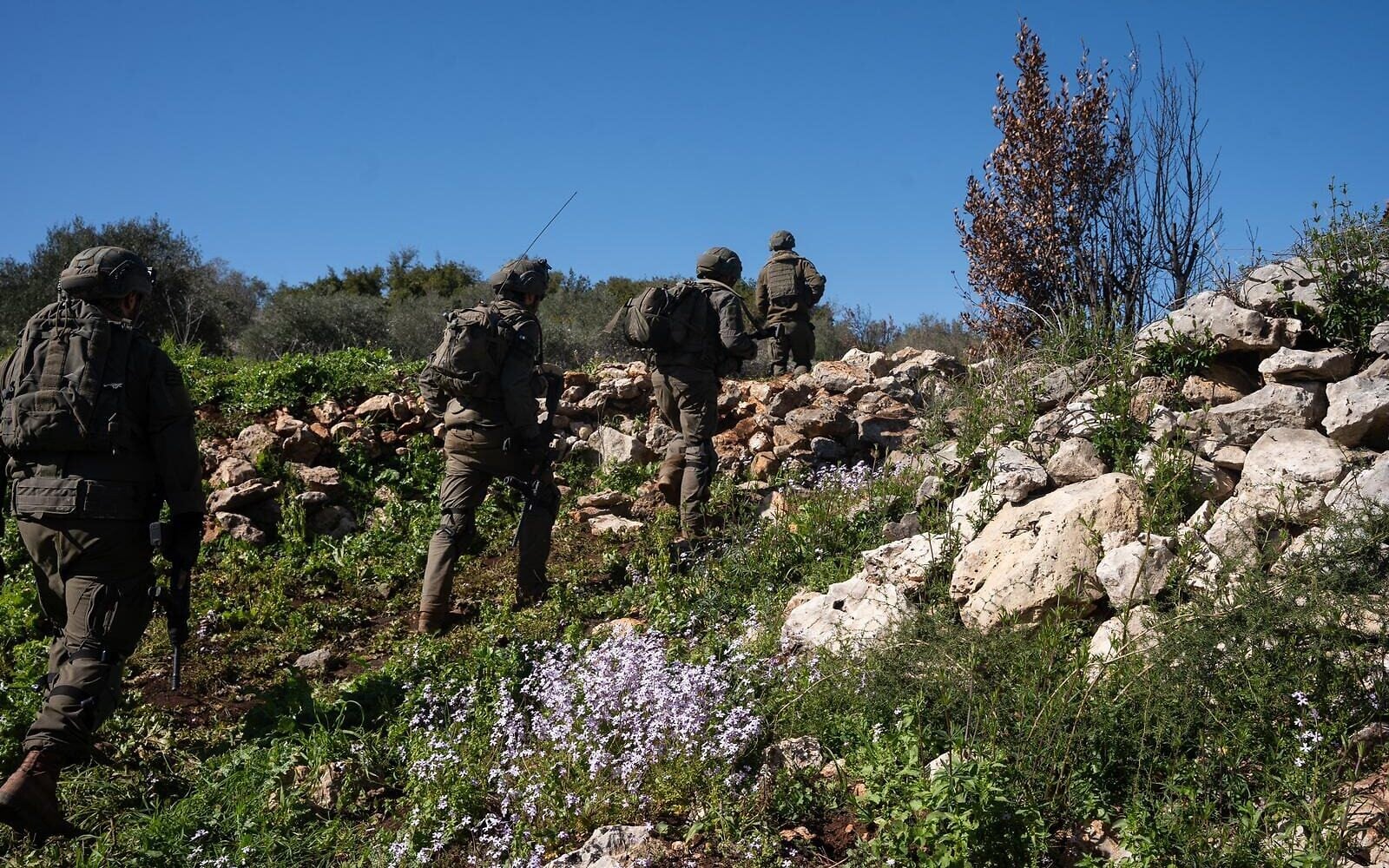
The Israel Defense Forces said Monday that it had pushed deeper into southern Lebanon overnight as part of its “enhanced forward defense posture” after Hezbollah began attacking Israel a week ago, as the terror group fired multiple rocket barrages at civilian areas.
Troops raided the Rab al-Thalathine area, west of the Israeli border community of Misgav Am, with the aim of locating and clearing the Lebanese village of Hezbollah infrastructure and operatives, the army said.
The IDF said it carried out numerous air and artillery strikes before the troops moved into the area.
“This operation is part of the effort to establish a forward defense that will create an additional security layer for the residents of the north,” the military said in a statement. The IDF has said that Hezbollah is launching most of its attacks from deeper within southern Lebanon, and not from close to the border.
The IDF said Monday that some 300 members of Hezbollah and other terror groups have been killed since hostilities intensified last week.
Get The Times of Israel’s Daily Edition
by email and never miss our top stories
By signing up, you agree to the terms
Lebanon’s health ministry said that at least 394 people have been killed in Israeli strikes, including 83 children. The toll did not differentiate between terror operatives and civilians.
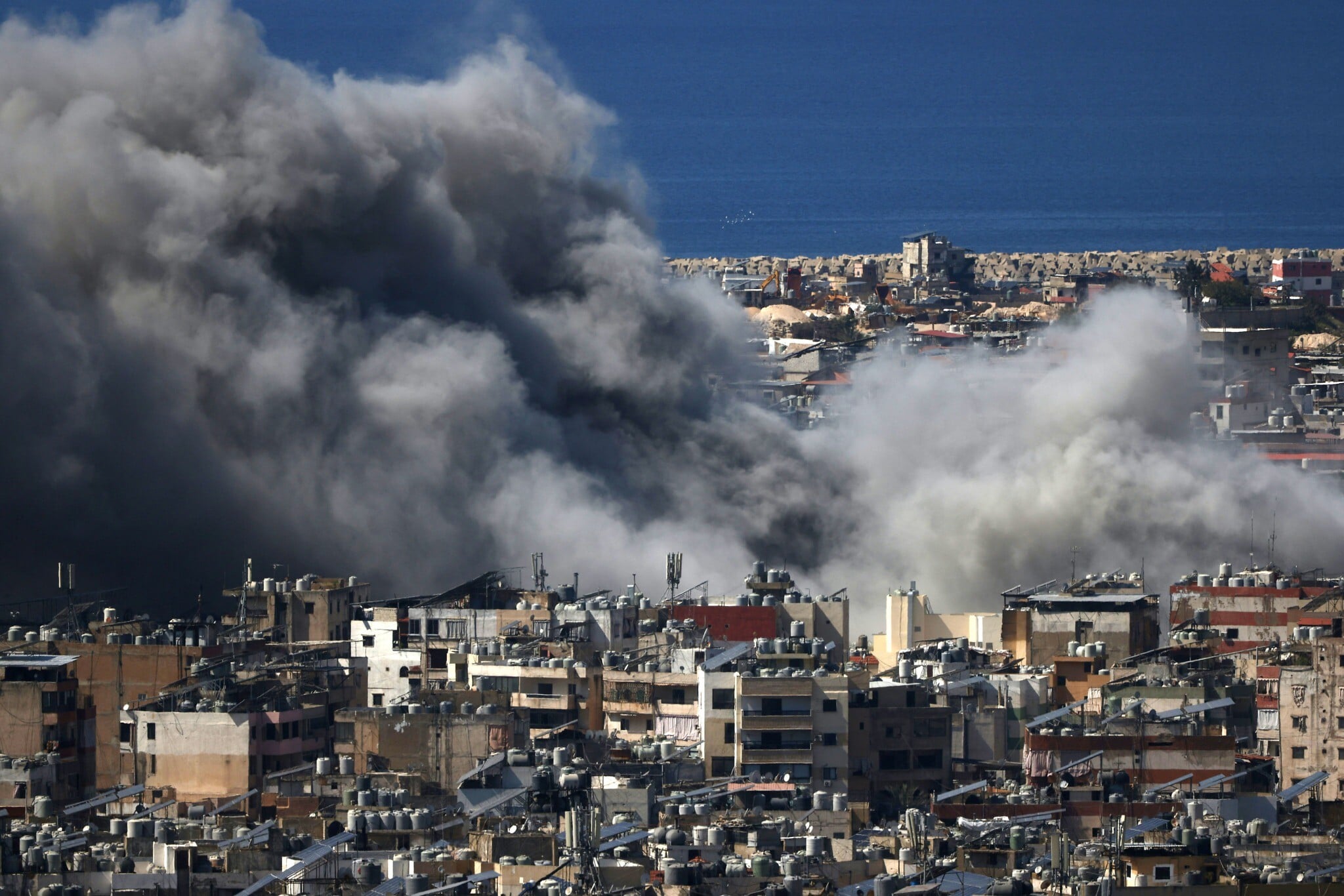
Smoke billows from the site of an Israeli air strike targeting Hezbollah in the southern suburbs of the Lebanese capital Beirut on March 9, 2026 (Ibrahim AMRO / AFP)
On Sunday, two Israel Defense Forces soldiers were killed in a Hezbollah attack in southern Lebanon.
Meanwhile, the incessant Hezbollah rocket and drone fire at northern Israel continued, sending millions running for shelter, including in the city of Haifa.
There were no reports of injuries.
One Hezbollah barrage targeted the north at the same time as a missile salvo from Iran. The IDF has said it has no intelligence indicating that concurrent fire from Iran and by Hezbollah in Lebanon is a “coordinated” effort.
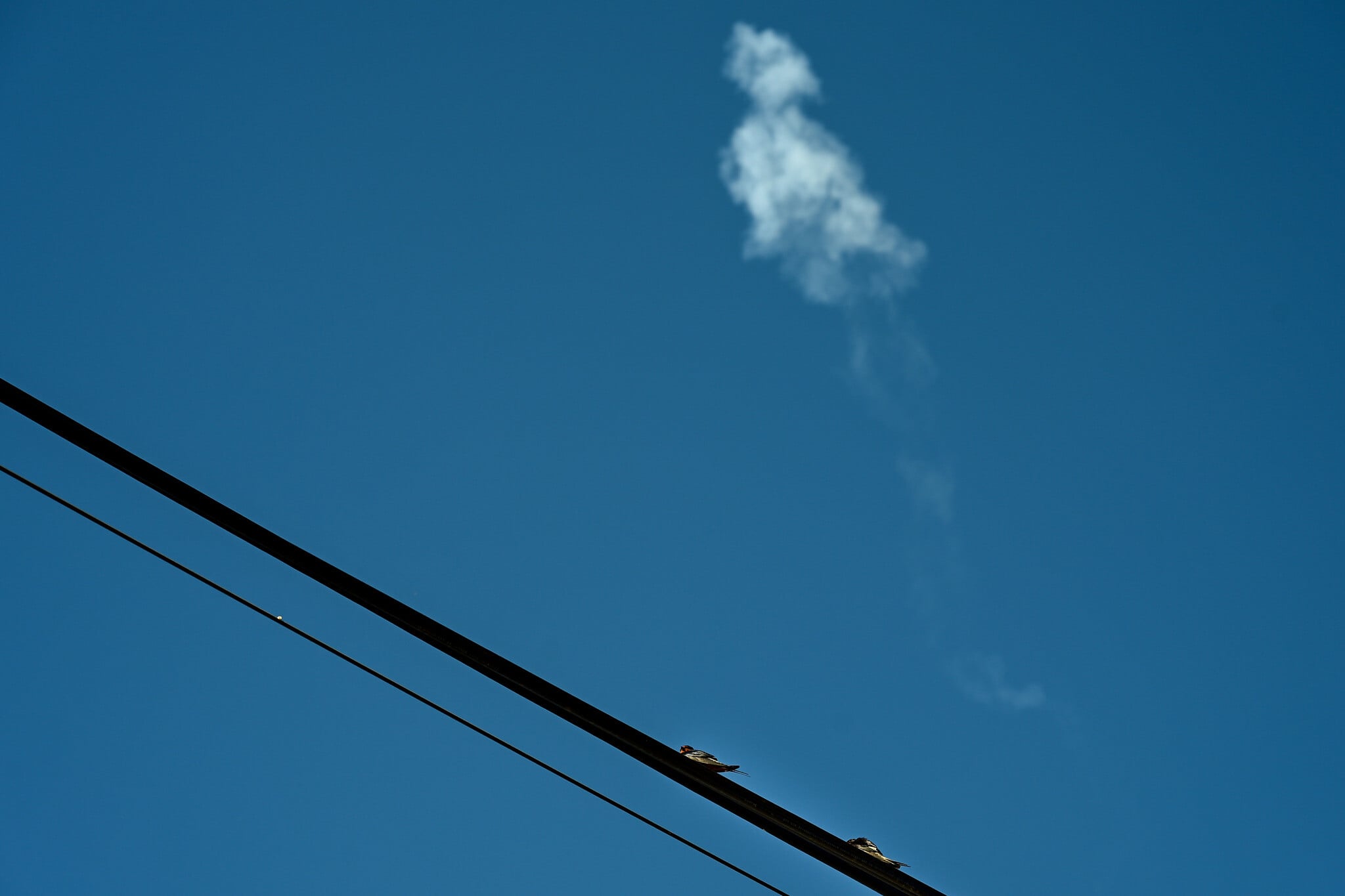
Anti-missile batteries fire interception missiles toward incoming ballistic missiles launched from Lebanon, as seen over northern Israel, March 9, 2026. (Michael Giladi/Flash90)
Israel carried on with heavy strikes in Lebanon on Monday as the military said that in the past week it has hit more than 700 targets, including 120 in the past day. More than 30 multi-story buildings in Beirut, used by Hezbollah, have been destroyed in the strikes, the army said.
On Monday, further targets were hit in Beirut’s southern suburbs and Sidon after Israel warned it would target branches of a US-sanctioned financial firm linked to Hezbollah.
The IDF said it would strike branches of Al-Qard al-Hassan, a financial firm mainly operating in Hezbollah strongholds across Lebanon’s south and east and Beirut’s southern suburbs. Israel also bombed the firm’s branches in 2024.
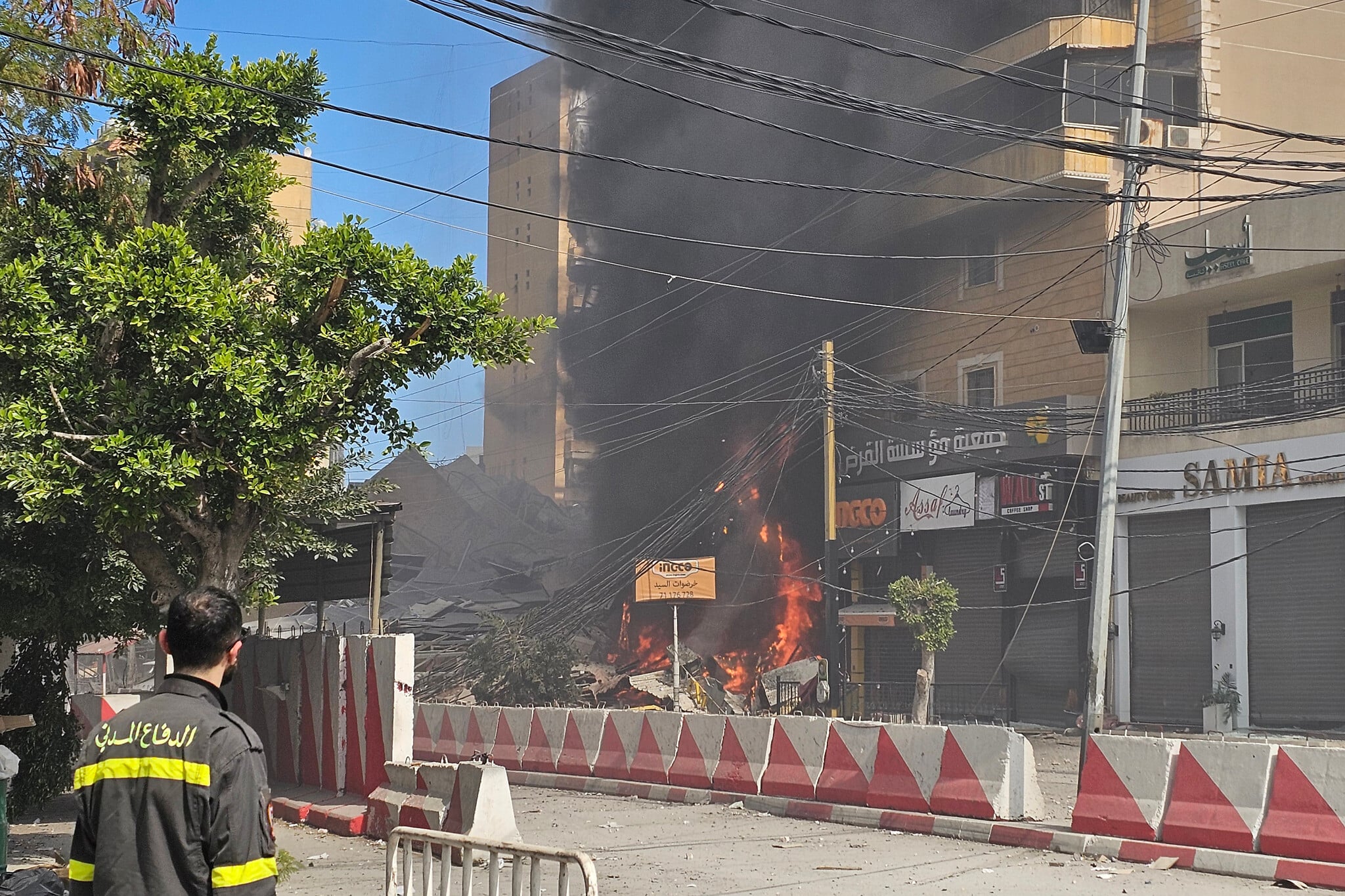
Smoke plumes billow from the site of an Israeli air strike in the southern suburbs of the Lebanese capital Beirut on March 9, 2026 (AFP)
Founded in 1983, Al-Qard Al-Hassan describes itself as a charitable organization that provides loans to people according to Islamic principles that forbid interest.
However, the US Treasury Department, which sanctioned AQAH in 2007, has said that Hezbollah uses Al-Qard Al-Hassan as a cover to manage “financial activities and gain access to the international financial system.”
“While AQAH purports to serve the Lebanese people, in practice it illicitly moves funds through shell accounts and facilitators, exposing Lebanese financial institutions to possible sanctions,” it said in a statement sanctioning individuals linked to the organization in 2021. Hezbollah’s former terror chief Hassan Nasrallah, who was killed in an Israeli airstrike on September 27, spoke about AQAH many times.
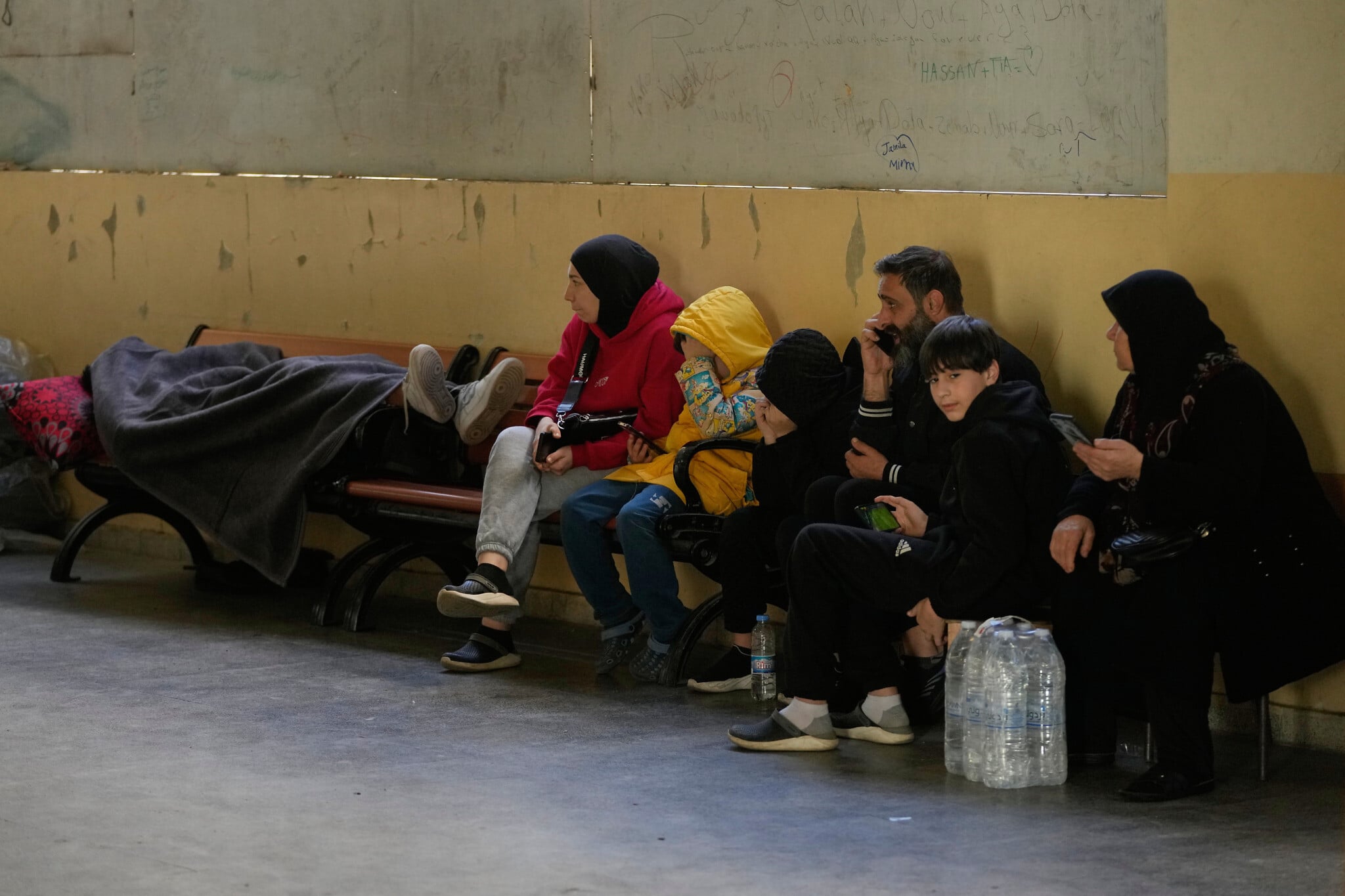
Families displaced by the fighting between Israel and Hezbollah in southern Lebanon and Dahiyeh, Beirut’s southern suburbs, sit inside a school used as a shelter in Beirut, Lebanon, March 9, 2026. (AP Photo/Hassan Ammar)
Israel regularly struck Hezbollah targets in Lebanon following a 2024 agreement, accusing the terror group of ceasefire violations, and continued to hold on to five border posts inside Lebanon, citing security needs. It has now expanded beyond those points, citing defensive needs.
The November 2024 ceasefire ended a year of hostilities between Hezbollah and Israel, which started when the terror group began firing missiles and drones into northern Israel one day after its ally Hamas launched a devastating attack on southern Israel that set off the war in Gaza.
You appreciate our wartime journalism

You clearly find our careful reporting of the Iran war valuable, at a time when facts are often distorted and news coverage often lacks context.
Your support is essential to continue our work. We want to continue delivering the professional journalism you value, even as the demands on our newsroom have grown dramatically during this ongoing conflict.
So today, please consider joining our reader support group, The Times of Israel Community. For as little as $6 a month you’ll become our partners while enjoying The Times of Israel AD-FREE, as well as accessing exclusive content available only to Times of Israel Community members.
Thank you,
David Horovitz, Founding Editor of The Times of Israel