
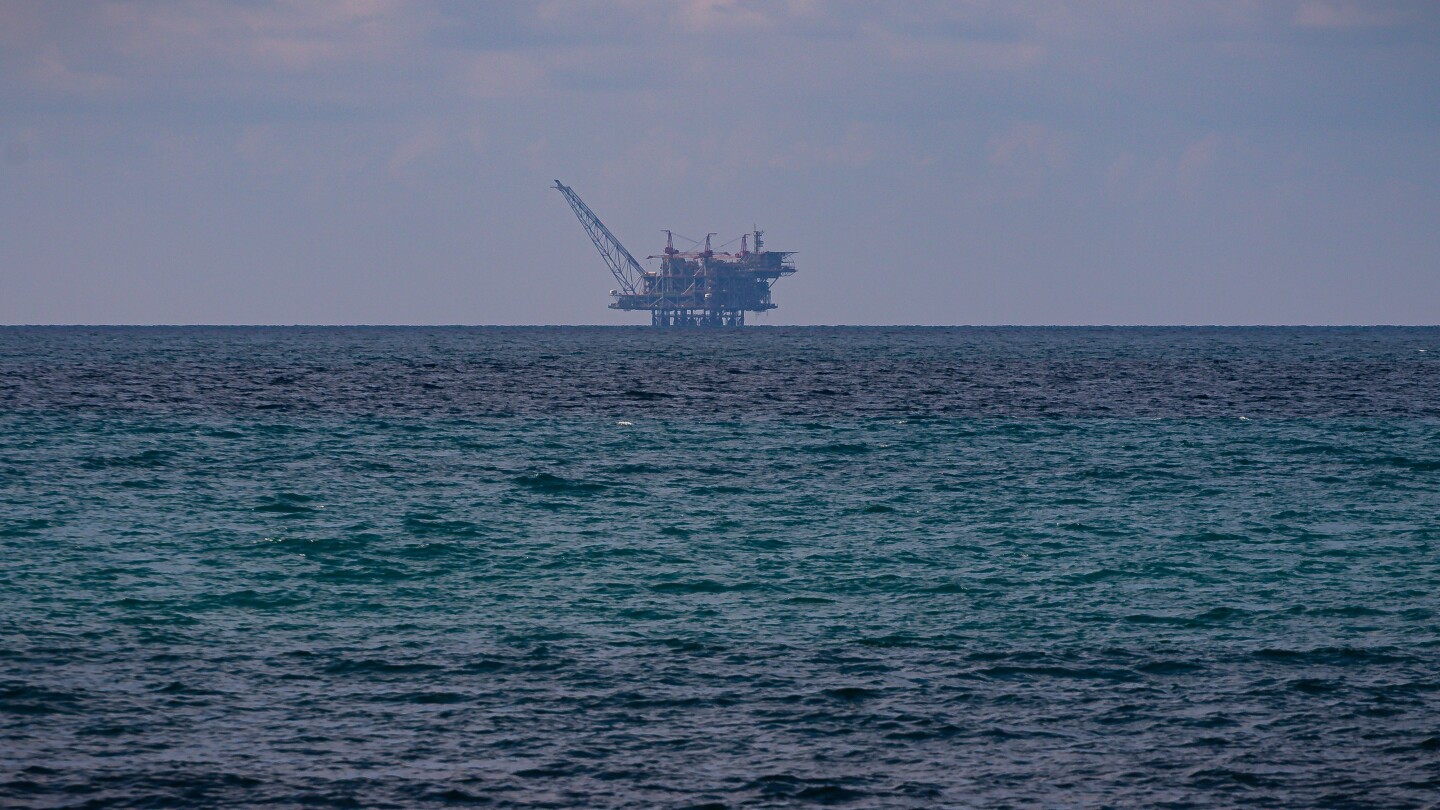
Israel’s offshore natural gas platforms are now among the most exposed energy assets in the Eastern Mediterranean. Israel’s March 7, 2026, strikes on Iranian oil facilities have heightened the risk that energy infrastructure could become a central target in regional escalation. As tensions rise, Israel’s offshore gas fields now sit at the front line of maritime security and geopolitical competition.
The Tamar and Leviathan gas fields lie roughly 50–80 miles off Israel’s northern coast in the Levant Basin. Tamar, discovered in 2009 with reserves estimated at about 283 billion cubic meters, began production in 2013 and now supplies roughly half of Israel’s domestic natural gas consumption. The larger Leviathan field, discovered in 2010, holds approximately 623 billion cubic meters of recoverable gas and entered production in 2019. In January 2026, Chevron approved a new investment phase designed to increase Leviathan’s production capacity to roughly 21 billion cubic meters annually by the end of the decade.
These resources can supply domestic demand and exports for decades.
Together with smaller deposits such as Karish and Tanin, Israel’s offshore reserves total about 413 billion cubic meters. These resources can supply domestic demand and exports for decades. Natural gas now generates roughly 70 percent of Israel’s electricity, sharply reducing dependence on imported coal and oil. These fields, therefore, form a critical pillar of Israel’s energy security and economic stability.
Yet the offshore location that makes these gas resources commercially valuable also creates security risks. Platforms, pipelines, and export routes operate far from Israel’s coastline and remain vulnerable to missile strikes, drones, naval infiltration, and underwater sabotage. As a result, protecting offshore energy infrastructure has become a central mission for the Israeli Navy.
Israel has built layered maritime defenses around its offshore infrastructure. Missile boats equipped with naval versions of the Iron Dome system provide protection against aerial threats, while submarines conduct underwater surveillance and patrol vessels monitor surrounding waters. Israeli forces also conduct frequent exercises simulating attacks on offshore platforms. In February 2026, the navy rehearsed defensive operations against missile strikes, drone incursions, and maritime infiltration attempts.
These preparations reflect credible threats. Hezbollah warned Israel in 2022 against developing the Karish field during maritime boundary negotiations with Lebanon. Although Israel and Lebanon later reached an agreement, Hezbollah retains the capability to target offshore infrastructure using missiles or drones. The group’s drone attack against British forces in Cyprus reinforce both its capabilities and its role as an Iranian proxy.
On March 7, 2026, Israel reportedly struck Iranian oil depots and refineries in Tehran. Iran retaliated by launching ballistic missiles at Israel’s Haifa refinery, damaging facilities linked to the Bazan energy complex. The exchange underscored a broader trend: Energy infrastructure sits at the center of regional confrontation.
Israel’s offshore gas platforms could become the next targets. Tamar and Leviathan supply most of Israel’s electricity and sustain gas exports to neighboring states, making them attractive targets. Iran or its proxies could attempt attacks using drones, missiles, cyber operations, or maritime sabotage.
Even a limited attack could force temporary shutdowns and disrupt regional gas flows.
Hezbollah presents the most immediate operational threat to Israel’s offshore energy infrastructure. The group possesses precision missiles, drones, and naval capabilities that could target fixed offshore platforms such as Tamar or Leviathan. Even a limited attack could force temporary shutdowns and disrupt regional gas flows. Israel has already experienced how quickly conflict can affect production. During previous regional crises, security concerns forced precautionary shutdowns of offshore fields, interrupting supplies to neighboring markets.
Egypt plays a central role in this export network. Israeli gas flows to Egyptian liquefaction facilities, which convert it into liquefied natural gas before shipment to global markets. This arrangement allows Israel to function as an indirect supplier to Europe as European governments search for alternatives to Russian gas.
For policymakers, the lesson is clear. Protecting Eastern Mediterranean energy infrastructure will require stronger naval defenses, sustained maritime security investment, and deeper coordination with regional partners such as Greece, Cyprus, and Egypt. As tensions with Iran intensify, safeguarding Israel’s offshore gas platforms will become a critical element of both regional deterrence and European energy security.