
Breadcrumb Trail Links
Carney government’s deal with Musqueam Indian Band rightly leaves Vancouver-area residents concerned
Get the latest from Brian Lilley straight to your inbox Sign Up
Published Mar 09, 2026 • Last updated 6 hours ago • 3 minute read
You can save this article by registering for free here. Or sign-in if you have an account.
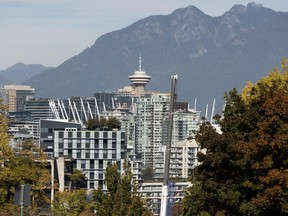 The skyline of Vancouver, as seen on Oct. 15, 2025. Photo by Arlen Redekop /Postmedia NetworkArticle content
Homeowners in the Vancouver area should know that the title to their land hasn’t been taken away from them by the Mark Carney government. That said, an expert in constitutional law and Indigenous rights said he understands why people are anxious when they hear about the recently signed agreement between Ottawa and the Musqueam Indian Band in the Vancouver area.
Advertisement 2
This advertisement has not loaded yet, but your article continues below.

THIS CONTENT IS RESERVED FOR SUBSCRIBERS ONLY
Subscribe now to read the latest news in your city and across Canada.
Unlimited online access to articles from across Canada with one account.Get exclusive access to the Toronto Sun ePaper, an electronic replica of the print edition that you can share, download and comment on.Enjoy insights and behind-the-scenes analysis from our award-winning journalists.Support local journalists and the next generation of journalists.Daily puzzles including the New York Times Crossword.
SUBSCRIBE TO UNLOCK MORE ARTICLES
Subscribe now to read the latest news in your city and across Canada.
Unlimited online access to articles from across Canada with one account.Get exclusive access to the Toronto Sun ePaper, an electronic replica of the print edition that you can share, download and comment on.Enjoy insights and behind-the-scenes analysis from our award-winning journalists.Support local journalists and the next generation of journalists.Daily puzzles including the New York Times Crossword.
REGISTER / SIGN IN TO UNLOCK MORE ARTICLES
Create an account or sign in to continue with your reading experience.
Access articles from across Canada with one account.Share your thoughts and join the conversation in the comments.Enjoy additional articles per month.Get email updates from your favourite authors.
THIS ARTICLE IS FREE TO READ REGISTER TO UNLOCK.
Create an account or sign in to continue with your reading experience.
Access articles from across Canada with one accountShare your thoughts and join the conversation in the commentsEnjoy additional articles per monthGet email updates from your favourite authors
Article content
Appearing on the latest episode of the Full Comment podcast for Postmedia, Dwight Newman, a professor of law at the University of Saskatchewan and the Canada research chair in rights, communities and constitutional law, said there is a lot of uncertainty surrounding the Feb. 20 agreement.
Article content
Article content
“I think it would be fair for homeowners to have some questions and have a little bit of concern,” Newman said. “But some of the accounts where all of their homes have already been transferred to the Musqueam vastly overstate the issue.”
Reason for homeowners to be concerned
On Feb. 20, during a Friday afternoon when most people had checked out for the weekend, the Carney government announced what it called “Historic Agreements Recognizing Rights, Stewardship and Fisheries.” The part that had people wondering about their home, land or business ownership was where the federal government signed an agreement giving right and title to the Musqueam Indian Band to pretty much all of the land in Vancouver, West Vancouver, Burnaby and Richmond and much of Delta.
“The purposes of this agreement are to: (a) recognize Musqueam’s Rights and Title within Musqueam Territory; (b) demonstrate progress in incrementally implementing Musqueam’s Rights and Title,” the document says.
That part of the agreement and many others have left Vancouver-area residents unsure about the future. The phrase “rights and title” has a very specific meaning that denotes ownership, which understandably has many people wondering about the repercussions.
“These agreements do not impact private property,” Crown Indigenous Relations Minister Rebecca Alty said in a post on X last week.

Your Midday Sun
Thanks for signing up!
Article content
Advertisement 3
This advertisement has not loaded yet, but your article continues below.
Article content
These agreements do not impact private property.
This is preferred to the more uncertain alternative of determining Musqueam’s Aboriginal title through the courts. By negotiating we are able to uphold existing property rights and advance reconciliation.
— Rebecca Alty (@RebeccaAltyNWT) March 3, 2026
That’s nice and so too is a statement from Musqueam Chief Wayne Sparrow saying they aren’t coming for anyone’s private property. The problem is that words in legal documents have meaning and a court could easily see the words in this document meaning something different down the road.
“There’s this cloud of uncertainty,” Newman said.
So many questions, so few answers
All of this is taking place against the backdrop of the Cowichan Tribes v. Canada court decision last year that granted the Cowichan Tribes rights and title over more than 7.5 sq. km, more than 1,800 acres, of land in Richmond, B.C. That land is now land that the Musqueam has been given rights and title to in their agreement with the Carney government.
The Musqueam are appealing the Cowichan court decision, saying it infringes on their land. Meanwhile, the Squamish Nation is challenging the Musqueam agreement saying that it infringes on their traditional territory.
Advertisement 4
This advertisement has not loaded yet, but your article continues below.
Article content
In the background, homeowners and businesses throughout the Vancouver area wonder what any of this means for them and the land that they think they own.
After the Cowichan decision, there were also claims that nothing would impact private property owners. Yet, the British Columbia government ended up putting forward a $150-million fund to assist landowners after banks and other lenders said mortgages in the area were in question.
RECOMMENDED VIDEO
We apologize, but this video has failed to load.
Play VideoCourts are making things less clear, not more
Newman said that in the Cowichan case, Justice Barbara M. Young made the argument that Aboriginal title and private property ownership, called fee simple title, can coexist.
“She says at one point that the two can coexist, which doesn’t make sense, because each is an exclusive ownership of the land and two people can’t both exclusively own the exact same thing,” Newman said.
Advertisement 5
This advertisement has not loaded yet, but your article continues below.
Article content
Newman points out that the New Brunswick Court of Appeal shut down an attempt by the Wolastoqey Nation to try to claim Aboriginal title over private land rather than Crown land. That is the opposite of what was decided in B.C. in the Cowichan decision and Newman believes this will end up at the Supreme Court.
“We might see the Supreme Court of Canada engage with this question sooner than later if they decide to hear an appeal,” he said.
Newman admitted that there is a lot of complication and uncertainty and that is unlikely to change for the foreseeable future as these cases work their way through the system.
Bottom line: You haven’t lost the title to your home, but that doesn’t mean you won’t.
Read More
EDITORIAL: Divisive land claims create uncertainty

Musqueam say only federal lands in play under rights agreement with Canada
LILLEY: Who owns Vancouver after agreement with Musqueam Indian Band?
Article content
Share this article in your social network