
 Bloomberg
(Bloomberg) — Global bond markets trimmed some of their hefty losses on Monday after oil prices reversed an early surge and Brent crude eased back under $100 a barrel.
While short-dated US Treasuries remained slightly lower on the session, those maturing in seven years or more were little changed as of midday in New York as the overnight oil shock abated. Global bonds were hit hard as the trading week began with a surge in oil toward $120 a barrel prompted investors to price in higher inflation despite risk to the economic growth outlook.
Most Read from Bloomberg
The yield on benchmark 10-year US Treasuries were back to 4.13% after spiking to 4.21%, while the rate on policy-sensitive two-year notes remained two basis points higher at 3.58%. Traders expect the Federal Reserve’s next quarter-point rate cut no earlier than September. Before the US attacked Iran on Feb. 28, traders had fully priced in a move by July. Bond options show some traders are betting the Fed won’t cut rates at all this year.
While European bonds also tempered losses as those markets came to a close, short-dated UK yields remained 10 basis points higher on the day — after earlier rising as much as 30 basis points to 4.17%. Swaps implied a 60% chance of the European Central Bank hiking rates twice this year and a slightly less than 50% probability of the Bank of England raising borrowing costs once by the end of the year. German two-year yields surged nine basis points to 2.40%, before fading back toward 2.32%

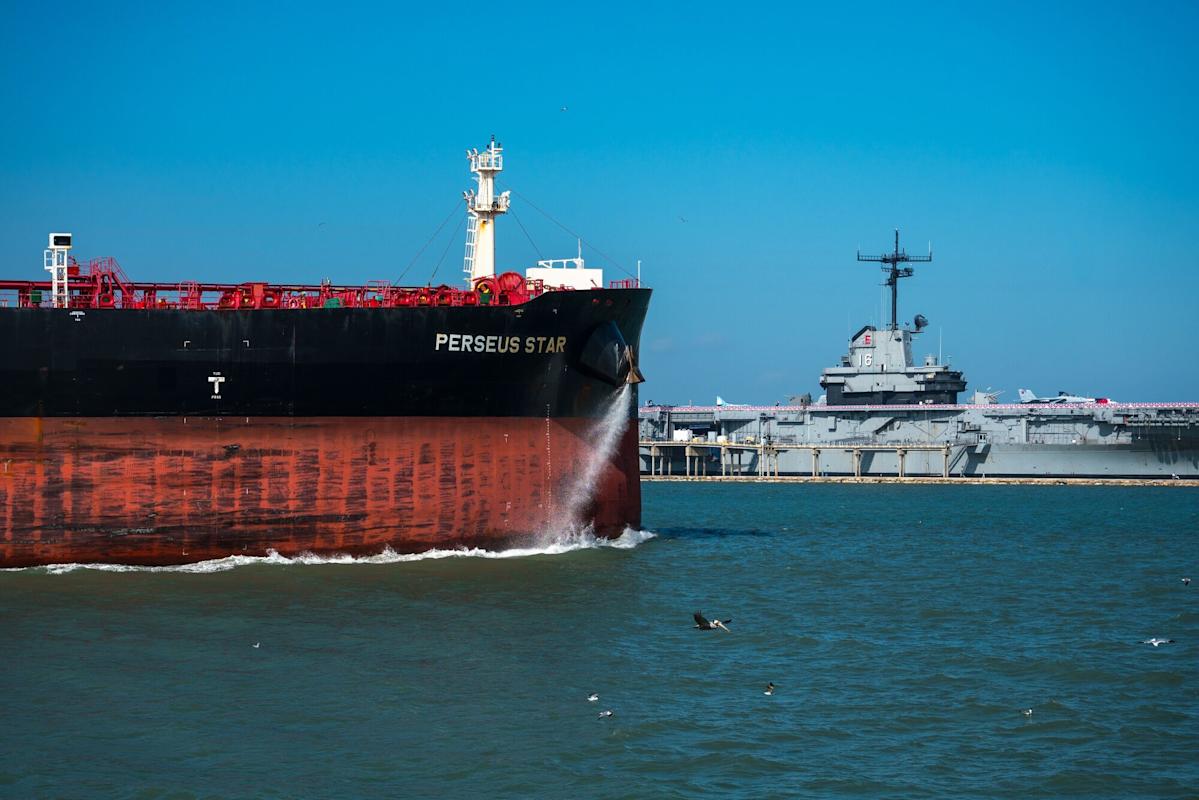
The broader bond rout reflects anxiety about the global economy after the global benchmark for crude oil surged toward $120 a barrel, up almost 80% since the Iran war began and disrupted shipments from the Middle East. Sustained price increases could force central banks to keep policy tight to curb inflation even as growth slows, leaving the world grappling with stagflation.
The cool-off in the market on Monday came after Group of Seven finance ministers said they were ready to take any steps needed to support global energy supply, including releasing strategic oil reserves — although the group isn’t at the point of doing so yet.
“A weeklong halt in Hormuz shipping is driving a fast‑escalating energy shock, lifting oil and gas prices, boosting the US dollar and global yields, and challenging 2026 consensus trades as stagflation risks rise,” Oversea-Chinese Banking Corp strategists including Sim Moh Siong wrote in a note.
Story Continues
The economic toll would be significant. A 10% rise in energy costs that persists for a year would lift global inflation by about 0.4 percentage points and shave up to 0.2 percentage points off growth, according to the International Monetary Fund. Bloomberg Intelligence says demand destruction tends to set in when crude hits $133, highlighting the risks if prices continue to climb.
Supply Strain
Investors are bracing for a prolonged conflict, suggesting the oil spike may be sustained. Iran’s selection of the late Ayatollah Ali Khamenei’s son as the next supreme leader signals continuity in Tehran’s stance and little shift in its approach to the war. Meanwhile, output cuts in Kuwait and the United Arab Emirates highlight the growing supply strain after the closure of Hormuz.
In the US, recent data have added to concerns about a potential stagflationary mix. Employers unexpectedly cut jobs in February and the unemployment rate rose, pointing to cracks in the labor market just as price pressures intensify.
“Oil is arguably the single most important input into global inflation,” said Tim Murray, a capital market strategist in the Multi-Asset Division at T. Rowe Price. With most Asian economies significant net oil importers, that creates a “relative headwind for the region in a risk-off environment,” he added.
Market-implied inflation expectations extended last week’s surge. In the US, Treasury inflation-protected securities outperformed conventional Treasury notes and bonds, with the five-year TIPS yield falling back toward 1%, near its lowest level of the past year. As the conventional five-year yield climbed, the gap between them — a proxy for the average expected US inflation rate over the term — increased to 2.69%, approaching last year’s high.
In the inflation swap market, the rate to receive payments based on the US consumer price index for one year exceeded 3% for the first time since October. Similar to the yield differential between TIPS and conventional Treasuries, it represents the expected CPI rate over the term.
Bonds fell across Asia, with benchmark yields climbing by double-digit figures in Australia, New Zealand and South Korea. Indonesian and Japanese debt markets also slumped, with the 10-year yen government yields surging by 11.5 basis points, while European bond futures retreated.
Chinese government bonds declined as well, with 30-year bond futures posting their biggest drop of the year. The asset had initially outperformed global peers after the Iran war began, but confidence in its resilience is being eroded by fears of imported inflation as oil prices push higher.
–With assistance from Ruth Carson, Wenjin Lv, Masaki Kondo and Michael MacKenzie.
(Updates with market moves throughout.)
Most Read from Bloomberg Businessweek
©2026 Bloomberg L.P.